John Prine & Emmylou Harris – Angel From Montgomery

Emmylou Harris

Longing for the Escape Artist: The Quiet Despair of a Life Unlived

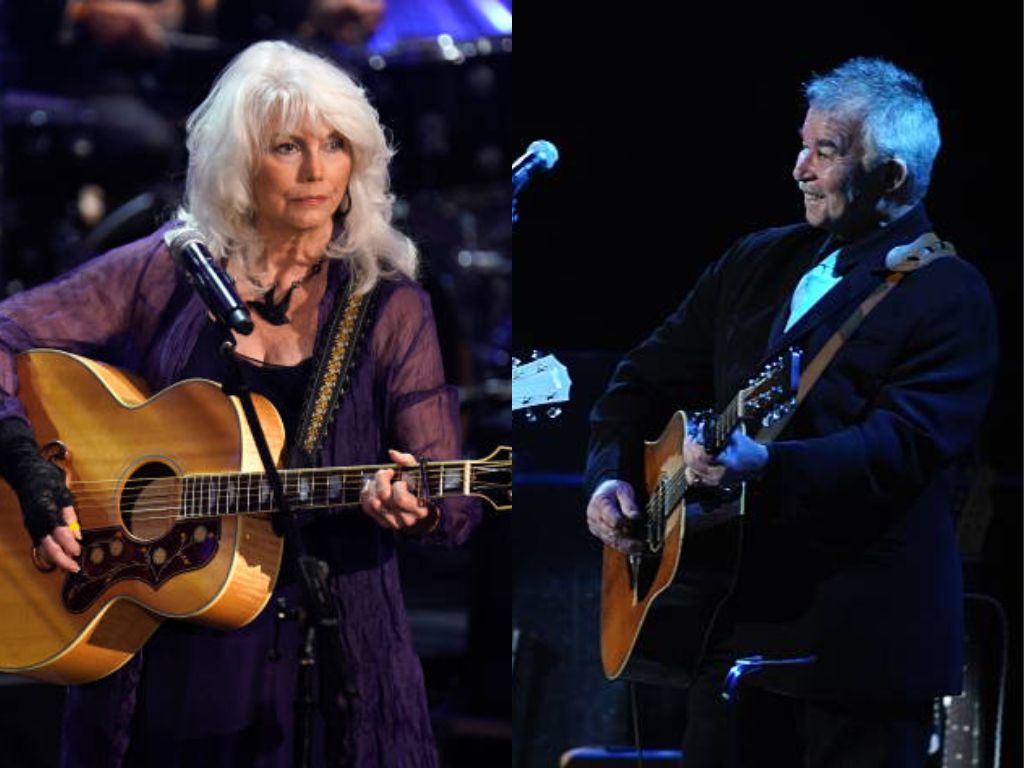
There are songs that simply exist, and then there are songs that become a shared language for the human condition—a melody and a lyric woven into the very fabric of our collective memory. “Angel From Montgomery,” especially the deeply soulful duet by the late, great John Prine and the incomparable Emmylou Harris, is certainly one of the latter. While the version featuring Emmylou Harris might not have registered a measurable “chart position” as a single in the era of its release, the original, written and performed by John Prine on his groundbreaking 1971 self-titled debut album, resonated immediately within the burgeoning folk and country-rock scenes, quickly establishing itself as a modern standard. The album itself, John Prine, was his first to chart on the U.S. Top 100 on Billboard, marking the arrival of a truly singular songwriting talent. However, it was Bonnie Raitt’s 1974 rendition on her Streetlights album that brought the song to a massive, mainstream audience, cementing its place in the American songbook—a testament to the enduring power of its poetry.

The story behind this ballad is as humble and profound as the man who wrote it. Prine, a former mailman from Maywood, Illinois, was renowned for his observational acuity, often composing songs on his mail route. A friend, Eddie Holstein, suggested he write “another song about old people,” in reference to the empathetic masterpiece, “Hello in There.” Although Prine felt he’d already said his piece about the elderly, the idea sparked a new image: a middle-aged woman, standing at the kitchen sink, her hands slick with soap, contemplating walking away from her monotonous life. He realized she felt “older than she is.” This vivid, aching image became the wellspring for a lyric that spoke for every soul trapped in a quiet domestic prison. Prine chose Montgomery, Alabama, for the setting, a likely homage to his hero, Hank Williams, thus adding an undercurrent of deep Southern melancholy and unfulfilled longing for a romanticized past.

The true genius of “Angel From Montgomery” lies in its meaning. It is a devastating portrait of midlife disappointment and stagnant marriage, delivered through the voice of a woman who begins with the heart-wrenching declaration, “I am an old woman, named after my mother / My old man is another child that’s grown old.” This is not just about aging; it’s about the crushing realization that life has shrunk, that dreams have evaporated into the buzz of kitchen flies and the endless routine of domesticity. The titular “Angel From Montgomery” is the ultimate escape fantasy—a desire for an effortless liberation, perhaps symbolized by the “old rodeo” poster, a visual echo of a youthful freedom, a time when she had a “cowboy” who was a “free ramblin’ man.” It’s a plea for a touch of the extraordinary to break the chains of the ordinary, a yearning not just for change, but for a divine intervention to transport her away from her silent despair.

When Prine and Harris perform it together, as they did on his 2016 album For Better, or Worse, the song takes on a different, but equally powerful, resonance. The blend of Prine’s wonderfully rough, lived-in voice—the voice of the narrator who understands her plight—and Harris’s crystalline, almost ethereal harmony and solo lines—the voice of the angel she longs for—is pure alchemy. It elevates the piece from a simple lament to a tender, deeply sympathetic conversation across the years, a shared nod of recognition for those unfulfilled desires we all carry. The recording is a beautiful, late-career revisiting of a masterpiece, reminding us that the pain of unlived dreams is ageless and universal.

Video

0 Shares:
Leave a Reply

Your email address will not be published. Required fields are marked *

You May Also Like
Elvis
Read More

THE VOW OF SILENCE — ANN-MARGRET FINALLY BREAKS FOR ELVIS PRESLEY Introduction LOS ANGELES — For more than half a century, she kept her lips sealed. Not a whisper, not a confession, not even a nostalgic slip. Ann-Margret, the flame-haired dynamite of the Silver Screen, refused to add fuel to Hollywood’s longest-running rumor: her secret love with Elvis Presley. But now — older, wiser, and finally ready — she steps out of the shadows, not to sell a scandal, but to mourn the only man who ever matched her fire. Her voice trembles as she says the words that instantly send shockwaves through Hollywood’s golden memories: “It was intense… deeply real,” Ann-Margret admits. “What we had was serious, profound, and genuine.” No ghostwriters. No book deal. No TV tell-all. Just a woman revealing the truth she guarded like sacred scripture. THE UNSTOPPABLE SPARK THAT SHOOK 1960s HOLLYWOOD Spring 1963. The sun bounces off chrome cars, gossip magazines scream from every newsstand, and the set of Viva Las Vegas becomes the epicenter of a cultural earthquake. On one side: Elvis Presley, already a living myth — the King of Rock and Roll, adored by millions, worshipped like a deity. On the other: Ann-Margret, the Swedish-born wildcat with a voice like velvet and a soul that defied Hollywood’s fragile femininity. The moment they met, the air cracked. Sparks didn’t fly — they detonated. Crew members later described their chemistry as “radioactive,” “dangerous,” and “too real for the cameras.” Even between takes, their laughter synced, their bodies moved in rhythm, and their energy pulled like magnets. Director George Sidney confirmed what the entire set had already whispered: “They didn’t need to act. The electricity you saw on film—that was them. Completely authentic.” Their on-screen flirtation spilled effortlessly into late-night motorcycle rides through the Nevada desert, intimate dinners far away from the flashbulbs, and long emotional conversations about fear, fame, and the loneliness of living in the spotlight. Ann-Margret eventually admitted: “We were soulmates. He understood me in ways no one else ever did.” But destiny had already written a cruel footnote in their love story. THE HEARTBREAK NO SCRIPT COULD FIX Elvis was already promised — not by contract, but by expectation — to Priscilla Beaulieu, the young woman waiting faithfully at Graceland. Ann-Margret grew up with strict values. Loyalty wasn’t negotiable. She refused to become the woman who broke another heart, even if it shattered her own. And so the affair ended. Not with a fight. Not with betrayal. But with two people letting go of something bigger than either of them could control. Their romantic relationship ended — but their bond never died. THE FLOWERS NO ONE SPOKE ABOUT In the decades that followed, Hollywood moved on. Paparazzi found new obsessions. Fans forgot. Publicity machines buried the truth. But something quiet and haunting endured. Every opening night of Ann-Margret’s career, a bouquet arrived in her dressing room. Always elegant. Always perfect. Always anonymous. No card. No initials. No signature. Just the familiar whisper of memory. She never needed to ask. The tradition lasted more than ten years — until the night everything changed. AUGUST 16, 1977 — THE WORLD STOPS Ann-Margret was preparing for her Lake Tahoe performance when a stagehand leaned in and delivered the sentence that cracked her world open: Elvis Presley was gone. Gone at 42. Gone too soon. Gone with a silence that roared across the planet. Ann-Margret could barely speak when recalling the moment to a close friend: “I couldn’t breathe. It felt like the world stopped.” The crowd waited. The band tuned up. The spotlight dimmed. But she never walked onto the stage that night. Instead, she wept behind the curtain — not as a Hollywood star, but as a woman mourning the man she once loved. Days later, while thousands flocked to Graceland, Ann-Margret slipped quietly through a side entrance. No cameras. No entourage. No reporters. She said goodbye alone. Invisible in a sea of grief. But grieving more deeply than anyone around her could imagine. FOUR DECADES OF LOYALTY AND A PROMISE SHE NEVER BROKE For the next forty years, Ann-Margret did something unheard of in Hollywood: she kept her silence. No tell-all memoir. No scandal-driven interviews. No exploitation of the most explosive love story of her life. She calls her silence “a promise.” “It wasn’t something to sell,” she told a journalist quietly. “It was something to protect.” She later married actor Roger Smith, a man who understood, accepted, and respected the quiet devotion she still carried for Elvis. Their marriage lasted until Smith’s death — a testament to loyalty, maturity, and emotional truth. Even those closest to Elvis confirmed it: Longtime friend and Memphis Mafia member Marty Lacker stated: “She truly loved Elvis — and he loved her. That was real. He just couldn’t live two lives.” Those words—simple, raw, devastating—explain everything better than any tabloid ever could. A SONG THAT NEVER STOPS PLAYING The world spins forward. Graceland welcomes new generations. Hollywood rewrites itself every year. But the story of Elvis and Ann-Margret remains frozen—glowing, untouchable, and strangely eternal. It’s not about scandal. Not about gossip. Not even about forbidden love. It’s about two souls who collided with the force of a supernova and carried the warmth of that collision for decades afterward. Ann-Margret’s silence was never emptiness. It was respect. It was love. It was the last gift she could give the man who once held her heart with the intensity of a thousand spotlights. And now, finally breaking her vow, her truth reveals the quiet heart of a legend we all thought we already knew. Some stories don’t fade. Some flames don’t die. Some promises echo louder than words ever could. And perhaps this one isn’t finished yet. Video

Introduction LOS ANGELES — For more than half a century, she kept her lips sealed. Not a whisper,…
George-Strait
Read More

“Tonight, I want to sing this for the man I’ve spent my whole life watching.” That was how Vince Gill opened his tribute — and from that moment on, the room knew this wasn’t just another honors performance. Standing beneath the lights of the Kennedy Center Honors, Vince didn’t rush. He didn’t dress the moment up. He simply spoke from the heart. He talked about watching a young Texas singer stay true to himself year after year, about learning what authenticity really looks like by paying attention — quietly, patiently — from the sidelines. “I’ve followed him my entire career,” Vince said, his voice steady but weighted. “And I’m still learning.”

Country Artists Pay Tribute To The “King Of Country,” George Strait, At Kennedy Center Honors “We can hardly…