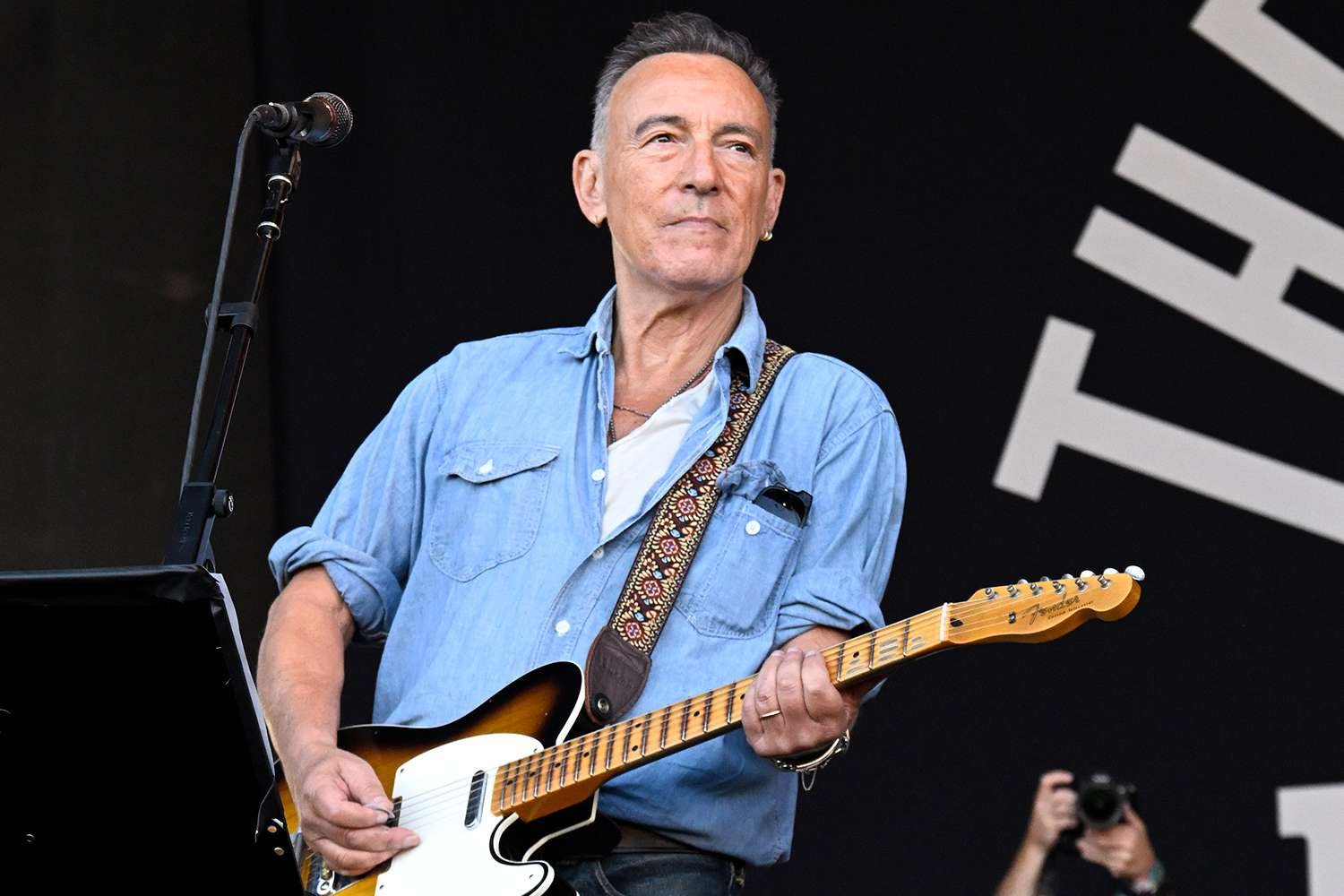
“I NEVER THOUGHT I’D ARGUE WITH THE BOSS — BUT I DID.” Jeremy Allen White Has Finally Broken His Silence About A Heated Debate He Had With Bruce Springsteen Over One Song On The Iconic Nebraska Album — And Fans Can’t Stop Talking About It.

bruce springsteen

The actor and the musician diverged in their interpretations of a critical song on the album at the center of “Springsteen: Deliver Me From Nowhere.”

Jeremy Allen White as Bruce Springsteen; Bruce Springsteen
Jeremy Allen White as Bruce Springsteen, and Bruce Springsteen.Credit: Macall Polay/ 20th Century Studios; Gareth Cattermole/Getty

For a time, Jeremy Allen White became Bruce Springsteen. But that doesn’t mean they share every opinion.

The actor recently reflected on stepping into the shoes of the legendary rocker to lead Springsteen: Deliver Me From Nowhere, his first big film since breaking out on the culinary drama The Bear. White told IMDb that, for the most part, he got along with Springsteen swimmingly. But diving into the details of the album at the film’s center — the introspective 1982 classic Nebraska — revealed a critical divergence point between the two.

“I had dinner at home with him and his wife, [Patti Scialfa], before we started filming. We got to talk about his music, and more specifically, we spoke a lot about ‘Reason to Believe.’ What I take away from that song, and what he thinks people misunderstand about that song,” White explained. “I believed that there was hope in that song, and he said, ‘That’s not the case.’”

Jeremy Allen White as Bruce Springsteen in 20th Century Studios' SPRINGSTEEN: DELIVER ME FROM NOWHERE
Jeremy Allen White as Bruce Springsteen in ‘Springsteen: Deliver Me From Nowhere’.Macall Polay/20th Century Studios

White recalled pleading his case, proposing to Springsteen, “‘Don’t you feel that when you’re writing a song, you’re kind of giving it up?’ And he said, ‘I guess you’re right. If you want to feel that way, you can feel that way. But that’s not how that was intended.’”

“Reason to Believe” closes out Nebraska, a deeply personal, introspective album that Springsteen recorded by himself while living in isolated Colts Neck, N.J. The song channels one of Springsteen’s primary cited inspirations for the album, the short stories of Flannery O’Connor, in its own braiding together of four short vignettes on the theme of endurance in the face of adversity.

A woman waiting for a man who will never come, a groom waiting for a bride who won’t marry him, a dead dog moldering on the side of a highway beneath a man’s contemplative gaze — “Reason to Believe” is often interpreted as speculating how each character in the vignettes, well, finds a reason to keep believing. But according to the song’s very own author, the weary search for reasons is more the point than the restoration of belief.

Deliver Me From Nowhere was adapted from Warren Zanes’ 2023 book of the same name, which chronicles the making of Nebraska.

In a September interview with Entertainment Weekly, writer-director Scott Cooper shed some light on why, at that particular time in his life, Springsteen may have been more attracted to the dark than the light. “It wasn’t about Bruce Springsteen, the icon and stadium-filling rock star,” he shared. “It was about Bruce alone in a rented house, trying to understand himself and his unresolved trauma through song… I saw a cinematic portrait of an artist who was willing to strip himself bare.”

Springsteen: Deliver Me From Nowhere is currently in theaters.

You can watch White’s full interview with IMDB above

0 Shares:
Leave a Reply

Your email address will not be published. Required fields are marked *

You May Also Like
toby-keith
Read More

THEY TOLD HIM TO SIT DOWN AND SHUT UP. HE STOOD UP AND SANG LOUDER. He wasn’t your typical polished Nashville star with a perfect smile. He was a former oil rig worker. A semi-pro football player. A man who knew the smell of crude oil and the taste of dust better than he knew a red carpet. When the towers fell on 9/11, while the rest of the world was in shock, Toby Keith got angry. He poured that rage onto paper in 20 minutes. He wrote a battle cry, not a lullaby. But the “gatekeepers” hated it. They called it too violent. Too aggressive. A famous news anchor even banned him from a national 4th of July special because his lyrics were “too strong” for polite society. They wanted him to tone it down. They wanted him to apologize for his anger. Toby looked them dead in the eye and said: “No.” He didn’t write it for the critics in their ivory towers. He wrote it for his father, a veteran who lost an eye serving his country. He wrote it for the boys and girls shipping out to foreign sands. When he unleashed “Courtesy of the Red, White and Blue,” it didn’t just top the charts—it exploded. It became the anthem of a wounded nation. The more the industry tried to silence him, the louder the people sang along. He spent his career being the “Big Dog Daddy,” the man who refused to back down. In a world of carefully curated public images, he was a sledgehammer of truth. He played for the troops in the most dangerous war zones when others were too scared to go. He left this world too soon, but he left us with one final lesson: Never apologize for who you are, and never, ever apologize for loving your country.

THEY TOLD HIM TO SIT DOWN AND SHUT UP. HE STOOD UP AND SANG LOUDER. He never looked…
Beatles-on-the-Rooftop
Read More

The wind still cuts through Savile Row the way it did in 1969. But yesterday, the street below stood in complete silence — no sirens, no crowds, no chaos. Just five men carrying some of the most legendary surnames in music history, quietly stepping onto the rooftop of Apple Corps. Julian Lennon. Sean Lennon. James McCartney. Dhani Harrison. Zak Starkey. They weren’t filming a documentary. They weren’t chasing headlines. They simply plugged into vintage amps that hadn’t echoed across that rooftop in decades. And when the opening chord of “Don’t Let Me Down” rang out — the song immortalized by The Beatles — something shifted in the London air. It wasn’t just a performance. It felt like a resurrection. But what happened after the final note faded — when silence returned to the rooftop — is the part no one is explaining. And it may change everything we thought we understood about their bond. ▶️ Listen to the song in the first comment 👇

The wind on Savile Row still howls the same way it did on January 30, 1969. But yesterday,…