Introduction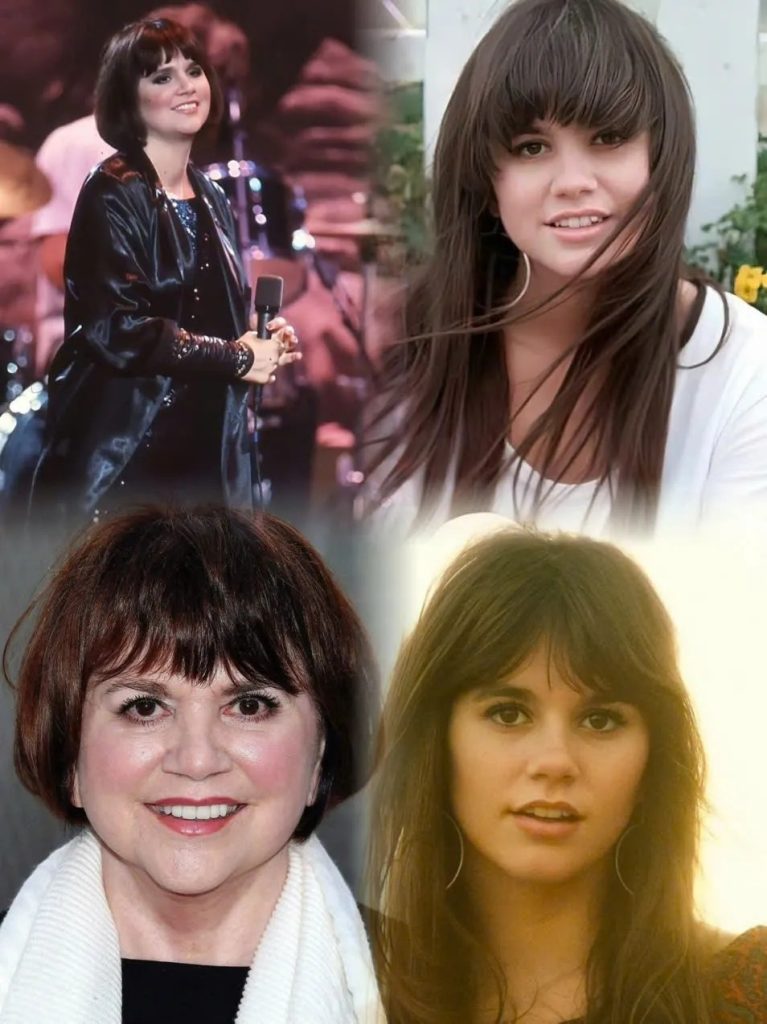
In the long and luminous career of Linda Ronstadt, every song she touched became something uniquely hers — honest, tender, and hauntingly human. Her rendition of “I Fall to Pieces”, originally made famous by Patsy Cline, stands as a powerful reimagining that transcends imitation. Ronstadt doesn’t simply sing the song — she lives it, wrapping her voice around every fragile syllable as if the heartbreak were her own.
Released during a period when Ronstadt was already a leading force in country-rock and pop, “I Fall to Pieces” reintroduced her audience to her country roots while reaffirming her mastery of emotional storytelling. What makes her version remarkable is the way she balances strength and vulnerability. There is no theatrical sadness here — only the quiet ache of someone learning to breathe through loss. Her phrasing, both restrained and trembling, paints heartbreak not as tragedy but as truth — something that lingers, reshapes, and humbles the human soul.
Ronstadt’s approach to this classic mirrors her lifelong gift: the ability to bridge eras and genres without losing sincerity. Where Patsy Cline’s original was steeped in traditional country melancholy, Ronstadt’s interpretation carries the warmth of California’s soft-rock glow and the intimacy of a folk confession. The result feels timeless — as though the song were being sung not just for one lost love, but for every heart that has ever tried to mend itself.
Listening to “I Fall to Pieces”, one can’t help but sense Ronstadt’s empathy. Her voice, crystalline yet textured with emotion, turns the pain of separation into something beautiful. Each note falls delicately, as if trying not to disturb the silence left behind by love’s absence. This is not merely a cover — it is a dialogue between two great women of country music, separated by time but united by truth.
Beyond the performance, the song also reflects Ronstadt’s fearless artistry. She was never content to rest within one genre or one emotional tone. Her career — from rock and country to mariachi and jazz standards — reveals a woman unafraid to feel deeply and express boldly. “I Fall to Pieces” becomes, in her hands, both tribute and transformation — a reminder that great songs evolve when they meet a voice brave enough to reshape them.
In the end, Linda Ronstadt’s version of “I Fall to Pieces” is not about falling apart at all. It is about endurance — the way love’s memory softens with time, and how music gives sorrow a voice that still sounds like hope. Through her interpretation, Ronstadt reminds us that heartbreak, when sung honestly, can be an act of grace.
— Written as a reflection on Linda Ronstadt’s timeless artistry and her luminous interpretation of “I Fall to Pieces.”
Video