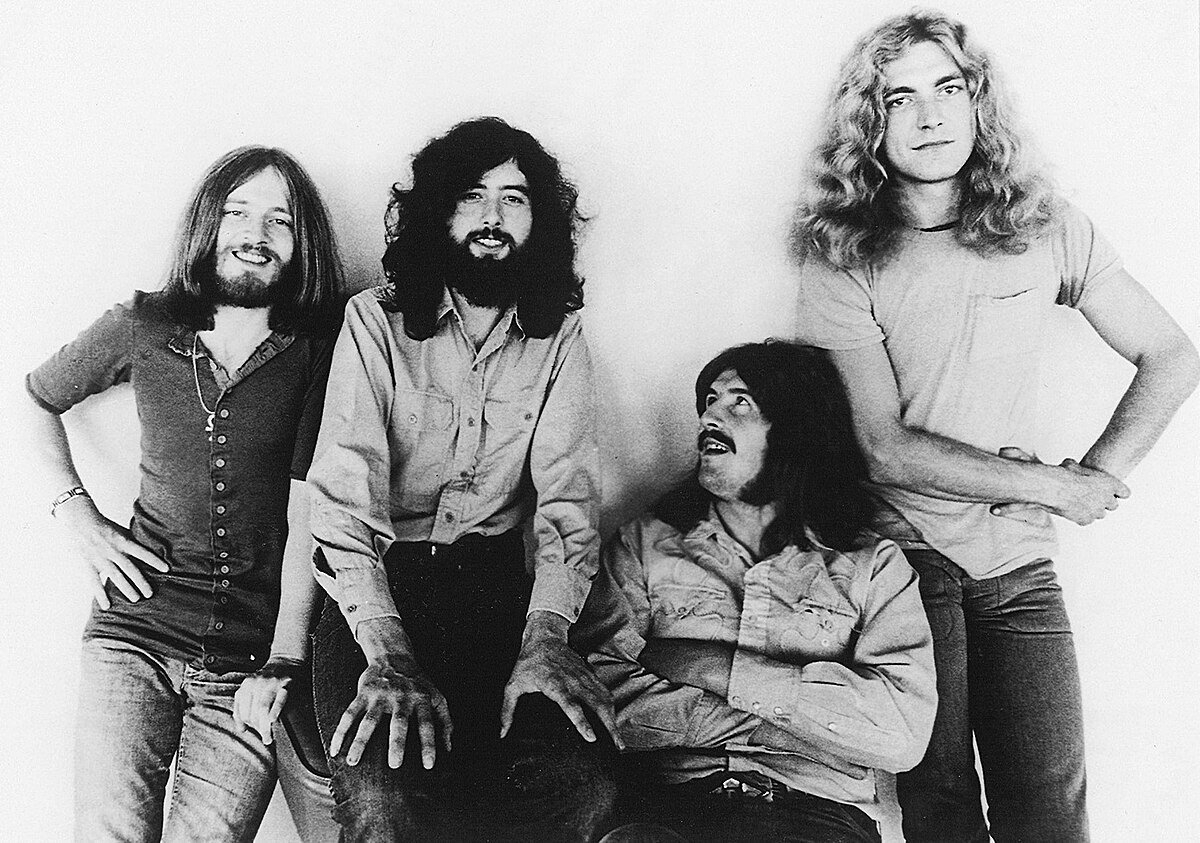
“People always ask who Led Zeppelin really was,” Robert Plant once said. “Really, Led Zeppelin was Jimmy.” He wasn’t being modest — he was being honest. Plant called himself “a great foil,” but the heart of his words was admiration. He knew Page wasn’t just a guitarist; he was an architect of sound, building something wild and holy all at once. “There’s a word,” Plant said, pausing like he was searching the air for it. “Not perpetrator… but he had a premeditated view of the whole thing.” It’s rare to hear one legend speak about another with that much tenderness — like an old friend remembering the spark that started it all. “Without Jimmy, it would have been no good,” he said simply. “He plays from somewhere else. A little left of heaven.” And maybe that’s where Led Zeppelin truly lived — in that space just left of heaven, where genius and madness meet and call it music.

Led_Zeppelin

When Robert Plant talks about Jimmy Page, his tone shifts — softer, almost reverent. It’s not just nostalgia; it’s recognition. “Really, Led Zeppelin was Jimmy,” he once said. “I was a great foil. But the big role was his. The risks were his. The risks made it memorable.”

It’s rare to hear one legend speak of another with that kind of grace. Most bands carry stories of ego clashes and creative tension, but when Plant remembers those days, there’s something else — respect born out of shared danger. Led Zeppelin didn’t just play songs; they built soundscapes that broke the rules. And behind much of it stood Jimmy Page, quietly mapping out chaos.

Plant admits that his lyrics and melodies sometimes pulled the music in directions Page hadn’t planned for, but that was part of the magic. “Even though with my lyrics and some of my melodies it took off in directions he might not have been ready for,” Plant said. “A couple of times later on, when I got more confident, I might have turned his head around a little… but the big role was his.”

What Plant admired most wasn’t just Page’s technique — it was his fearlessness. “When people talk about how good other guitarists are, they’re talking about how they play within the accepted structures of contemporary guitar playing,” he explained. “Pagey plays miles outside of that. He plays from somewhere else. A little left of heaven.”

It’s a phrase that lingers — a little left of heaven. Maybe that’s the best way to describe what made Zeppelin eternal. The band’s sound wasn’t pure perfection. It was raw, unpredictable, human — always reaching for something divine but never losing touch with the dirt and fire below.

Every note Page played carried that mix of beauty and danger. You can hear it in “Stairway to Heaven” — the quiet beginning, the slow build, the way the guitar doesn’t just accompany but ascends. It’s not a song you simply listen to; it’s one you climb.

Robert Plant’s words remind us that great music isn’t about perfection — it’s about the courage to go somewhere uncharted. And Jimmy Page? He never played from the map. He played from that strange, luminous place — just a little left of heaven

0 Shares:
Leave a Reply

Your email address will not be published. Required fields are marked *

You May Also Like
Il Volo
Read More

From the Moment They Began Playing “Capolavoro,” What Was Supposed To Be a Simple Promotional Visit Turned Into an Explosive, Room-Shaking Event. The Intensity of Their Voices Completely Surprised Viewers, Producers, and Even Seasoned Experts. But Halfway Through the Song, There Was an Abrupt and Stunning Change That Left Everyone Frozen.

Il Volo’s “Capolavoro” on Radio Italia Live: A Performance That Took Our Breath Away 15 Years, One Voice,…
toby-keith
Read More

HE FILLED STADIUMS WITH SONGS — BUT HIS TRUE STORY LIVED FAR FROM THE STAGE. It begins with Don’t Let the Old Man In — not as a performance, but as a truth spoken quietly For Toby Keith, the noise was never the point. Onstage, he stood tall and loud. Away from it, he softened. He learned when to speak plainly, when to stay still, and when silence carried more weight than another chorus. Late in life, strength changed shape. It stopped proving and started preserving. The songs became fewer, but truer. Less about winning, more about keeping what mattered intact. He filled stadiums, yes. But the story that lasted was written far from the lights — in honesty, restraint, and the quiet courage to let things be.

“Scroll down to the end of the article to listen to music.” Introduction There’s a certain magic when…
Bob dylan
Read More

At 84 years old, Bob Dylan proved he can still leave a crowd speechless. Kicking off the Outlaw Music Festival in Saratoga Springs, NY, the music legend stunned fans by reaching deep into his past and opening with “Positively 4th Street”—a song he hasn’t performed in more than 35 years. The moment hit like a thunderclap. After nearly seven decades on stage, most artists would be leaning on the familiar, but not Dylan. With one bold choice, he turned an ordinary concert into living history, reminding everyone why his name still carries weight after all this time. For the audience, it wasn’t just a song—it was a once-in-a-lifetime moment they’ll be talking about for years.

A Surprise Start at the Outlaw Music Festival After nearly seven decades of performing, music icon Bob Dylan…
Joe Diffie, Toby Keith, and Luke Combs
Read More

“Sing me back home before I die…” The lyrics were just a story, but on that stage, Toby Keith turned them into a prayer. He stood beside Merle Haggard not as a superstar, but as a man sensing his own final walk was near. He didn’t try to outshine the legend; he clung to the melody like a lifeline, as if begging the music to make his own “old memories come alive” one last time. His eyes held a haunting secret—a silent admission that he, too, would soon need a song to guide him into the dark. We thought he was honoring Merle, but was he actually rehearsing his own goodbye? The chilling truth behind that performance changes every note…

“SING ME BACK HOME BEFORE I DIE…” — THE NIGHT TOBY KEITH TURNED A MERLE HAGGARD SONG INTO…