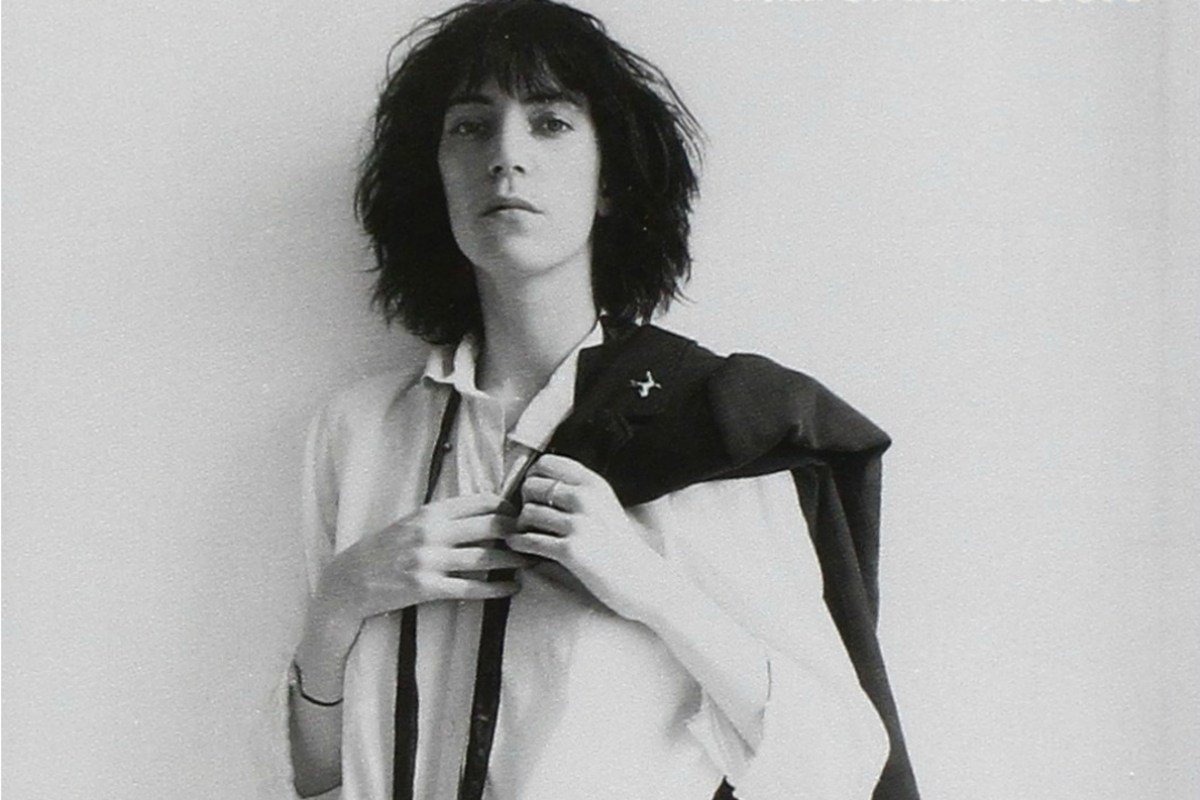
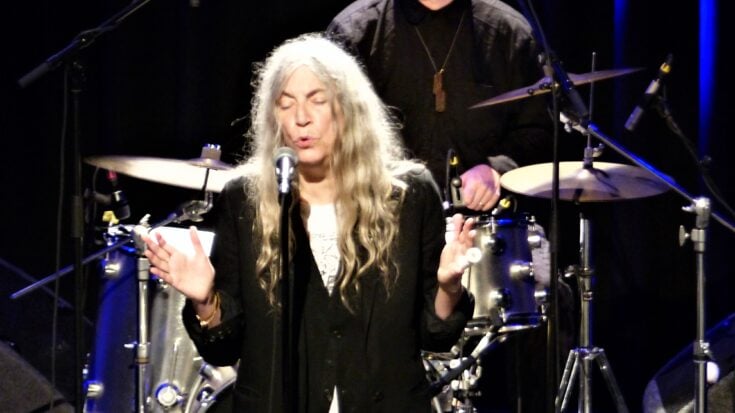
Patti Smith, the legendary ’70s rocker and often called the Godmother of Punk, just shocked fans in the best way possible. At 78 years old, she stepped onstage and delivered a mind-blowing cover of a classic hit by The Who—so powerful and raw that the crowd practically stopped breathing. People came expecting a good performance, but what they got felt like a lightning bolt. Her voice, still fierce and full of fire, tore through the song like she owned it, leaving fans cheering, crying, and wondering how someone pushing eighty can still shake a room like that. It wasn’t just a cover—it was a reminder that Patti Smith is still a force you don’t dare underestimate.

patti smith

Photo by Elekes Andor, CC BY-SA 4.0, via Wikimedia Commons

A Surprise Throwback on Stage

Often hailed as the Godmother of Punk, Patti Smith has long been seen as a defining voice of her era. So it felt fitting when her recent concert featured her take on one of The Who’s most famous tracks: “My Generation.”

A video posted to Instagram by Leather Saints Archive captured the moment from Smith’s Nov. 22 show at the Beacon Theatre in New York City. The clip showed Smith, now 78, singing and playing guitar as she tackled the 1965 classic. According to the caption, it marked her first time performing the song on her current tour. She was joined by a full band that included guest guitarist Charlie Sexton, known for his work with Bob Dylan.

Fans React to the Powerful Rendition

Tough Facts About Patti Smith, The Punk Rock Poet

Reaction in the comments was immediate. One viewer called it a “mind blowing moment,” while another wrote, “Thank you for sharing this. May or may not have tears in my eyes.” Others praised her energy, with one person declaring, “She is ageless.” Another simply asked, “Could I love her more?”

Longtime followers of Smith know her connection to the song runs deep. She has been covering “My Generation” since the ’70s, and her 1976 single “Gloria” even included a live recording of the tune from Cleveland as its B-side.

Keep going for the video below:


Pete Townshend’s Complicated History With ‘My Generation’

Although the song remains tied to The Who, not everyone in the band has enjoyed playing it over the years. Guitarist Pete Townshend admitted as much during a March 2025 episode of the Switched on Pop podcast.

“I hate playing it,” Townshend said. “Well, I think for the band members, for me and the band members, it became a burden.”

He explained that by their late 20s, the band was still closing shows with the track. “It felt to us that the conversation was over,” he said.

The Meaning Behind the Song’s Style

Townshend reflected on how the song’s message fit — or didn’t fit — the times. “When we first went to New York in 1967, there were kids who were being called up for Vietnam, but the Vietnam issue was over and we were still doing ‘My Generation’ on the stage,” he recalled. He added that the band’s trademark smashing of instruments continued throughout 1968, even as the cultural moment shifted.

Some listeners criticized the song early on, believing Roger Daltrey’s stuttered delivery mocked people with speech disorders. Townshend pushed back on that idea. “It wasn’t meant to be a piss-take,” he said.

Townshend Clears Up Misunderstandings

He pointed to the way bands handled serious questions in interviews at the time. “When you look at early interviews with The Beatles, what they did is every time they were asked a serious question, they made a joke,” he said. Townshend noted that while he tried to answer sincerely, there were topics he avoided. He added that the stutter in the song came from his own experiences: “It was meant to be that I grew up in this group of boys who took so much amphetamines that they couldn’t speak.”

Even with early criticism, “My Generation” grew into one of rock’s most recognizable anthems — and Smith’s recent performance showed that its impact continues to echo decades later.

 

0 Shares:
Leave a Reply

Your email address will not be published. Required fields are marked *

You May Also Like
Ritchie Blackmore
Read More

RITCHIE BLACKMORE BREAKS HIS SILENCE — After Falling Ill, The Guitar Legend Shares A Statement Filled With EMOTION Fans Have Never Heard From Him Before. A Rare, Vulnerable Confession From One of Rock’s Most Untouchable Icons Has Shaken Deep Purple & Rainbow Fans Worldwide. THIS Is the Message That Left the Rock Community in Absolute Silence.

Blackmore’s Night axed all upcoming shows © Getty Ritchie Blackmore Author: Scott ColothanPublished 9 hours ago Deep Purple and Rainbow legend Ritchie…
CLIFF Richard
Read More

Today we’re celebrating a true classic — the anniversary of “Travellin’ Light,” the song that marked a turning point for Cliff Richard and The Shadows and helped shape the sound of a brand-new era in British music. Long before stadium tours and decades of hits, this gentle, breezy track showed the world a different side of Cliff — smoother, softer, and backed by the unmistakable magic of The Shadows’ signature guitar work. It was the moment when everything clicked: Hank Marvin’s clean, melodic tone, Bruce Welch’s tight rhythm, Jet Harris’ steady bass, and Cliff’s warm voice blending into something timeless. “Travellin’ Light” didn’t just top charts — it became a milestone, proving that British artists were ready to carve out their own place in music history. For fans who remember the first spin, and new listeners discovering its charm today, the song still feels like a breath of fresh air. It’s simple, iconic, and a reminder of how early British pop found its footing and began to soar. And the surprising story behind how this song was recorded — and why it almost didn’t happen — makes this anniversary even more special

Happy Anniversary to “Travellin’ Light”: The Song That Sent Cliff Richard & The Shadows Into Music History Some…
phil-collins
Read More

Phil Collins took his seat behind the drums, the arena fell silent — and then chaos was unleashed; “Drums, Drums & More Drums” wasn’t just percussion, it was an earthquake in rhythm, each strike a thunderclap that shook the rafters and rattled hearts; sweat poured as Collins attacked the kit like a man possessed, summoning storms, wars, and oceans with his sticks, while the crowd rose to their feet as if pulled into the ritual; some screamed, others simply stared wide-eyed, knowing they were watching more than music — they were witnessing a man bend time with raw sound; critics gasped it was “the most primal performance ever staged,” while fans online hailed it as “a drum solo that could end civilizations”; and when the final crash echoed into silence, one truth lingered — Phil Collins didn’t play the drums, he conquered them.

Phil Collins Unleashes “Drums, Drums & More Drums” — Rhythm as Revolution The arena lights dimmed, and an…