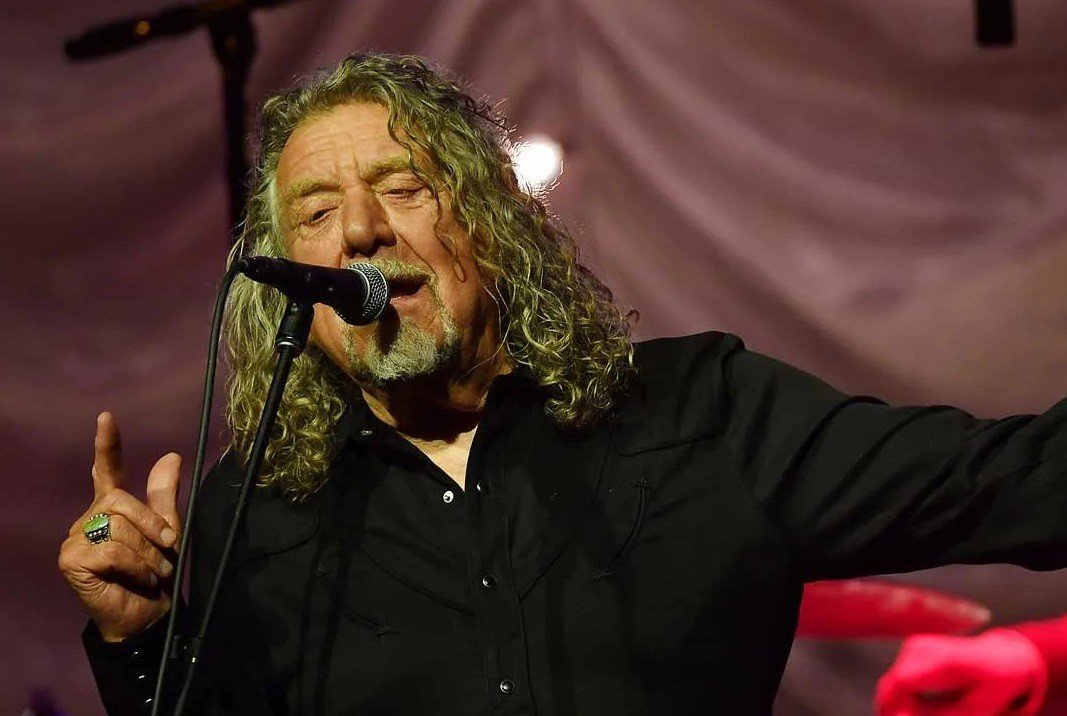
On a chilly Halloween afternoon, Robert Plant — the voice that once roared across stadiums, festivals, and entire generations — walked into NPR’s Tiny Desk studio and instantly changed the atmosphere. No grand lighting. No arena-sized monitors. No towering amps. Just a raw setup, a few instruments, and the hum of a small room waiting for magic.

Plant looked around, took it all in, and with a mischievous smile delivered the line that instantly stole the show:
“This is just like Live Aid. I couldn’t hear myself there either.”
The room erupted in laughter — the kind of laughter that comes from recognizing greatness wrapped in humility. Tiny Desk doesn’t amplify or use monitors, meaning artists hear themselves exactly as the room hears them. For Plant, this stripped-down, unfiltered setup triggered a memory that defined a musical era.

And the way he said it — casual, warm, almost nostalgic — reminded everyone that even legends have moments where the stage feels imperfect.
But that was the beauty of it.
For a man whose voice once soared above the decibels of thousands, performing in a space small enough to hold a classroom felt shockingly intimate. No theatrics. No pressure. Just Plant, his musicians, and the sound of pure craftsmanship.
Witnesses say the energy shifted the moment he settled in. He leaned in close to the mic, eyes sparkling, embracing the vulnerability of the moment rather than fighting it. Fans watching online later said it felt like “being invited into his living room” — a rare chance to hear one of rock’s greatest voices without the noise of spectacle.
Between songs, he shared quiet jokes, tiny stories, and glimmers of the history he carries with him. The Live Aid callback became the unofficial highlight — not because it was dramatic, but because it was human. A reminder that even on one of the biggest stages on Earth, he had moments just like everyone else: lost in the noise, relying on instinct, trusting the music.
At Tiny Desk, the noise fell away.
And the man behind the myth stepped forward.
No amps.
No monitors.
Just Robert Plant — and a moment that felt like history breathing again.