Introduction
Pop music loves its illusions. Beneath sparkling synths and polished harmonies, it hides wounds deep enough to split a family forever. And in 1989, when the Bee Gees released Wish You Were Here, the world heard a soft late-’80s ballad—pretty, nostalgic, radio-friendly.
But they didn’t know the truth.
This wasn’t a love song.
It was a eulogy.
A funeral disguised as a pop hit.
A brother’s scream buried inside a melody.
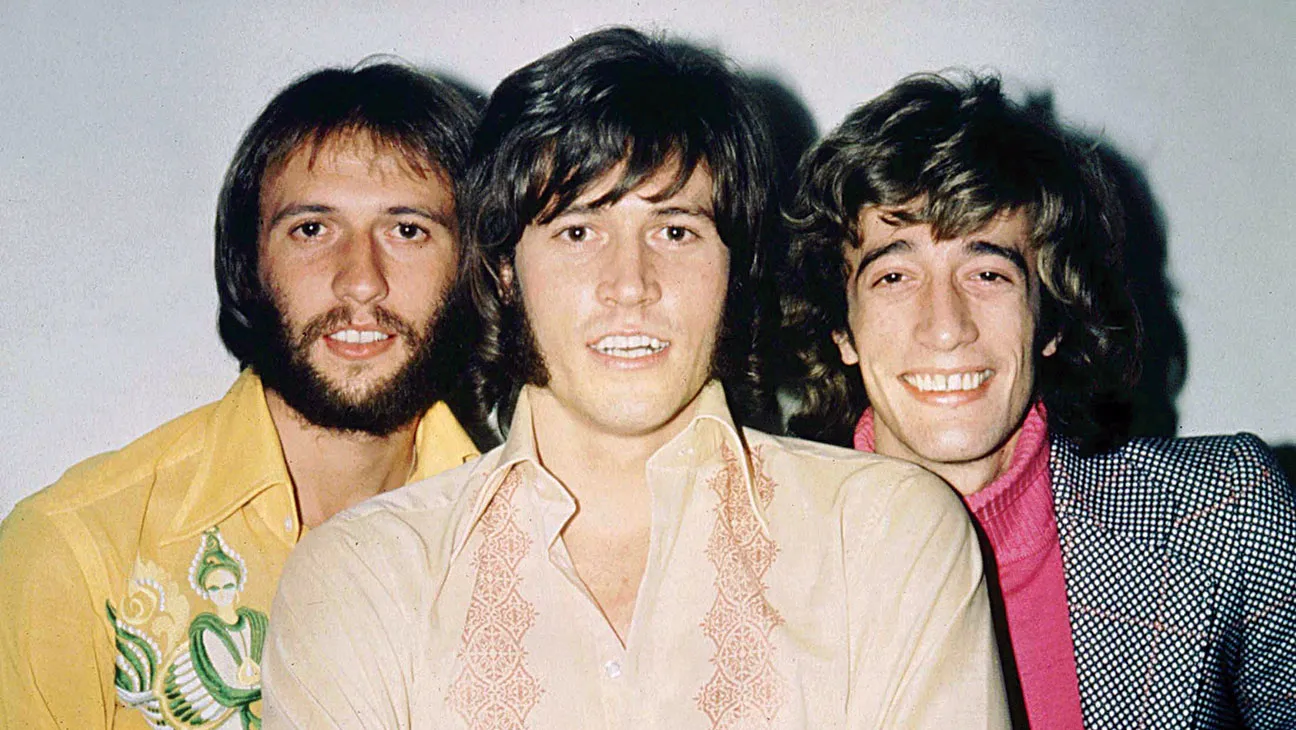
A secret elegy for the “fourth Bee Gee”, a boy whose light was so blinding that it burned him alive.
This… is the story of Andy Gibb, the golden child never allowed to grow old.
This is the story of the three brothers who tried to out-sing grief itself.
This is the story of a song written for a ghost.
⭐ THE DREAM THAT DIED AT 30
On March 10, 1988, only five days after his 30th birthday, Andy Gibb—the youngest Gibb brother, the rising superstar, the one they always described as “made of sunshine”—died from myocarditis, a heart inflammation worsened by years of emotional turmoil and substance abuse.
What the public never fully understood was this:
👉 Andy was only weeks away from officially joining the Bee Gees as their fourth member.
👉 The papers had already been drafted.
👉 The reunion was planned.
👉 The world would finally see all four brothers on stage—together.
Instead of rehearsing harmonies, the Bee Gees prepared for a funeral.
Barry Gibb, shattered and trembling, later admitted:
“We were writing for the new album when Andy died. We had no idea how to come back from that. ‘Wish You Were Here’… that was the only way we knew how to say goodbye.”
Those words would haunt him for the rest of his life.
⭐ A BROTHER’S GUILT
Barry carried the heaviest burden.
He was the eldest.
He was the leader.
He was the one who pulled Andy into the spotlight—a spotlight that became a furnace.
The guilt soaked deep into the lyrics.
When Barry sings:
“Try to throw it away and I just can’t let go…”
—he isn’t whispering about a lost love.
He’s confessing the weight of brotherhood, the grief that clings like gravity.
Professionals call it survivor’s guilt.
Barry simply called it Andy.
⭐ THE STUDIO THAT TURNED INTO A SHRINE
After burying Andy, the brothers did what they always did when their world collapsed:
They went back to the studio.
The album One became their lifeline.
The studio became a sanctuary, a confessional booth, a pressure chamber of grief.
Maurice Gibb, always the mediator, later revealed:
“We honestly didn’t know if we could keep going. We were broken. ‘Wish You Were Here’ was the hardest thing we ever recorded. But it was also the most important. It was for Andy.”
Inside the booth, the air was thick—mourning turned into music.
🔹 The drum loop mimicked a heartbeat.
🔹 The synths floated like a memory you can’t hold.
🔹 Barry’s voice cracked with grief on take after take.
🔹 Robin and Maurice layered harmonies meant to “fill the space Andy should have stood in.”
The entire song was designed to sound full—yet incomplete.
Like a family photo with one face missing.
⭐ THE LYRICS THAT WERE NEVER MEANT FOR US
Let’s be clear: the Bee Gees never intended this track to be just another single.
They were writing a private message to Andy.
When Barry sings:
“Summer sunshine keeps running through my mind…”
it’s not poetic nostalgia.
It’s memory.
The line “And I can feel you, and I can see your face” was written the night Barry swore he saw Andy’s silhouette in the reflection of the studio window.
He told friends the room felt “crowded,” though only three brothers remained.
⭐ A POP SONG THAT MISLED THE WORLD
America heard a soft ballad.
Europe heard a radio hit.
Fans played it at graduations, farewells, road trips, weddings.
But if you listen with the truth in mind, the tone shifts.
It transforms from a love song to a haunting.
This wasn’t about lovers separated.
This was about brothers divided by death.
Wish You Were Here was not universal at first.
It became universal.
Because loss is something every human eventually understands.
⭐ AND THEN THE WORLD LOST TWO MORE
What makes the song unbearably tragic today is that its meaning has evolved.
🔹 In 2003, Maurice died suddenly at 53.
🔹 In 2012, Robin died at 62.
And so the brother who wrote the song for the first ghost became the last one left behind.
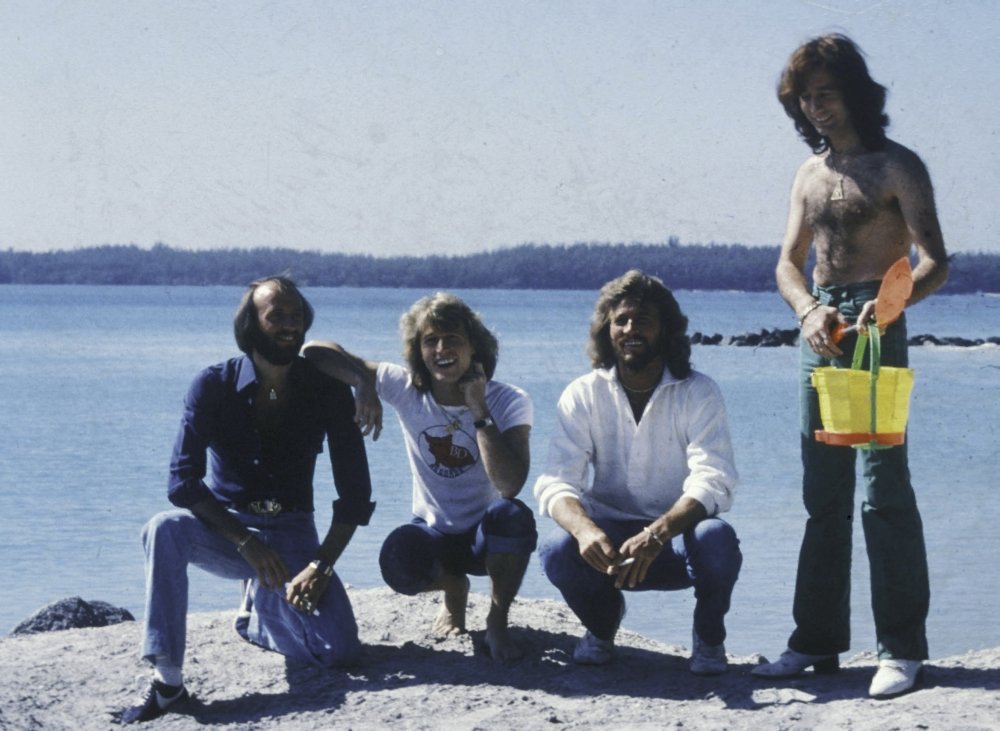
Today, Barry Gibb stands alone—the final surviving Bee Gee—singing a song originally written for one lost brother, now echoing for three.
When he performs Wish You Were Here in his acoustic concerts, he often stops before the final chorus.
The audience thinks he’s emotional.
The truth is simpler, crueler:
The song no longer has a direction.
It’s not one ghost he’s singing to—
It’s all of them.
Barry once told a journalist:
“I look to the side of the stage and expect them there. It’s like I’m singing into that empty space.”
The shadow of the fourth brother never left.
But now it’s joined by the shadows of the second and third.
⭐ WHY THIS SONG STILL HITS LIKE A KNIFE
Because the Bee Gees were not a brand.
They were not a disco act.
They were not a pop machine.
They were brothers.
Brothers bound by harmony, ambition, trauma, and an almost telepathic musical connection.
Wish You Were Here is the purest distillation of that bond.
A song written from the center of a heartbreak that never healed.
The synth sheen may have aged.
The mixing may sound dated.
But the pain?
Timeless.
It remains one of the most devastating brother-to-brother tributes ever recorded in popular music.
And it all began with a boy who was supposed to walk into the studio… but never did.
⭐ A FINAL QUESTION FOR THE NEXT CHAPTER
If this was the song that said goodbye to Andy—
—what song will Barry someday choose to say goodbye to the era, the band, and the dream that built the Bee Gees?
(story to be continued…)
Video