Los Laureles — a voice finding its roots again, blooming with memory, dignity, and the colors of old Mexico
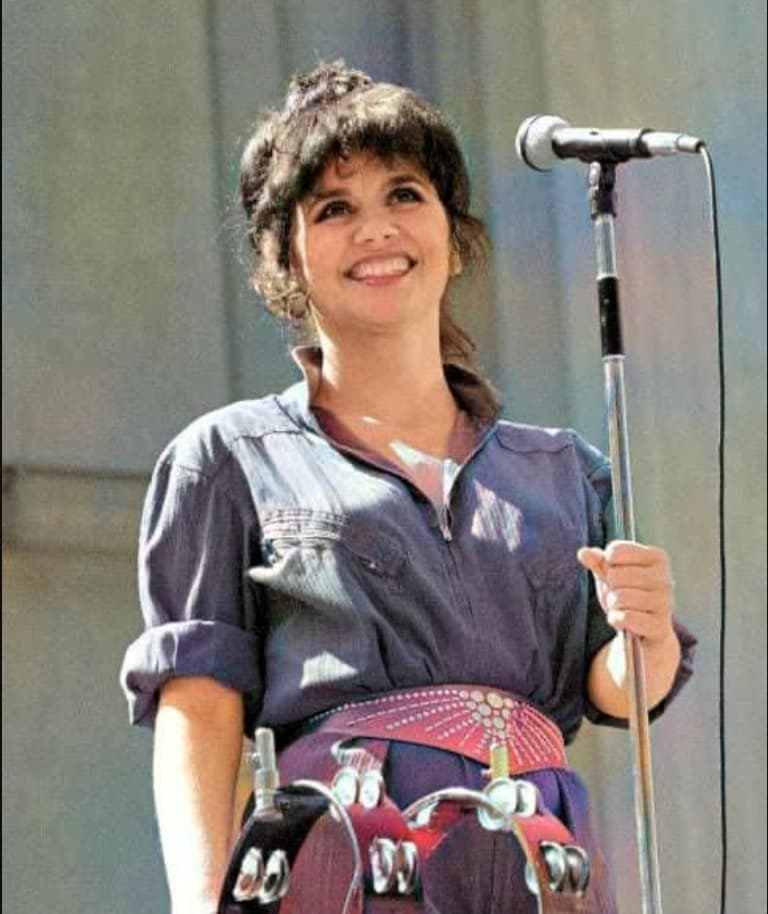
There is a moment — the very first moment — when Linda Ronstadt begins “Los Laureles”, and you can feel an entire heritage breathe through her. It is not just a performance. It is an awakening. A returning. A voice recognizing the landscape it came from. Recorded for her landmark album Canciones de Mi Padre in 1987, “Los Laureles” stands as one of the most radiant pieces in her exploration of traditional Mexican ranchera music. Although the album itself became the best-selling non-English record in American history at the time, individual tracks were not released as charting singles. But within the album’s emotional arc, “Los Laureles” holds a place of honor — a fierce, proud, heart-on-its-sleeve celebration of cultural memory.
To understand the depth of this performance, one must understand where it came from. Ronstadt grew up in Tucson, hearing her father sing the old songs of Sonora, learning melodies that drifted across generations. For many years she carried these songs inside her, quietly, like seeds waiting for the right season. When she finally stepped into the studio to record Canciones de Mi Padre, it was not a career move — it was a homecoming. And among all the songs she chose, “Los Laureles” captures her spirit at its most joyful and defiant.
The track itself is a traditional ranchera standard, known throughout Mexico as a song of pride, heartbreak, and emotional candor. But in Ronstadt’s hands, it becomes something more — both a tribute and a declaration. She sings with a clarity that shines like sunlight on a desert morning, lifting every phrase with remarkable control, strength, and authenticity. This is not imitation; this is inheritance. Her voice honors the mariachi tradition while bringing to it the full emotional weight of her own life story.
What strikes the listener most is how fearlessly alive she sounds. The arrangement bursts with trumpets, strings, and rhythmic precision — the unmistakable sound of mariachi at full bloom. Yet through that vibrant orchestra, Ronstadt’s voice remains the unshaken center, moving from tenderness to fire in a single breath. She sings not as an outsider learning the language, but as someone who has carried that language in her blood since childhood.
There is also a deep sense of courage in this song. By the mid-1980s, Ronstadt had already conquered rock, pop, and Broadway. She could have stayed comfortably where she was. Instead, she turned toward a genre rarely embraced by mainstream American audiences, singing in Spanish at a time when few major U.S. artists dared to do so. And she did it with absolute devotion — not bending the music to suit commercial tastes, but giving herself fully to the tradition as it was meant to be sung.
For listeners today, especially those who grew up with her earlier albums, “Los Laureles” can feel like a revelation. It shows a part of her that was always there, waiting to be fully expressed: the pride of heritage, the resilience of family memory, the love for the songs that shaped her earliest understanding of the world. When she reaches the song’s soaring final lines, it is as though the past and present merge — her father’s voice, the old family gatherings, the dusty Sonoran wind, all rising through her as one.
What “Los Laureles” ultimately offers is not nostalgia alone, but continuity. It reminds us how music preserves the stories of who we are and where we come from. Ronstadt didn’t simply record a beautiful rendition; she preserved a piece of cultural soul, handing it forward to anyone willing to listen with an open heart.
And in that generous gesture, we too find ourselves rooted — sheltered for a few minutes in the warmth of a voice that sings not just a song, but a legacy.
Video