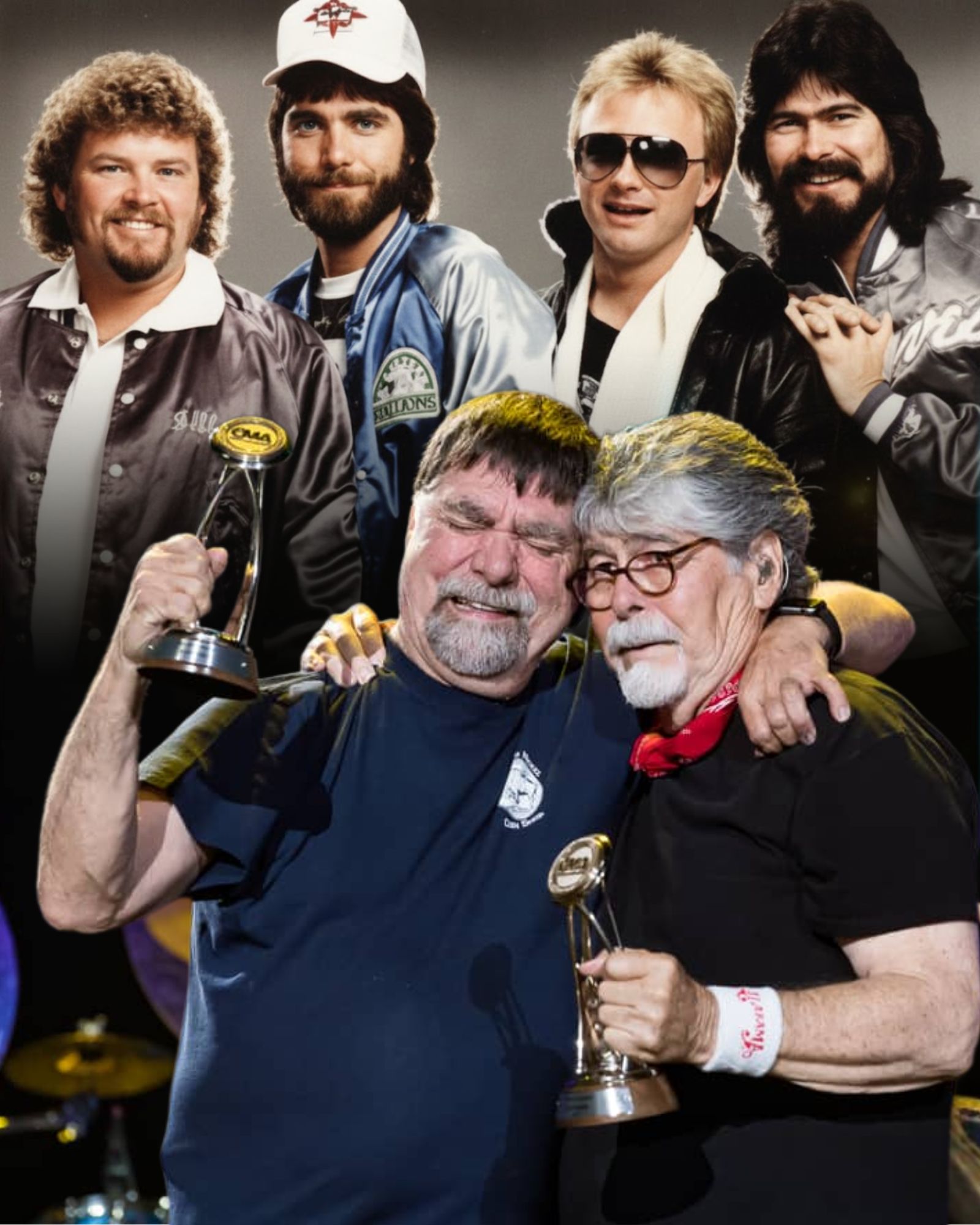
“30 NO.1 SONGS IN JUST 11 YEARS — AND IT STARTED IN A SMALL ALABAMA TOWN.” They were just cousins from Fort Payne. Teenagers. Old cars. Cheap guitars. They called themselves Wildcountry and played wherever someone would listen. In 1977, they chose a new name — Alabama — and never chased trends after that. They played. They sang. All of them. No hired hands. No shortcuts. Between 1980 and 1991, 30 songs climbed to No.1. But what stayed mattered more. Songs about home. Work. Quiet pride. When June Jam drew 60,000 people back to their hometown, it didn’t feel like a concert. It felt like a reunion. Some bands chase history. Alabama let history walk beside them. 🎶

jamey Johns

“30 NO.1 SONGS IN JUST 11 YEARS — AND IT STARTED IN A SMALL ALABAMA TOWN.”

Before the records.
Before the awards.
Before anyone knew their name.

They were just cousins from Fort Payne, Alabama.
Teenagers with more time than money. Old cars that barely made it down the road. Cheap guitars that stayed slightly out of tune. They called themselves Wildcountry and played wherever someone would listen — small bars, school gyms, anywhere a song could land without asking permission.

There was no master plan. No industry roadmap.
Just three voices that fit together naturally, like they always had.

In 1977, they chose a new name — Alabama. Not because it sounded big. Because it was honest. And from the beginning, they made one quiet decision that changed everything: they wouldn’t chase trends. They wouldn’t dress up the sound or hire someone else to play what they already knew how to feel.

They played.
They sang.
All of them.

No hired hands. No shortcuts. That mattered.

When country music leaned toward polish, Alabama leaned toward home. Songs about work boots by the door. About love that stayed quiet instead of loud. About pride that didn’t need explaining. Their music didn’t ask for attention — it earned trust.

Between 1980 and 1991, thirty singles climbed to No.1.
Thirty.
In just eleven years.

But numbers were never the point.

What stayed mattered more than what charted. These were songs people didn’t just hear — they carried them. To factories. To back roads. To kitchens late at night when the house was finally quiet.

And when June Jam brought 60,000 people back to Fort Payne, it didn’t feel like a concert. There were no walls between the stage and the crowd. It felt like a reunion. Neighbors. Families. Strangers who somehow knew every word.

Alabama didn’t arrive from somewhere else.
They came back.

Some bands chase history — trying to leave a mark big enough to last. Alabama never ran after it. They walked beside it. Step by step. Song by song. Letting it grow naturally, the same way they always had.

And maybe that’s why, decades later, their music still feels close.

Video

0 Shares:
Leave a Reply

Your email address will not be published. Required fields are marked *

You May Also Like
bruce springsteen
Read More

“SHE’S THE ONLY PERSON WHO CAN BREAK ME OPEN LIKE THIS…” Bruce Springsteen whispered those trembling words the moment his daughter placed her small hand in his — and in an instant, the entire stadium turned into a cathedral of pure emotion. He’d been the untouchable legend all night, the leather-clad icon who could command a crowd of hundreds of thousands with a single guitar riff… until she walked out. Barefoot. Smiling. Shy — but glowing with a kind of innocence that melted every hard edge around him. And then it happened.

Bruce Springsteen’s Heartfelt Dance With His Daughter Jessica: A Once-in-a-Lifetime Moment That Still Moves the World There are…
BRIAN
Read More

At a commemorative concert in London, Brian May stepped out, his signature white curls glowing, clutching his weathered Red Special guitar. By his side stood Roger Taylor. But the true center of attention was a haunting void in the middle of the stage—a lone, upright microphone stand with no one behind it. The music began. “Love of My Life.” Brian plucked the strings, the notes ringing out with heartbreaking sorrow. He didn’t sing. Instead, he let 80,000 fans fill the silence, singing Freddie Mercury’s part for him. Brian closed his eyes, tilting his head toward the heavens as if communing with an old friend. For a moment, it felt like Freddie was really there—right beside him, draped in his royal cape, conducting this colossal choir. When the song faded, Brian walked slowly toward that empty microphone and made a gesture that moved even the toughest men to tears…

In the world of rock and roll, silence is usually the enemy. Concerts are built on noise—the roar…