On a chilly day in London, the city moved as it always did — busy streets, passing traffic, and the steady rhythm of everyday life. No one expected history to unfold above their heads.
Then, without warning, music drifted down from the rooftop of Apple Corps headquarters on Savile Row. People slowed. Some stopped entirely. They looked up, confused at first, then astonished.
It was The Beatles.
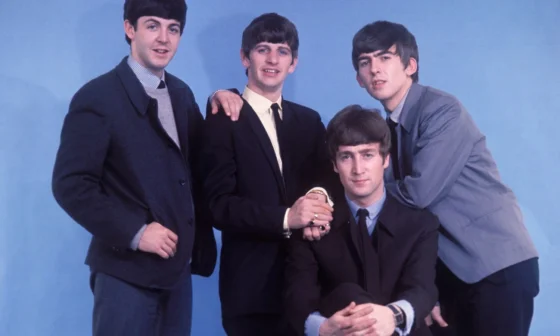
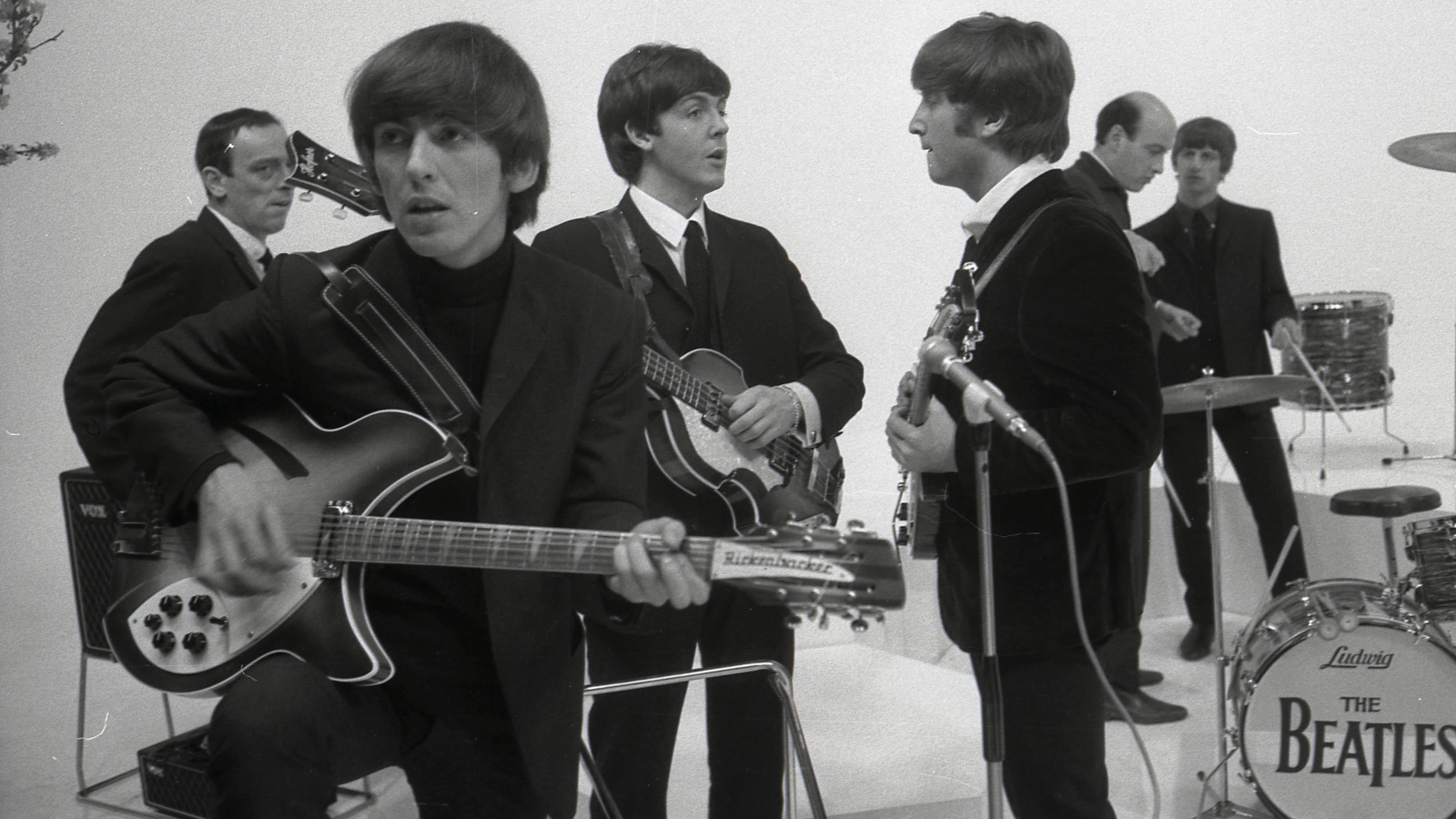
Against the gray winter sky, John Lennon, Paul McCartney, George Harrison, and Ringo Starr stood together one last time, instruments in hand. There was no stage design, no grand announcement — just amplifiers, cables, and a sense of spontaneity that felt almost rebellious.
:max_bytes(150000):strip_icc():focal(999x0:1001x2)/the-beetles-1-1a971bd703a849268568fcf20bee9fe1.jpg)
They began to play.
The sound wasn’t polished for a stadium. It was raw, immediate, and alive. Songs like “Get Back” and “Don’t Let Me Down” echoed between the buildings, turning the business district into an impromptu concert hall. Office workers leaned out of windows. Pedestrians gathered in clusters. Traffic slowed as the music pulled attention upward.
For 42 minutes, the band played as if time had paused.
But down below, not everyone was swept up in the moment. Complaints began to surface. The noise, the disruption — it wasn’t exactly planned or permitted. Soon, police officers made their way into the building, determined to bring the performance to an end.
Up on the rooftop, the band kept going.
There was a quiet defiance in the air. No speeches, no declarations — just music. It was as though they understood, even if they didn’t say it aloud, that this was something final. A closing act not announced, but felt.
The Beatles had changed everything in less than a decade. From small clubs in Liverpool to global phenomenon, they redefined what a band could be. But by the time of this rooftop performance, tensions had grown, and the future was uncertain.
And yet, in that moment, none of it seemed to matter.
They played together — not as headlines or individuals, but as a band. The way it had started.
When the police finally intervened and the music came to a stop, it didn’t feel like an abrupt ending. It felt like a curtain gently falling. There was no formal goodbye, no final bow. Just the lingering sound of a last chord carried across the rooftops of London.
For those who witnessed it, whether from the street or an office window, it was unforgettable. For everyone else, it would become legend — a story passed down, replayed, and revisited through recordings and film.
The rooftop concert wasn’t just their last public performance. It was a statement — that even at the end, The Beatles could still surprise the world.
No tickets. No stage. No expectations.
Just four musicians, a rooftop, and 42 minutes that would never be repeated.