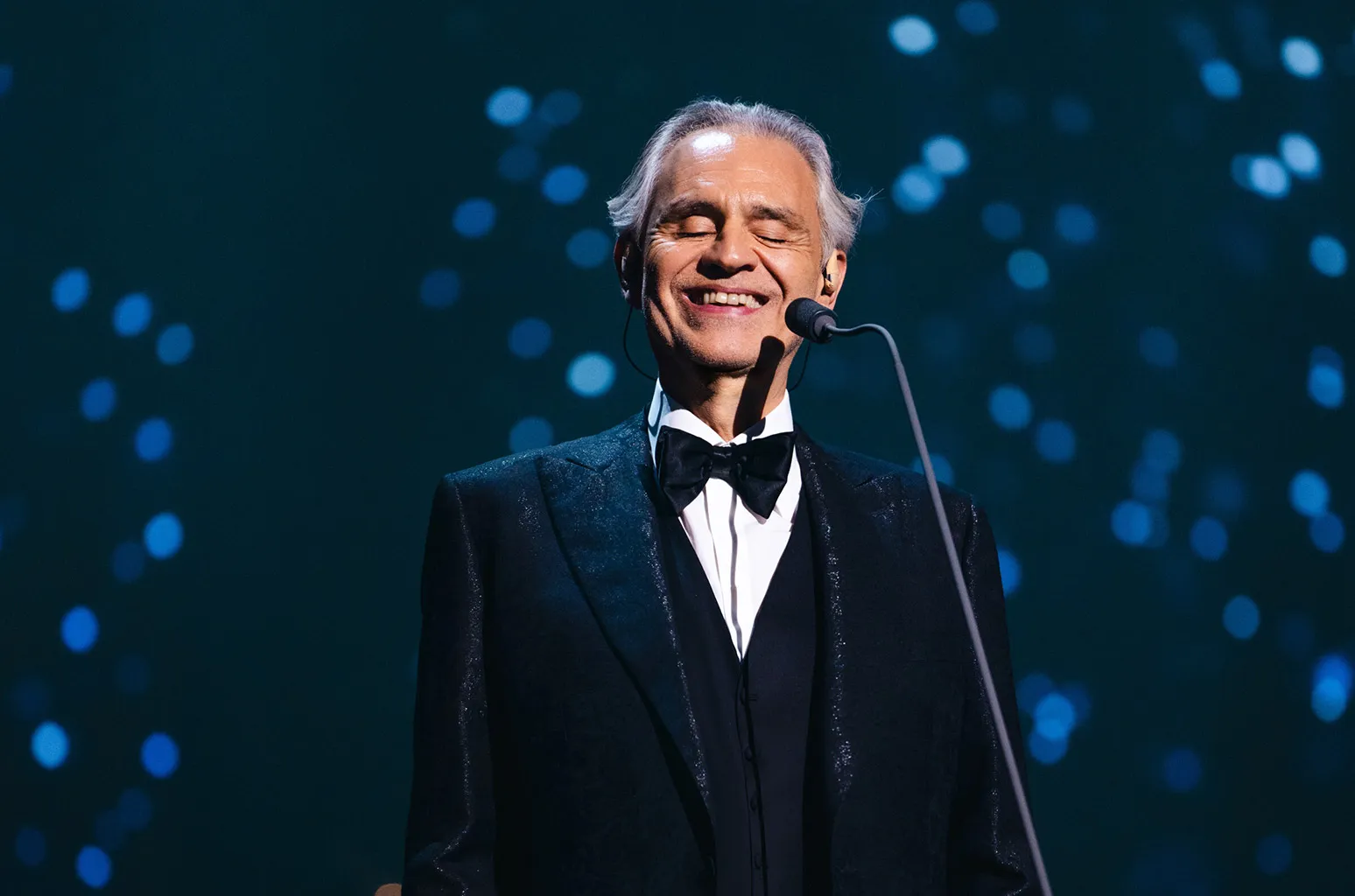
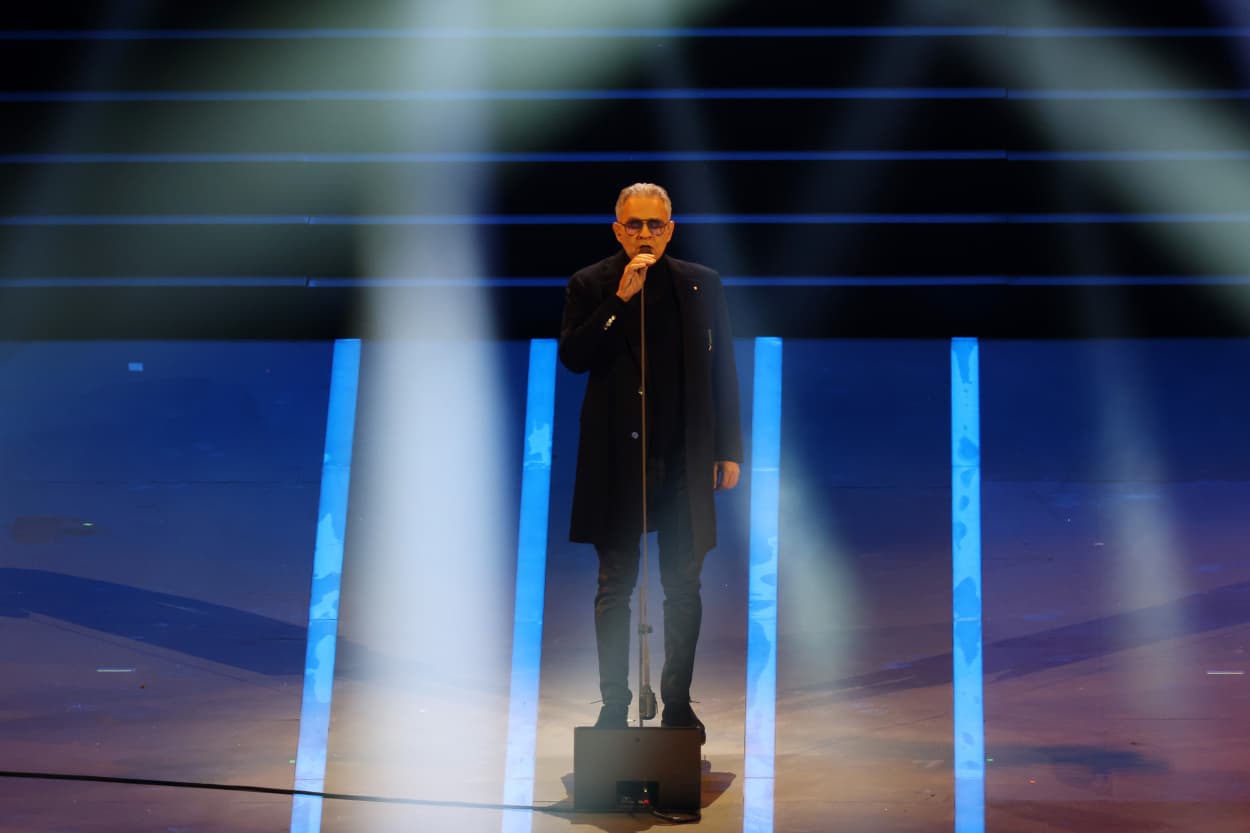
The 2026 Winter Olympics opening ceremony delivered a moment that will be remembered long after the final medals are awarded, as Andrea Bocelli took center stage with a breathtaking performance of Nessun Dorma. As torch bearers entered the stadium ahead of the lighting of the Olympic Cauldron, Bocelli’s voice transformed the ceremony into something far more than spectacle — it became a shared emotional experience felt across the world.
Often described as a song of victory, Nessun Dorma took on new meaning in that moment. Bocelli’s powerful yet tender interpretation elevated the famous final word — “vincerò” (“I will win”) — beyond personal triumph. Instead, it became a collective declaration, a chorus of hope and unity echoing through the stadium and into millions of homes watching the broadcast.

There was no need for elaborate staging or visual distraction. As the orchestra swelled and Bocelli’s voice soared, the focus remained on the emotion itself. Athletes from every nation stood shoulder to shoulder, many visibly moved, as the music underscored what the Olympic Games represent at their core: perseverance, solidarity, and the belief that humanity is stronger together.
Viewers around the globe described the performance as “goosebump-inducing” and “spine-tingling,” with social media quickly filling with clips and reactions. Many noted how the aria’s message — sung in Italian yet universally understood — perfectly captured the spirit of the Games.
Andrea Bocelli, who has long been associated with moments of profound global significance, delivered the performance with remarkable restraint and grace. His voice, rich with experience and emotion, carried a quiet authority that commanded the stadium without overpowering it. Each note felt deliberate, each pause meaningful.
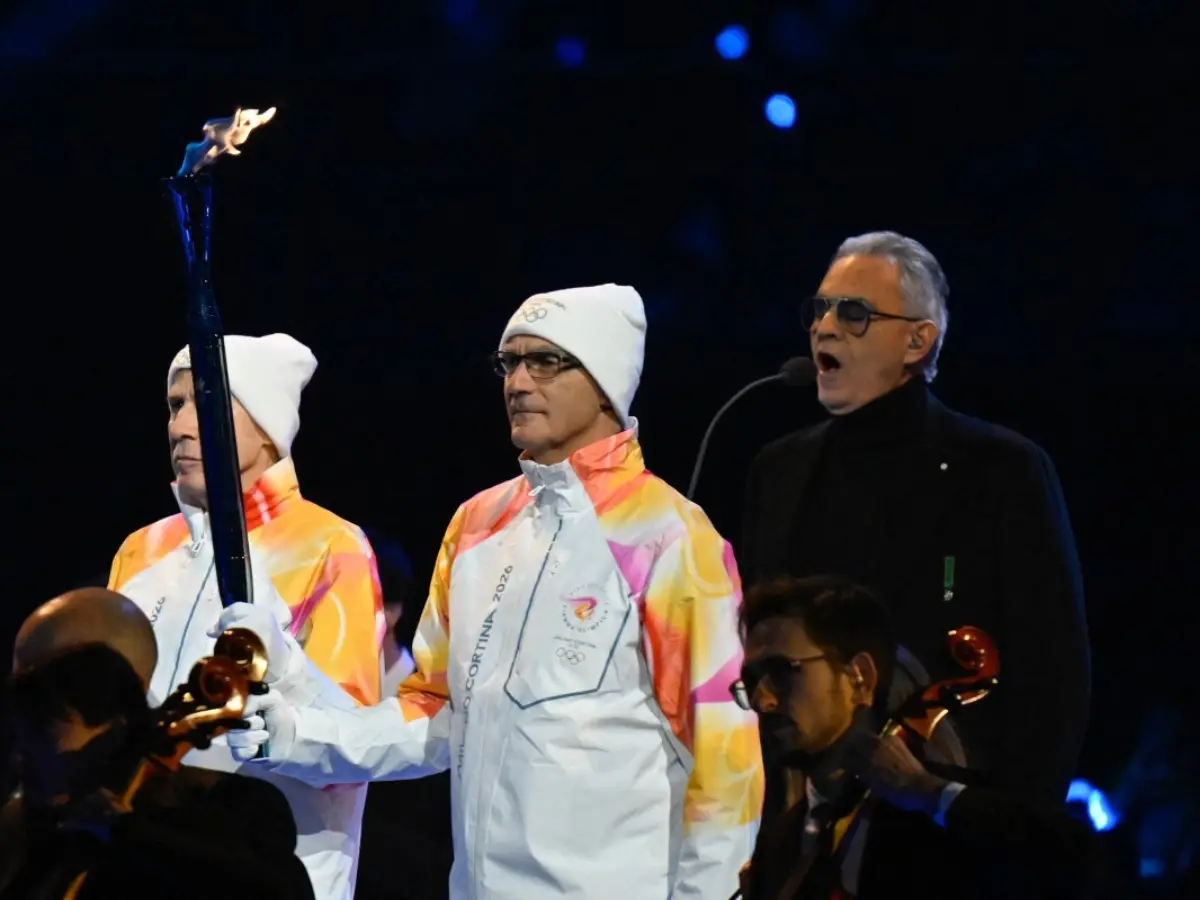
The timing could not have been more symbolic. As the torch made its way toward the cauldron, representing continuity from past Games to the present, Bocelli’s voice served as a bridge between tradition and the future. The music did not celebrate domination or defeat, but something far more enduring — the triumph of human connection.
Olympic organizers later described the performance as a defining moment of the ceremony, chosen specifically to reflect the Games’ theme of unity through diversity. While athletes compete fiercely on the ice and snow, the opening ceremony reminded the world that the Olympics are not about who loses — but about what is shared.
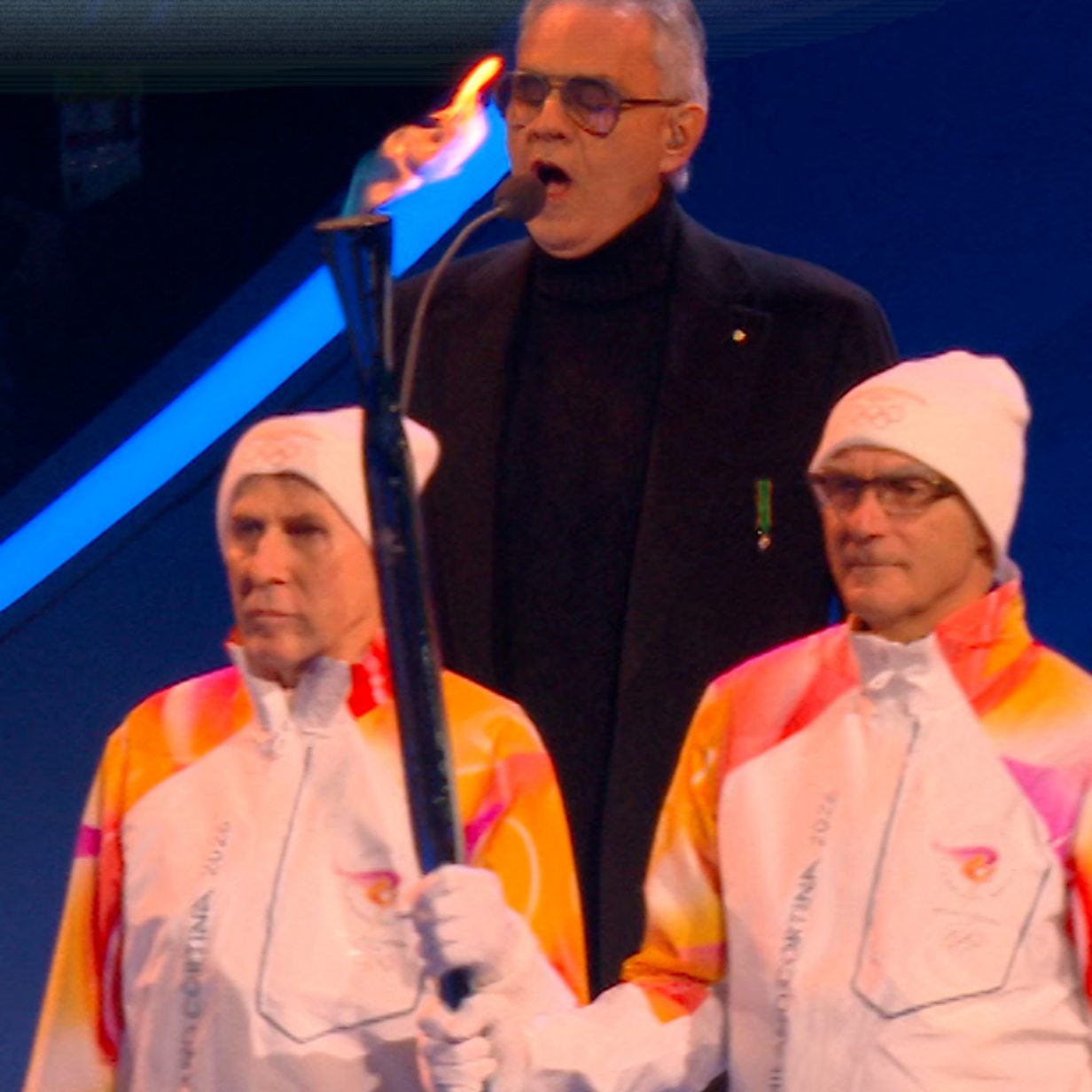
“When love triumphs, no one loses,” one commentator observed during the broadcast, summing up the sentiment that swept through the stadium.
For many, the performance transcended sport altogether. It became a reminder of music’s unique power to dissolve borders, languages, and differences — if only for a few minutes. In that moment, millions of viewers were united not by nationality or competition, but by emotion.
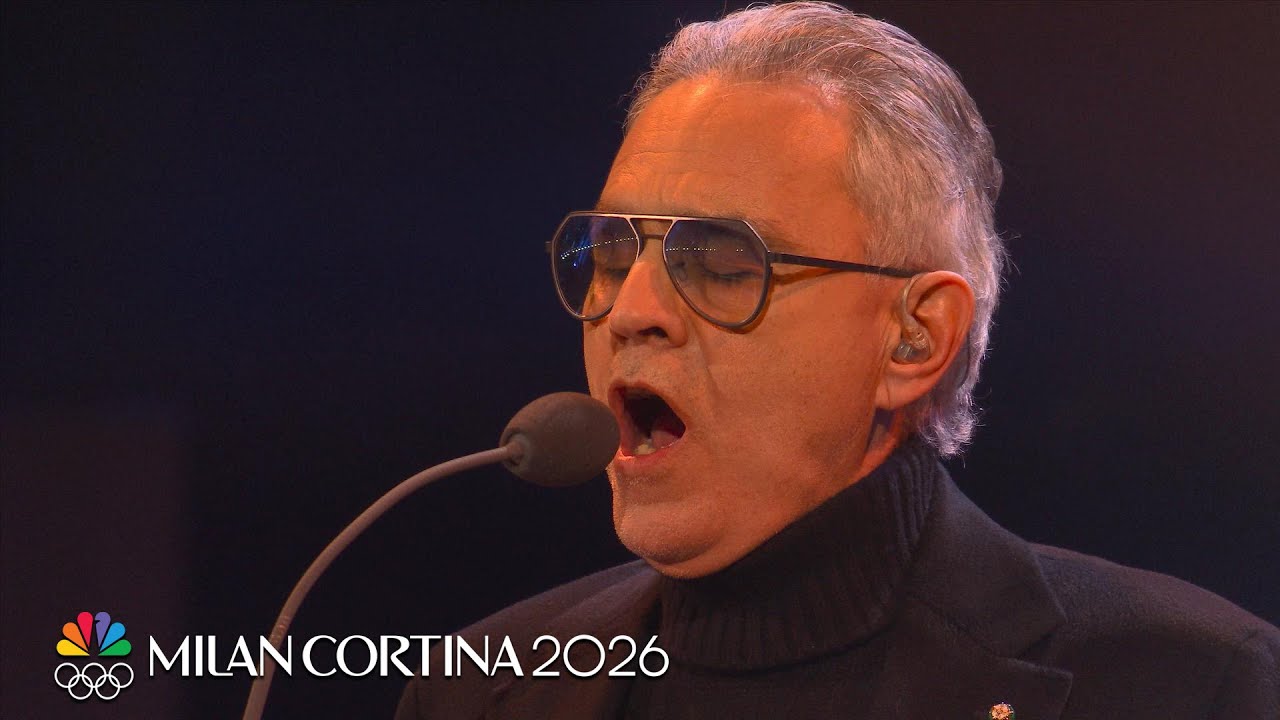
As the Olympic Cauldron was finally lit and fireworks illuminated the night sky, Bocelli’s final notes lingered in the air, leaving an indelible mark on the ceremony.
It wasn’t just an opening to the Games. It was a statement.
A voice that unites.
A victory shared.
And a reminder that at the Olympics — and beyond — the greatest triumph is humanity itself.