For decades, the life and music of Eric Clapton have been closely followed, with fans often finding pieces of his personal story reflected in his songs. But recently uncovered letters—reported by The Guardian—have brought renewed attention to one of the most emotionally complex chapters of his life, offering a glimpse into feelings that were once kept private.
At the center of this story is a relationship that began simply enough: shared music, creative collaboration, and long nights spent writing and talking. Yet over time, what existed between Clapton and the woman he wrote to grew into something far deeper and far more complicated. His letters, described as intensely personal, reveal a man grappling with emotions he could neither fully understand nor suppress.

In these writings, Clapton does not hold back. He questions his own value, expresses longing, and confronts the painful reality of loving someone who may never fully be his. There is a vulnerability in his words that contrasts sharply with the confident persona many associate with him on stage. It’s not the voice of a guitar legend—it’s the voice of someone searching for clarity in a situation that offers none.
What makes this story particularly poignant is the context in which it unfolded. The woman at the heart of Clapton’s letters was not unattached, nor was she removed from his professional world. Instead, this emotional entanglement existed alongside a close personal and musical relationship with someone Clapton respected and worked with—adding layers of tension, guilt, and unspoken conflict.
For those familiar with Clapton’s history, the situation echoes the well-known connection between him, George Harrison, and Pattie Boyd. Harrison, a member of The Beatles, shared both friendship and musical ties with Clapton. Boyd, meanwhile, became the subject of Clapton’s deep and enduring affection—an emotional reality that would later inspire some of his most iconic songs.
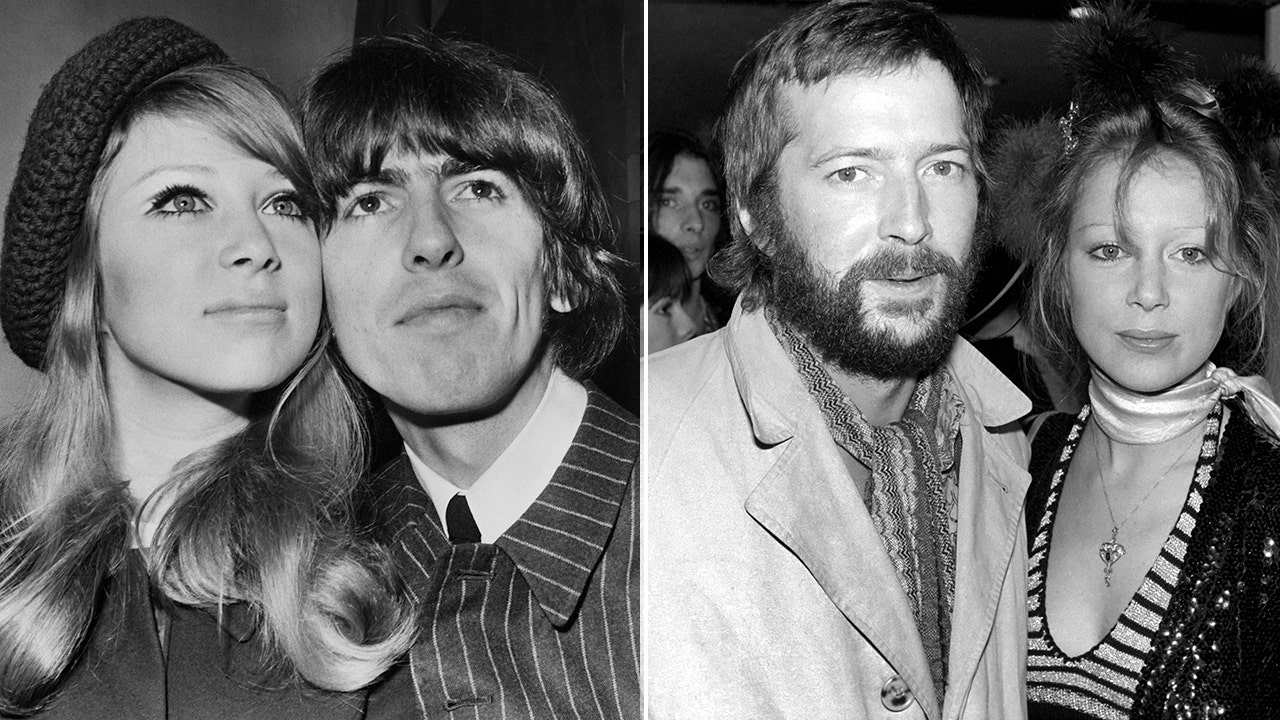
Yet the letters suggest that the emotional landscape was even more complicated than many realized. Rather than a dramatic confrontation, the tension appears to have unfolded quietly, almost painfully so. It was not defined by sudden decisions, but by prolonged uncertainty—a slow unraveling of boundaries between friendship, loyalty, and love.
This is perhaps what resonates most strongly today. The story does not fit neatly into categories of right or wrong. Instead, it reflects something more human: the way emotions can grow unexpectedly, the way timing can complicate even the most genuine feelings, and the way relationships can become entangled despite the best intentions.
Looking back, it is easy to frame the situation as scandalous. But the tone of these letters suggests something else entirely. They reveal a man caught between desire and restraint, between hope and doubt. They show how deeply he felt, and how difficult it was to reconcile those feelings with the reality around him.
For fans, these insights add new depth to Clapton’s music. Songs that once seemed like general expressions of love and heartbreak now carry a more specific weight. They become, in a sense, extensions of the emotions found in those letters—echoes of a time when everything felt uncertain and intensely real.

In the end, the story uncovered in these writings is not just about love—it is about conflict, timing, and the fragile balance between personal desire and loyalty to others. And perhaps that is why it continues to resonate. Because long after the headlines fade, what remains is something deeply familiar: the complexity of the human heart, laid bare in words never originally meant to be seen.