
The square wasn’t filled with noise. There were no towering speakers, no flashing lights, no wave of sound rolling through a packed stadium. Instead, there was something far more fitting — stillness.
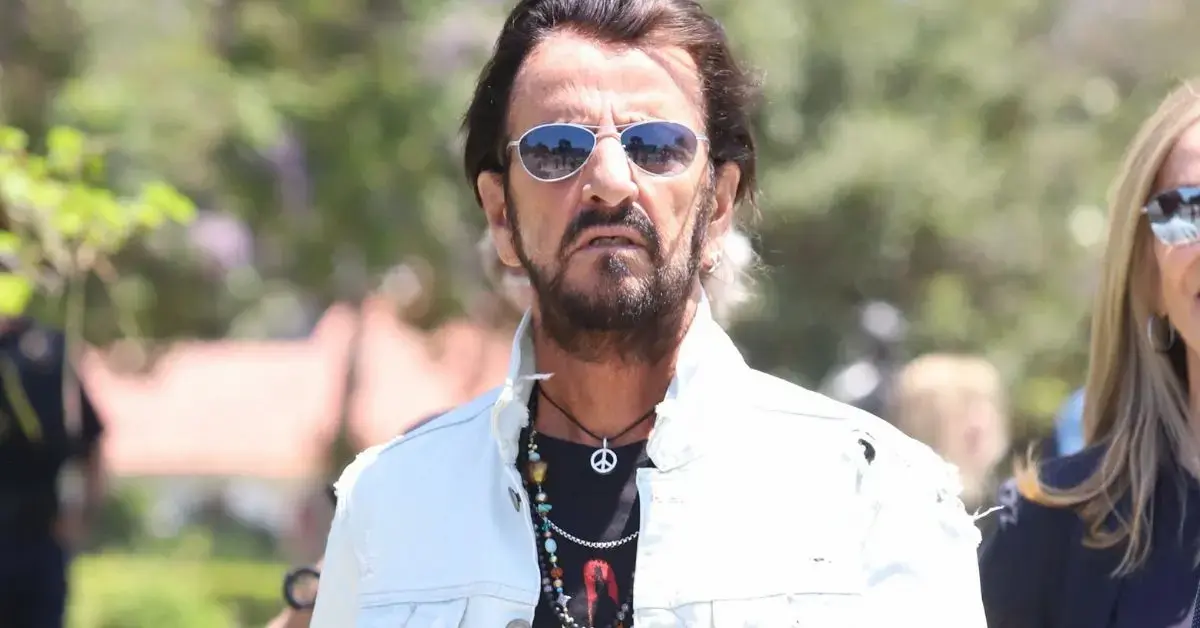
In Liverpool, where the story of The Beatles first took shape, a crowd gathered not to hear music, but to reflect on it. At the center of that moment stood Ringo Starr, the man whose drumming helped define an era without ever demanding the spotlight.
For decades, Ringo had been known as the quiet Beatle — the steady pulse behind some of the most influential songs in history. While others took center stage with vocals and guitars, he remained seated behind the kit, anchoring the band with a style that was both simple and unmistakably his own.
That’s what made this moment different.

As fans watched, Ringo stepped toward a statue concealed beneath a blue cloth. There was no rush in his movement. He reached out and gently pulled it away, revealing a bronze likeness of himself — seated at the drums, sticks poised, expression calm and familiar.
The crowd fell silent. Not out of hesitation, but out of recognition.
Because what stood before them wasn’t just a sculpture. It was a reflection of a journey that began in the modest clubs of Liverpool, long before global fame arrived. Back then, the stages were small, the audiences even smaller, and the future uncertain. But the rhythm was already there — steady, reliable, and quietly powerful.
Ringo’s drumming was never about complexity for its own sake. It was about feel. Songs like “Come Together” and “Let It Be” didn’t need flashy percussion — they needed someone who understood space, timing, and restraint. That was his gift.
And over time, that gift reached far beyond Liverpool. It traveled across continents, through radios and record players, into the lives of millions. The beat he kept became part of something larger — a soundtrack to cultural change.
Yet, standing in that square, the story felt grounded again. Local. Personal.

This tribute wasn’t about chart positions or record sales. It was about origin — about a boy who grew up in Liverpool and found his place in music not by leading loudly, but by supporting perfectly.
The statue captures that essence. Not a grand, exaggerated pose, but a moment of focus. A drummer at work. A musician doing what he does best.
For fans, it’s a reminder that influence doesn’t always come from the front of the stage. Sometimes, it comes from behind the scenes — from the person keeping everything together when no one else notices.
As the crowd slowly returned to conversation, the meaning of the moment settled in.
Ringo Starr didn’t just help shape the sound of The Beatles. He helped define the role of a drummer in popular music — not as a background figure, but as the foundation itself.

And now, in the city where it all began, that quiet foundation has been cast in bronze — steady, enduring, and impossible to overlook.