
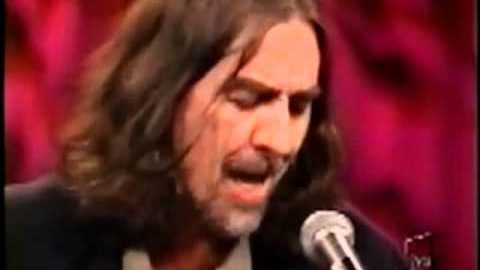
By the time The Beatles reached their final years, the tension within the band was impossible to overlook. Everyone in the studio could sense the strain in their relationships as the once-inseparable friends began to turn on one another, both personally and musically. The magic that had fueled their creative collaboration was starting to fade, giving way to songs that felt more like weapons than art. George Harrison, in particular, found ways to express his frustrations through his music, even taking jabs at Paul McCartney.
Harrison’s Frustrations and Sour Songs

After the band’s breakup, Harrison poured his feelings into his songwriting, producing tracks that reflected his disappointment and bitterness. In “Isn’t It A Pity,” he mourned the sad decline of their friendship and the descent into infighting. The lyrics captured the heartache of watching something beautiful unravel: “Isn’t it a pity / Now, isn’t it a shame.” Another track, “Run Of The Mill,” voiced his anger at the band’s dynamics, singing, “No one around you / Will carry the blame for you.” These lines were pointed digs at his more volatile bandmates, underscoring the emotional toll the breakup had taken on him.
Inside the group, Harrison often felt overlooked and unheard. He struggled to voice his concerns amid the dominating presence of Lennon and McCartney. By the end, he felt less like a full-fledged band member and more like a sideman. “At that point in time, Paul couldn’t see beyond himself,” Harrison told Guitar World in 2001. “He was on a roll, but… in his mind, everything that was going on around him was just there to accompany him. He wasn’t sensitive to stepping on other people’s egos or feelings.” This lack of acknowledgment left Harrison feeling frustrated and isolated.
A Bold Response in “Savoy Truffle”
When it was finally his turn to contribute to The White Album, Harrison took the opportunity to challenge McCartney directly. His song “Savoy Truffle” is often seen as one of the more whimsical tracks on the album, but underneath its sugary surface lies a biting critique. In the lyrics, “You know that what you eat you are / But what is sweet now, turns so sour,” he seemed to be calling McCartney out. The line references the upbeat “Ob-La-Di-Bla-Da,” a track that had sparked heated debates among the band members.
Harrison’s mention of McCartney’s song served as a reminder of their internal strife. It was a shared frustration among Harrison, Lennon, and Starr, who had all tried to veto “Ob-La-Di-Bla-Da” due to its perceived superficiality. The fact that it ended up on the album only reinforced Harrison’s view that McCartney was self-centered. In a moment of honesty, he later acknowledged, “It’s a very me song,” revealing that he understood this track was more about asserting his own legacy than contributing to the group’s harmony.
In the end, Harrison’s music became a canvas for his emotions, capturing the turmoil and complexity of a band that had changed forever.