
There’s a moment that stays with you—not because it was loud or dramatic, but because it was quiet.
Backstage, near the later years of his life, Harold Reid shared a thought with his brother Don Reid that revealed something deeply human beneath a lifetime of music.
“I’m not afraid of dying,” he said. “I’m only afraid that one day no one will remember our voices.”
It’s the kind of statement that doesn’t need explanation. It lands immediately, especially for anyone who has ever created something and wondered what happens to it after they’re gone.
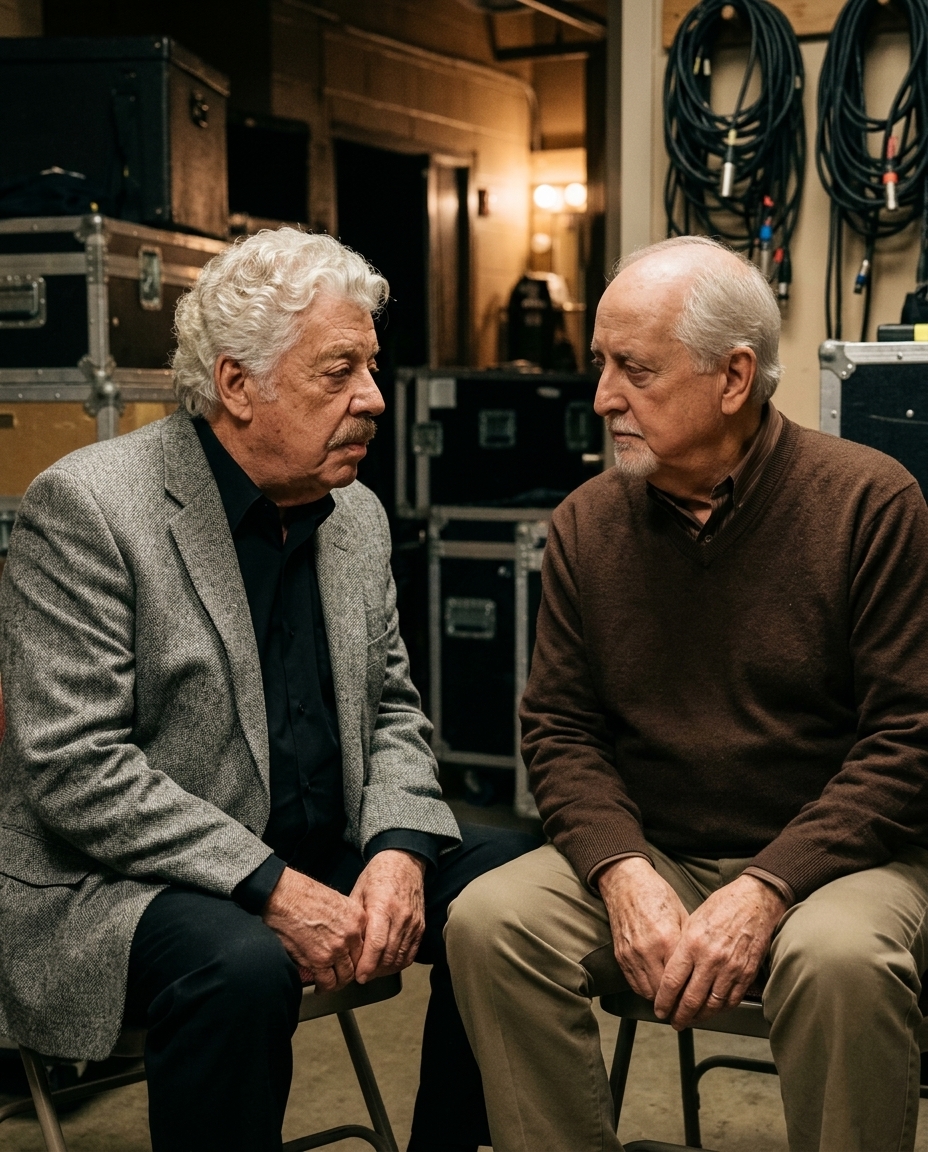
For artists, that question carries a particular weight. The stage lights eventually dim. The applause fades. What remains is less certain. Not the records themselves—they endure—but the connection. The feeling that someone, somewhere, is still listening.
Harold Reid understood that.
As a member of The Statler Brothers, he spent decades building something that went beyond songs. The group’s harmonies, humor, and storytelling became part of everyday life for their audience. Tracks like “Flowers on the Wall” weren’t just hits—they were moments people carried with them, woven into memories of different times and places.
That’s why his words resonate so strongly. They aren’t about charts or recognition. They’re about presence. About whether the music still lives in the hearts of those who once heard it.
But if you look at the response from fans over the years, there’s an answer hidden in plain sight.
People still play those songs. They still smile at the familiar opening lines. They still share them with others—children, friends, anyone willing to listen. And in doing so, they keep something alive that goes beyond the recording itself.
Because memory works differently than fame. Fame can fade, shift, or be replaced. But memory—especially the kind tied to music—has a way of staying. A song heard at the right moment can remain for decades, resurfacing unexpectedly and bringing everything with it.
That’s the kind of legacy Harold Reid helped create.
It doesn’t rely on constant attention or reinvention. It exists quietly, in the background of people’s lives, waiting to be rediscovered. And every time it is, the voices return—not as echoes, but as something present and real.
So the fear he expressed—that one day no one would remember—feels understandable, but also, in a way, unfounded.
Because as long as someone presses play on “Flowers on the Wall,” as long as someone hums along without even thinking about it, the music hasn’t disappeared.
It has simply continued.
And maybe that’s the answer to the question he never fully resolved.
If even one voice still remembers the song…
Then silence never really wins.