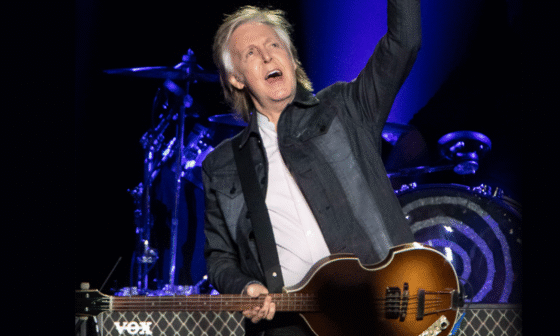
Some songs never truly belong to just one moment in time. They travel, evolve, and carry pieces of history with them. “Hey Jude” is one of those songs—a track that has comforted millions, yet began as something deeply personal within the world of The Beatles.
Originally written by Paul McCartney during a difficult period for John Lennon’s family, the song was meant to bring reassurance to a young Julian Lennon. Its message was simple but powerful: take a sad song and make it better.
Decades later, that same song has come full circle in a way few could have predicted.
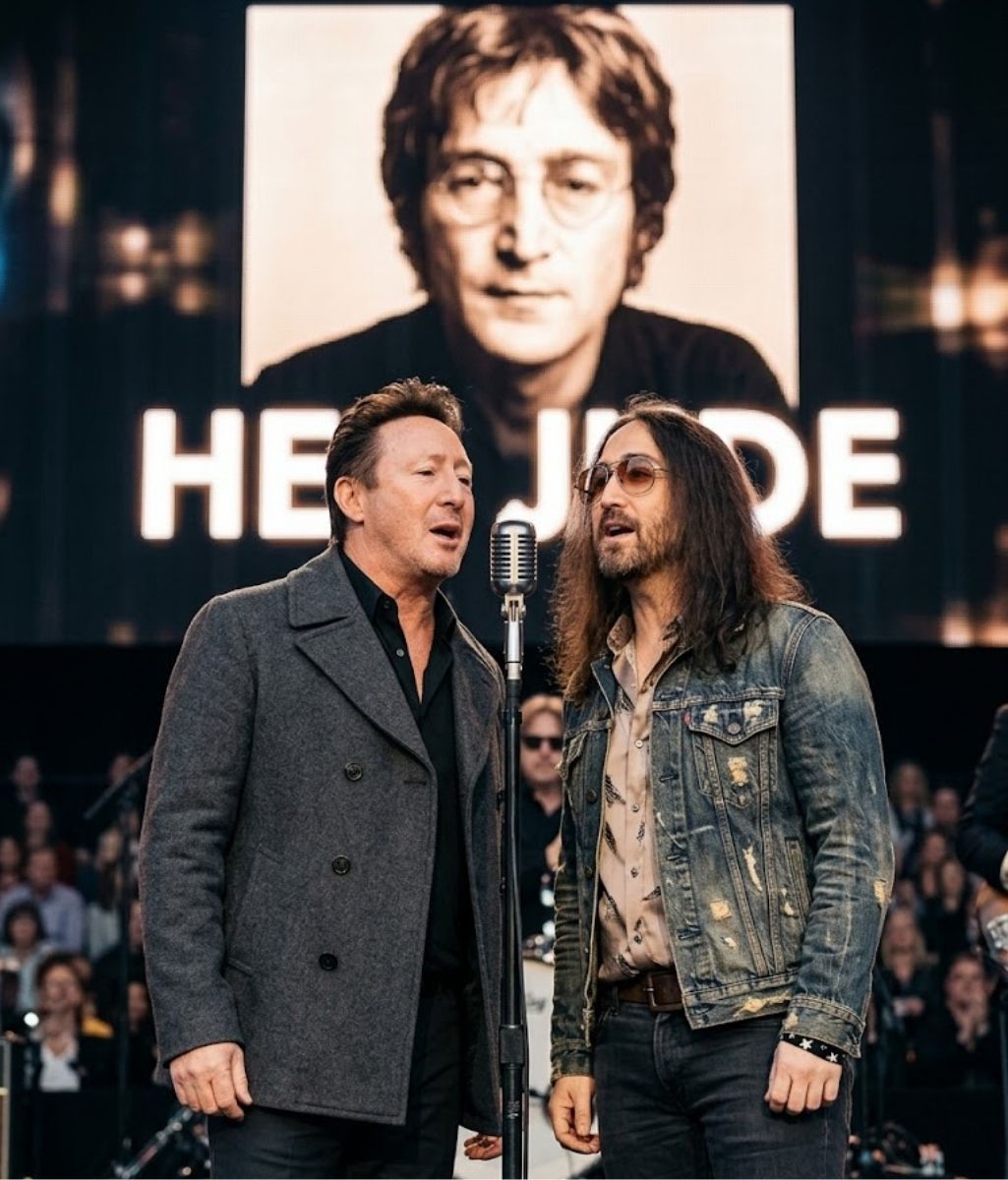
In a quiet and unexpected moment, Julian Lennon and his half-brother Sean Lennon came together to honor their father. Their tribute didn’t rely on spectacle or elaborate staging. Instead, they chose something far more meaningful—the very song that had once been written for comfort during a fragile time in their family’s life.
As they performed “Hey Jude,” the weight of its history was impossible to ignore. This wasn’t just another rendition of a well-known classic. It was layered with memory, emotion, and a sense of return. For Julian especially, the song has always carried a unique significance. It represents a moment from childhood, a connection to a time that was both complicated and formative.
Hearing it now, shared between brothers, felt like a bridge between past and present.
Fans who witnessed the moment quickly responded, not just to the music, but to the feeling behind it. Many pointed out the timing, describing it as more than coincidence. Some even called it a message sent “to heaven,” interpreting the tribute as a quiet conversation with their father, carried through melody instead of words.
Whether seen as symbolic or simply heartfelt, the performance resonated widely. It spread across social platforms, drawing reactions from listeners who felt the emotional depth of what had taken place. For many, it was a reminder of how music can preserve connections that time cannot erase.
The relationship between John Lennon and his sons has often been discussed in different ways, shaped by distance, circumstance, and change. But moments like this offer a different perspective—one that focuses less on what was complicated and more on what endures.
Music, in this case, became the link.
“Hey Jude” has always been about reassurance, about moving forward despite difficulty. Hearing it now, performed by the very people it once touched so personally, adds a new layer to its meaning. It becomes not just a song of comfort, but one of reflection and continuity.
In the end, what made the moment stand out wasn’t just who performed it, but why. It wasn’t about revisiting a famous track for nostalgia. It was about reclaiming something personal, something rooted in family, and sharing it in a way that felt genuine.
For fans, it was a rare glimpse into how music can circle back, finding new meaning with time. And for a brief moment, “Hey Jude” wasn’t just a song heard by millions—it was a message carried between generations, quietly finding its way home.