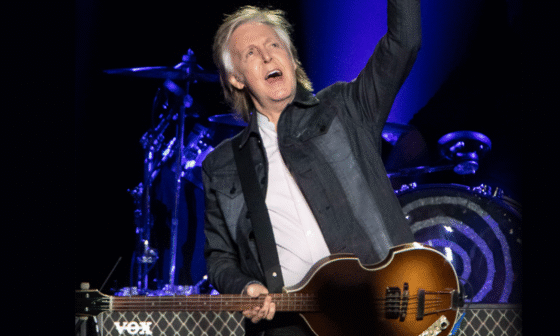
If you have been to a Paul McCartney concert in the last 20 years, you know the moment. The lights dim, the rocking atmosphere of “Helter Skelter” fades, and Paul moves to the piano. The energy in the stadium shifts from excitement to reverence. This is the moment for “Maybe I’m Amazed.”

While the song was written in 1970, Paul’s performance of it today is an active conversation with Linda. He doesn’t just play it; he channels her. For fans, the most touching aspect is the visual tribute that accompanies the song. The giant screens behind the stage scroll through a montage of Linda’s photography and intimate family snapshots—Linda holding a baby, Linda with her mullet in the 70s, Linda smiling that easy, natural smile.

Paul often introduces the song by simply saying, “I wrote this for Linda.” He doesn’t need a long speech. The way his voice still cracks on the high notes, fighting to deliver the passion of a man in his 20s despite being in his 80s, tells us everything.
He also frequently acknowledges her presence during the “Wings” segment of the setlist. When he plays “My Love,” another track written specifically for her, the dedication is implicit. But it’s the subtle moments—a look up to the sky, or a thumbs-up to a photo on the screen—that break our hearts. He keeps her alive not just as a memory, but as a band member. For the audience, Linda isn’t gone; she’s just just off-stage, captured forever in the chords he plays every single night.