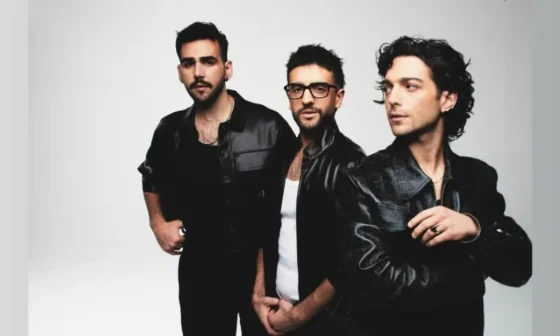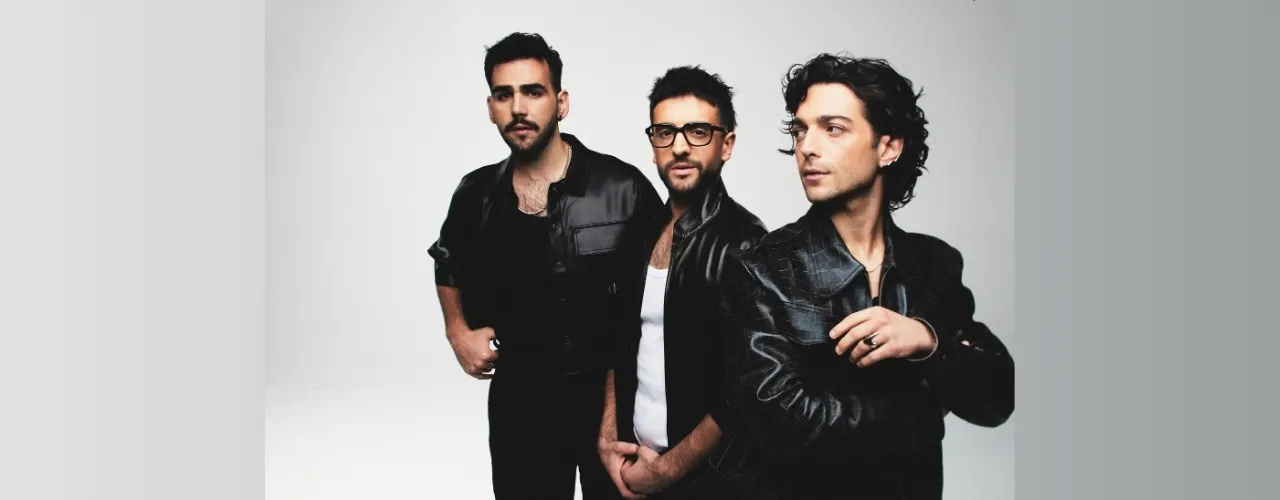
In a setting that already carried centuries of history, Il Volo delivered a performance that would become unforgettable not for its scale, but for its emotional depth. The trio—Piero Barone, Ignazio Boschetto, and Gianluca Ginoble—transformed a concert into a moment of collective reflection, honoring two individuals whose story had clearly left a lasting impact.
Before the music began, there was silence. Not the restless quiet of anticipation, but a deliberate pause—one that invited the audience to listen, to reflect, and to prepare for something more than a performance. In that stillness, the three singers spoke about Antoine and Mackenzie, recalling their courage during a critical moment at LaGuardia.

Their words were simple but deeply felt. They described the two not only as skilled pilots, but as individuals who embodied responsibility and selflessness. One, with a future still unfolding; the other, driven by passion and commitment. Together, they represented a choice made in a moment of crisis—a decision to act for others, even at great personal cost.
When the music finally began, it did so gently. The opening notes of “Grande Amore”—the very song that helped define Il Volo’s global success—were slowed, softened, and reshaped into something entirely different. What is typically performed as a soaring declaration of love became, in this moment, a solemn tribute.
The trio’s harmonies carried through the ancient theater with a quiet strength. Each note seemed carefully placed, not to impress, but to honor. The acoustics of the venue amplified the emotion, allowing the sound to linger in the air, almost as if the space itself were part of the tribute.
Behind them, images of Antoine and Mackenzie appeared on a large screen. The visual element added another layer to the performance, grounding the music in real lives and real memories. For many in the audience, this was the moment when the full weight of the tribute became undeniable.

Some lowered their heads. Others watched in stillness. And many were moved to tears.
What made the performance so powerful was its restraint. Il Volo did not rely on dramatic gestures or elaborate staging. Instead, they allowed the story—and the music—to speak. In doing so, they created a space where grief, respect, and admiration could coexist.

For fans familiar with the trio’s work, the performance also revealed a different dimension of their artistry. Known for their vocal precision and operatic style, they showed an equally strong ability to convey emotion through subtlety. It was a reminder that technical skill, while impressive, finds its true purpose in moments like this—when it serves something greater than the music itself.
As the final notes faded, the silence returned. But this time, it felt different—full rather than empty, shared rather than solitary. It was the kind of silence that follows something meaningful, when words are no longer necessary.
In that ancient theater, under a vast open sky, Il Volo offered more than a song. They offered a tribute—one that turned “Grande Amore” into a lasting expression of remembrance, carried not just by their voices, but by the hearts of everyone who listened.