IN 2026, THE BEATLES AREN’T JUST A MEMORY — THEY’RE STILL HERE. You don’t hit play to relive yesterday. You hit play because it still feels alive. When “Let It Be” starts, something inside you gently softens — not because of nostalgia, but because it feels familiar in the deepest way. When “Hey Jude” swells into that unforgettable final chorus, even strangers seem connected through the same melody. And when “Here Comes the Sun” begins, it doesn’t carry the weight of age. It feels like sunlight breaking through all over again.

beatle
Beatles

In 2026, The Beatles do not feel archived. They feel active.

Their music does not surface merely as background nostalgia or curated revival. It arrives in living rooms, in car radios, in streaming playlists not because people are revisiting youth, but because the songs still meet something current inside them. “Let It Be” continues to offer comfort that feels immediate rather than inherited. When “Hey Jude” builds toward its final chorus, strangers still find themselves singing together without irony. And when “Here Comes the Sun” begins, the opening notes still resemble light moving through shadow.

What separates endurance from memory is usefulness. The Beatles remain useful.

Story pin image

Their strength was never confined to record sales or cultural hysteria. It was rooted in songwriting — in the architecture of melody paired with meaning. Their compositions balanced accessibility with emotional precision. Lines that sounded simple carried layered resonance. Harmonies that felt effortless were carefully shaped to hold both intimacy and scale.

They evolved quickly, sometimes restlessly. From early pop structures to studio experimentation, from bright harmonies to introspective confession, they moved with curiosity rather than fear. Yet beneath those shifts, something human remained intact. The songs never detached from feeling. Even at their most ambitious, they retained warmth.

In an era where trends accelerate and attention fragments, that steadiness feels increasingly rare. Music now often competes for immediacy, engineered to capture seconds rather than sustain decades. The Beatles’ catalog moves differently. It does not rush to explain itself. It does not rely on novelty. It lingers.

Part of their ongoing presence lies in emotional universality. Themes of doubt, hope, reconciliation, longing, and resilience continue to cycle through generations. The details may change — the technologies, the social landscapes — but the core experiences remain familiar. The Beatles wrote about them with clarity rather than abstraction.

That clarity translates across time.

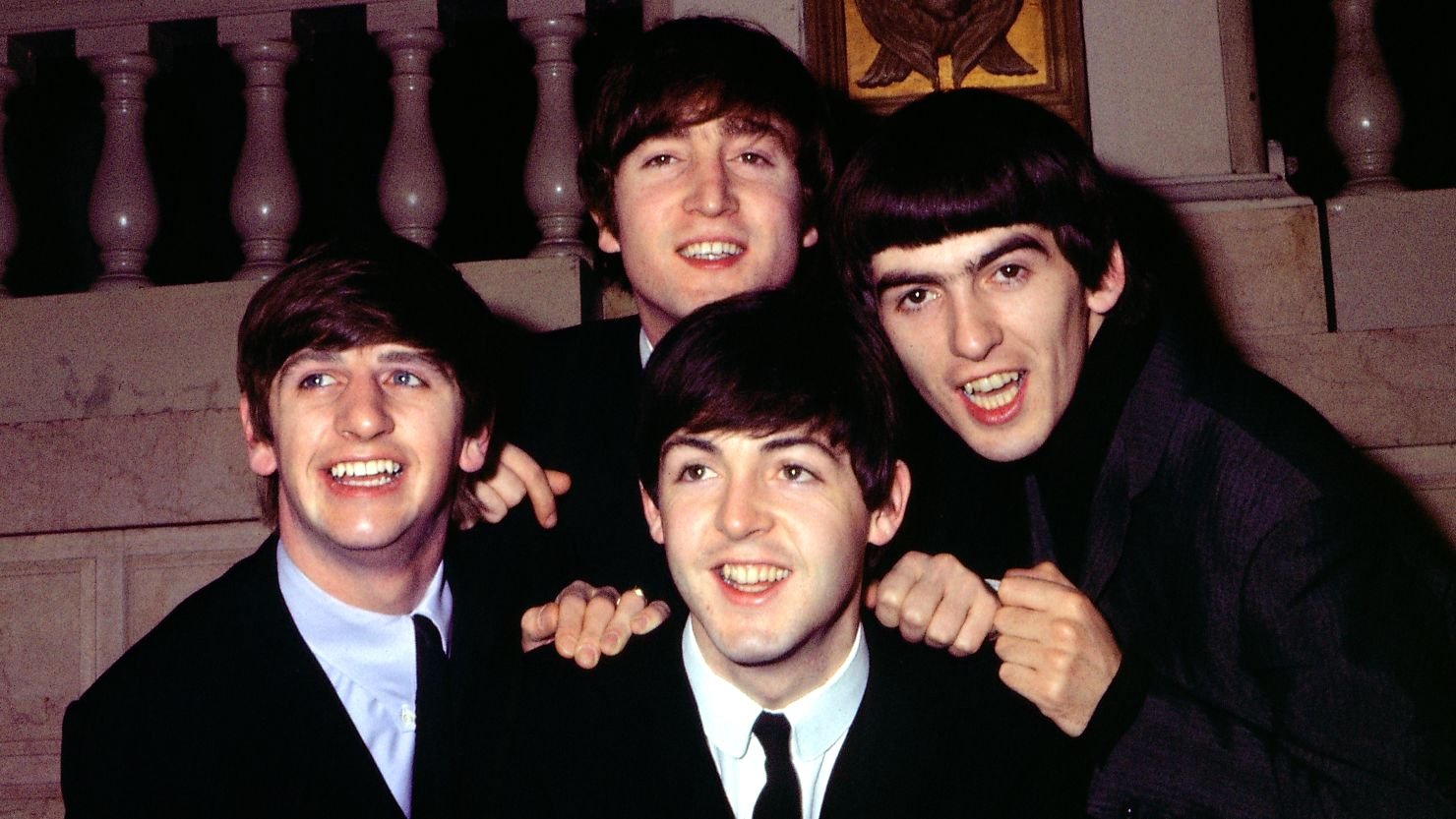
The Beatles are shown at a press conference at the Warwick Hotel. Standing left to right are: Ringo Starr, , Paul McCartney, John Lennon, and George...

Younger listeners encounter the music not as historical artifact but as discovery. For them, the songs are not relics. They are new arrivals. The melodies feel unburdened by context; the emotions land without explanation. Meanwhile, older audiences return not simply to remember, but to reconnect.

There is also a communal quality embedded in their work. The final chorus of “Hey Jude” still transforms crowds into collective voices. “Let It Be” still invites reflection without prescribing it. The music allows space — for grief, for optimism, for quiet strength.

That space is why it persists.

Cultural relevance often depends on reinvention. The Beatles’ relevance depends on recognition. Listeners hear themselves in the songs. Not because the world hasn’t changed, but because certain truths have not.

In 2026, their presence is not maintained by marketing cycles or anniversary editions alone. It is maintained by resonance. By the way a melody still settles into the air as if it were written yesterday. By the way lyrics continue to feel personal, even when sung by millions.

Some music fades because it is tethered too tightly to its moment.

Theirs was anchored in something broader.

And so it remains — not as memory, but as companion.

This may contain: three men and one woman are posing for a photo with their arms around each other
0 Shares:
Leave a Reply

Your email address will not be published. Required fields are marked *

You May Also Like
Nicole and Keith
Read More

Those words, spoken through tears by Sunday Rose (16) to Nicole Kidman, have become the most haunting echo of the Kidman–Urban divorce. Her younger sister, Faith Margaret (13), clung to their father and whispered: “I don’t care about the movies or the music… I just want you home.” Witnesses say the two girls broke down as their parents revealed the truth behind their 19-year marriage ending. The moment was so raw that even Nicole, usually composed, sobbed uncontrollably, while Keith sat frozen — before quietly walking out of the room in silence. Now, insiders reveal the split may be “one-sided,” with Nicole fighting desperately to hold the marriage together while Keith had already let go. The daughters’ heartbreak has only deepened the drama, leaving fans questioning whether Hollywood’s golden couple ended things by choice — or by something far more painful.

Nicole Kidman and Keith Urban: A Family in Tears as Divorce Turns Heartbreaking The Fairytale Shatters The fairytale…
bees gees
Read More

THE NEXT GENERATION STEPPED FORWARD — AND THE GIBB LEGACY DIDN’T FADE As Steve Gibb, Ashley Gibb, Adam Gibb, and Robin John Gibb came together onstage, the moment felt less like a revival and more like a handoff, four voices choosing continuity over imitation as they honored the music shaped by The Bee Gees, carrying forward the spirit of Barry, Robin, and Maurice with restraint and shared purpose, letting harmony lead rather than spectacle, and reminding the room that legacy survives not by repeating the past but by protecting what made it honest in the first place. What this quiet step forward may open next — and how far the music can travel when it’s carried this way — is what listeners are now waiting to see.

THE NEXT GENERATION CARRIES THE LEGEND FORWARD — STEVE, ASHLEY, ADAM & ROBIN JOHN GIBB: FOUR CHILDREN KEEPING…
phil-collins
Read More

Phil Collins took his seat behind the drums, the arena fell silent — and then chaos was unleashed; “Drums, Drums & More Drums” wasn’t just percussion, it was an earthquake in rhythm, each strike a thunderclap that shook the rafters and rattled hearts; sweat poured as Collins attacked the kit like a man possessed, summoning storms, wars, and oceans with his sticks, while the crowd rose to their feet as if pulled into the ritual; some screamed, others simply stared wide-eyed, knowing they were watching more than music — they were witnessing a man bend time with raw sound; critics gasped it was “the most primal performance ever staged,” while fans online hailed it as “a drum solo that could end civilizations”; and when the final crash echoed into silence, one truth lingered — Phil Collins didn’t play the drums, he conquered them.

Phil Collins Unleashes “Drums, Drums & More Drums” — Rhythm as Revolution The arena lights dimmed, and an…