“It will be all right… let it be.” Paul McCartney didn’t plan this lyric—he dreamed it. In 1968, at the most tense point inside The Beatles, he saw his late mother Mary. She said one sentence… and it hit harder than any argument in the studio. What happened next became one of the most comforting songs ever written. But the real origin story is far more heartbreaking than people realize.

paul

A Dream in the Middle of a Breakdown: How Paul McCartney Turned His Late Mother’s Words Into “Let It Be”

The Beatles – Apple Studios, 31 January 1969 | The Beatles Bible

In the most fragile season of The Beatles’ story, when studio time felt less like magic and more like survival, Paul McCartney walked in carrying something unexpected: not a clever chord change, not a new arrangement idea—just a sentence.

It didn’t come from a notebook.
It came from a dream.

A storm inside the studio

By the late 1960s, the band’s unity was cracking. Pressure, resentment, and creative friction turned the Let It Be era into one of the tensest chapters in Beatles history. Paul—often the one trying to keep the machine moving—was feeling the weight of it all.

And then, in 1968, something deeply personal resurfaced.

The dream that became a lifeline

Paul dreamed of his mother, Mary McCartney, who had died of cancer when he was only fourteen. In the dream, she didn’t deliver a speech or offer complicated advice. She simply reassured him with a calm, steady message:

“It will be all right, let it be.”

For Paul, those words weren’t just comforting—they were clarifying. In a time when everything felt loud, messy, and unfixable, the dream offered a rare kind of peace: the permission to stop fighting reality for a moment and breathe.

Turning grief into melody

The Beatles' Let It Be album. The in-depth story behind the Beatles ...

He carried that message into a song. “Let It Be” became more than a track on an album—it became a bridge between private loss and public hope. You can hear the grief underneath it, but you can also hear something stronger: acceptance, resilience, the quiet wisdom of someone learning how to live with what can’t be changed.

That’s why it lands with so many people. The song never pretends pain is easy. It simply offers a hand in the dark.

A comforting anthem, born from chaos


Released in 1970, “Let It Be” quickly grew into a universal comfort song—played at funerals, sung in hard seasons, returned to whenever life gets too heavy. And knowing its origin makes it even more haunting: one of the world’s most soothing anthems was written at a moment when its creator needed soothing most.
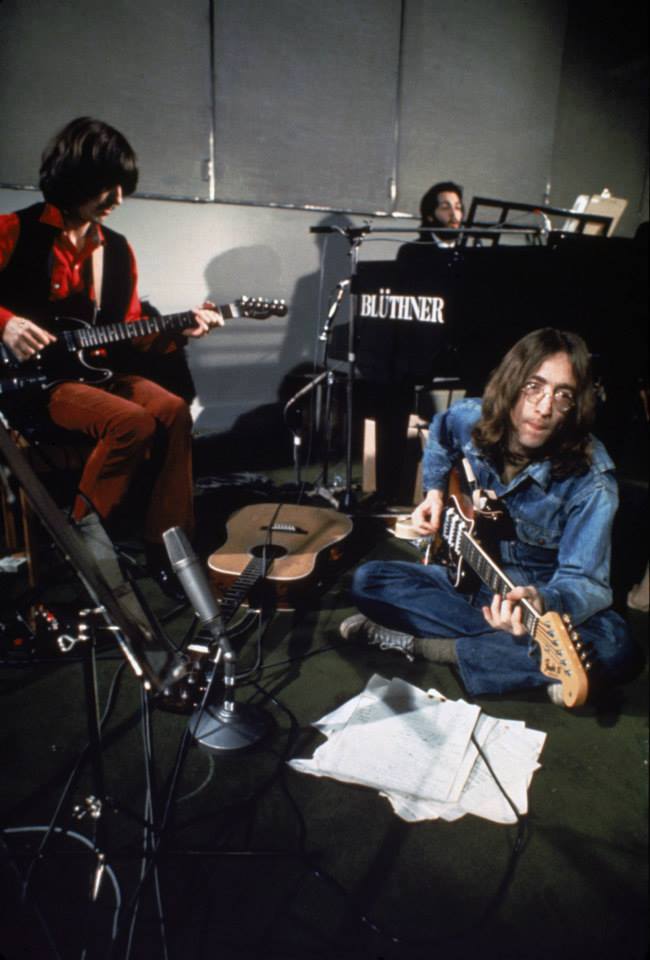
Get Back sessions - January 31, 1969 - Day 20 (session) • The Paul ...

In the end, the story of “Let It Be” is the story of art doing what it does best: taking a single human moment—love, loss, and a need for reassurance—and turning it into something millions can hold onto.

A dream. A mother’s voice. A simple line.
And a song that still whispers, decades later: it will be all right.

0 Shares:
Leave a Reply

Your email address will not be published. Required fields are marked *

You May Also Like
Long-Lost Conway Twitty Performance
Read More

I can still recall the first time Conway Twitty’s “Touch the Hand” came across the radio back in the ’70s. His voice, smooth yet filled with raw emotion, felt like it was reaching straight through the speaker and into my soul. The simple act he sang about — reaching out, holding on — carried so much tenderness and longing that it left me completely still, just listening. Conway had a way of turning everyday moments into unforgettable truths, and this song was proof of that gift. Even now, every time I hear “Touch the Hand,” I’m transported back to that summer evening, when country music wasn’t just sound — it was a feeling, a memory, and a companion for life.

Conway Twitty’s “Touch the Hand” – A Timeless Country Love Song About the Song Some songs have the…
ABBA
Read More

HALF A CENTURY LATER, A SONG STILL MARKS THE EXACT MOMENT ABBA WAS BORN. When ABBA stepped into the recording studio in Sweden in the early 1970s, they couldn’t have known they were standing on a crossroads that would change their entire future. It wasn’t a moment of fanfare or ostentation—just four people, four voices, and a vague belief that their blend could take them further than any individual act.

Half a century later, one song still points with remarkable precision to the exact moment everything began. When…
Blakee
Read More

No one expected Trace Adkins to pull this off at 62, and Blake Shelton was only supposed to pop in for a quick cameo—but the second they hit the stage, everything changed. A song most people hadn’t heard live in years suddenly came roaring back to life at CMA Fest, and for a moment it felt like the clock had turned back to 2005. Trace walked out with a confidence that hit the crowd like a shockwave, but the real explosion came when Blake strolled out behind him. The arena erupted. People were screaming, laughing, crying—every emotion spilling out at once.

“He is a brother to me,” Shelton says of his longtime friend, Trace Adkins. Blake Shelton and Trace Adkins thrilled the CMA…