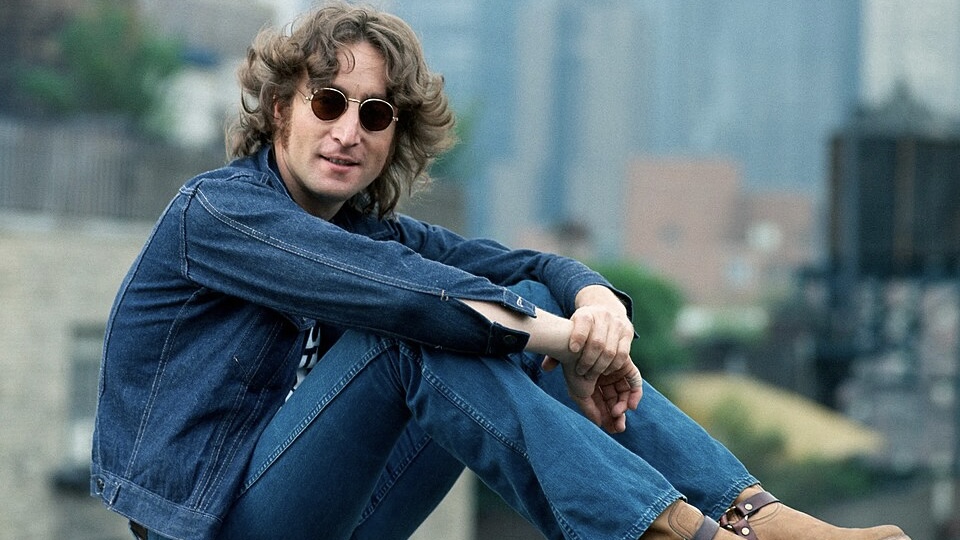
 By 1980, John Lennon was no longer chasing the noise that once defined his life. The chaos of global fame, the pressure of constant creation, and the weight of public expectation had all faded into the background. In their place was something far less dramatic—but perhaps far more meaningful.
Inside the Dakota building in New York, Lennon’s world had become smaller, quieter, and deeply personal. Mornings often began not with music, but with family. He would check in on his young son, Sean Lennon, and move through a day shaped by ordinary routines—meals at home, time spent together, and moments that didn’t demand an audience.
For someone who had spent years at the center of a cultural storm, this shift wasn’t accidental. Lennon had stepped away from music deliberately, choosing to focus on being present in a way he hadn’t before. He cooked. He observed. He learned how to slow down. These weren’t headlines, but they mattered to him.
When he did speak publicly during this period, there was a noticeable change. The sharp, sometimes defensive edge people associated with his earlier interviews had softened. He sounded more reflective, more at ease with himself. Rather than trying to reshape how the world saw his past, he seemed more interested in what came next—and how he could approach it differently.

So when he returned with Double Fantasy in November 1980, it didn’t feel like a grand comeback. There was no sense of urgency or reinvention. Instead, the album carried the same tone as his life at home—steady, thoughtful, and grounded in real emotion.
The project was shared with Yoko Ono, reflecting their relationship as it had evolved over time. Their voices alternated across the album, not competing, but complementing one another. Together, they told a story of partnership, growth, and the kind of love that deepens through change.
The songs themselves were simple in theme but sincere in feeling. They explored family life, connection, and the passage of time—ideas that mirrored Lennon’s daily experience. There was no sense that he was trying to prove anything to critics or audiences. Instead, he was simply expressing what felt honest.
What stands out most about those final months isn’t any single event, but the consistency of how he lived. Lennon moved through his days with a kind of quiet awareness. He laughed more easily. He listened more closely. There was a sense that he understood the value of time—not in a dramatic way, but in the choices he made each day.
At the time, it didn’t feel like a closing chapter. To those around him, it seemed like a new beginning—a phase of life where things had finally settled into place. He was a father, fully present. A partner in a relationship that had endured and evolved. An artist returning to his work with clarity instead of pressure.
There was nothing flashy about it. Nothing designed to capture headlines.
Just a life, lived simply and honestly—one day at a time.