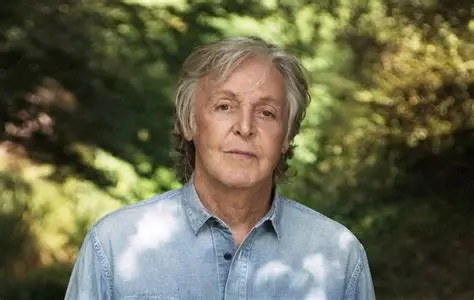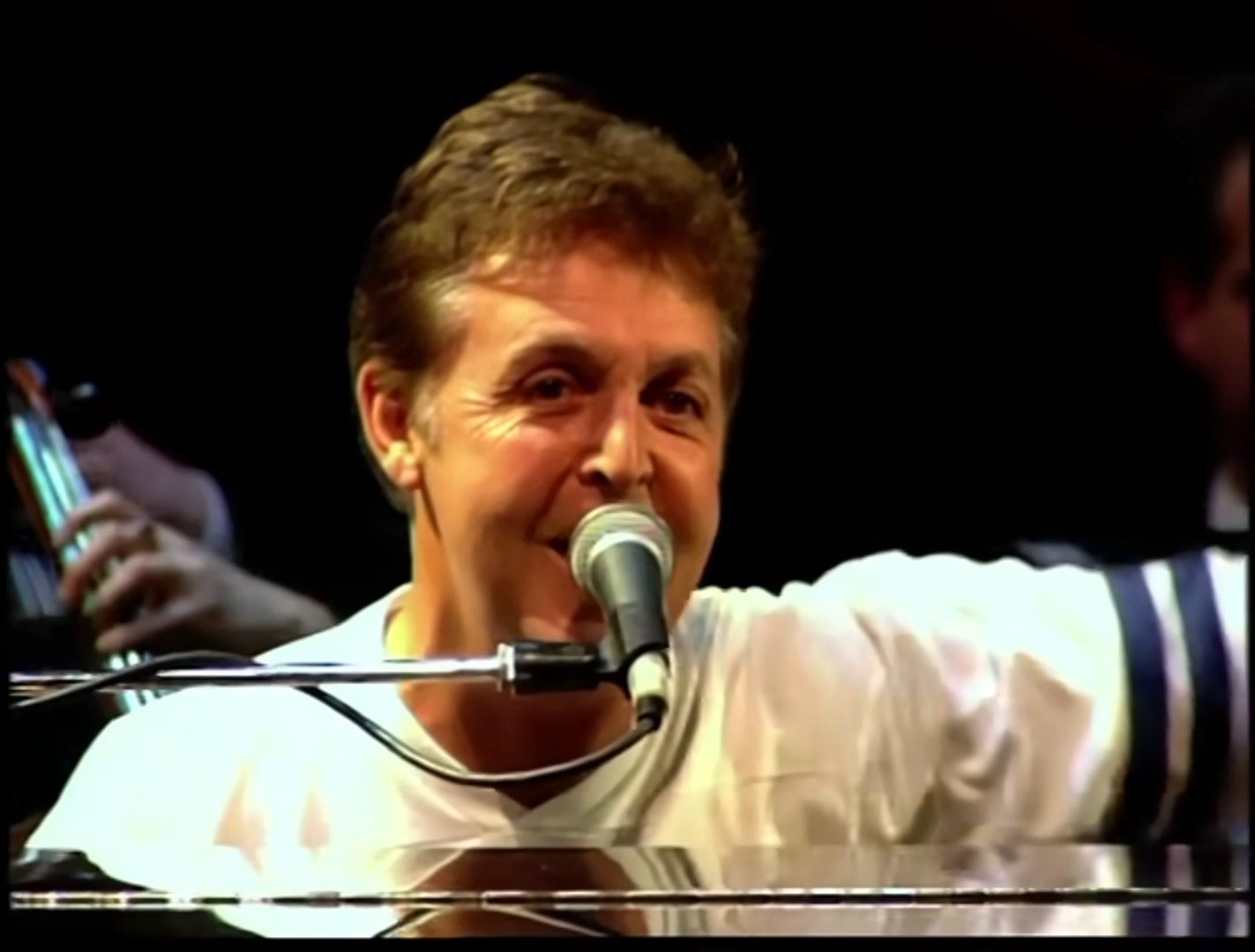
When Paul McCartney steps onto a stage, expectations are always high. Decades into his career, he remains one of the most enduring figures in music, a former member of The Beatles whose influence still shapes generations of artists and fans alike. But this time, the conversation surrounding his upcoming performance feels different.
It’s not just about the songs.
In the days leading up to the event, anticipation has been building across social media. Fans aren’t only speculating about the setlist—whether he’ll revisit classics like “Hey Jude” or “Let It Be”—but also about what this moment might represent. There’s a growing sense that McCartney’s appearance could carry a message that extends beyond nostalgia or musical celebration.

That kind of speculation doesn’t come out of nowhere. Throughout his career, McCartney has often used his platform to communicate more than melody. Whether through lyrics, interviews, or live performances, he has shown a willingness to reflect on the world around him—touching on themes of peace, unity, and resilience. It’s part of what has kept his work relevant long after the height of Beatlemania.
Now, fans are reading between the lines again.
Part of the intrigue lies in timing. McCartney’s return to the stage comes at a moment when audiences are increasingly looking to artists not just for entertainment, but for perspective. Music has always had the power to bring people together, but it can also serve as a form of commentary—a way to process what’s happening in the wider world.
For longtime listeners, this adds an extra layer of meaning to the performance. Every song choice, every pause between tracks, even the visuals behind him could carry significance. McCartney has never needed elaborate gestures to make a point; often, the message is woven subtly into the experience.

At the same time, there’s a balance he’s always maintained. While some artists lean heavily into statements or spectacle, McCartney’s approach has typically been more understated. He lets the music lead, trusting that its emotional resonance will do most of the work. That’s part of what makes this moment so compelling—no one is quite sure how explicit or understated any message might be.
Of course, there’s also the possibility that the performance will simply be what it appears to be: a master musician doing what he does best. And for many fans, that would be more than enough. After all, McCartney’s catalog is filled with songs that have already said so much, often without needing additional explanation.
Still, the sense of curiosity persists.
In a way, that anticipation speaks to McCartney’s lasting impact. Few artists can generate this level of conversation simply by announcing a performance. It’s not just about legacy—it’s about presence. Even now, his appearances feel like events, moments that bring people together in shared attention.

As the time approaches, one thing is certain: when McCartney walks on stage, people will be watching closely. Not just to hear the music, but to see what else might unfold. Whether the night delivers a powerful message or simply a reminder of timeless artistry, it’s clear that this performance already means something more.
And sometimes, that sense of possibility is what makes a live moment unforgettable.