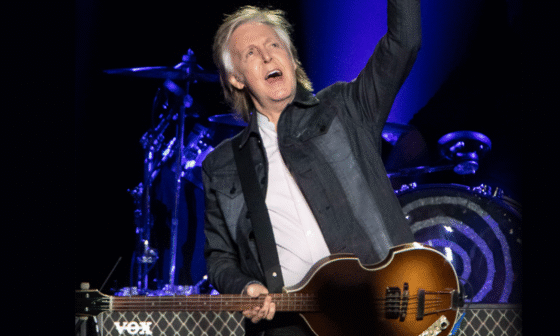
ON THIS NIGHT IN 1967, The Beatles DELIBERATELY BROKE EVERY ORCHESTRAL RULE TO CREATE 24 BARS THAT CHANGED MUSIC HISTORY. Paul McCartney stood in EMI Studio One conducting a 40-piece orchestra instructed not to play together, not to listen to each other, sliding from the lowest possible notes to the highest in rising chaos, recorded repeatedly until it sounded like 200 musicians, while fake noses, paper glasses and rolling cameras turned a formal session into something dangerously unrepeatable. And almost no one outside that room was ever meant to see how close it came to going completely off the rails.

Beatles

This date in 1967: Paul conducting the 40-piece orchestra for the 24-bar instrumental passage on ‘A Day in the Life’. The Studio One session at EMI took place from eight in the evening until one in the morning.
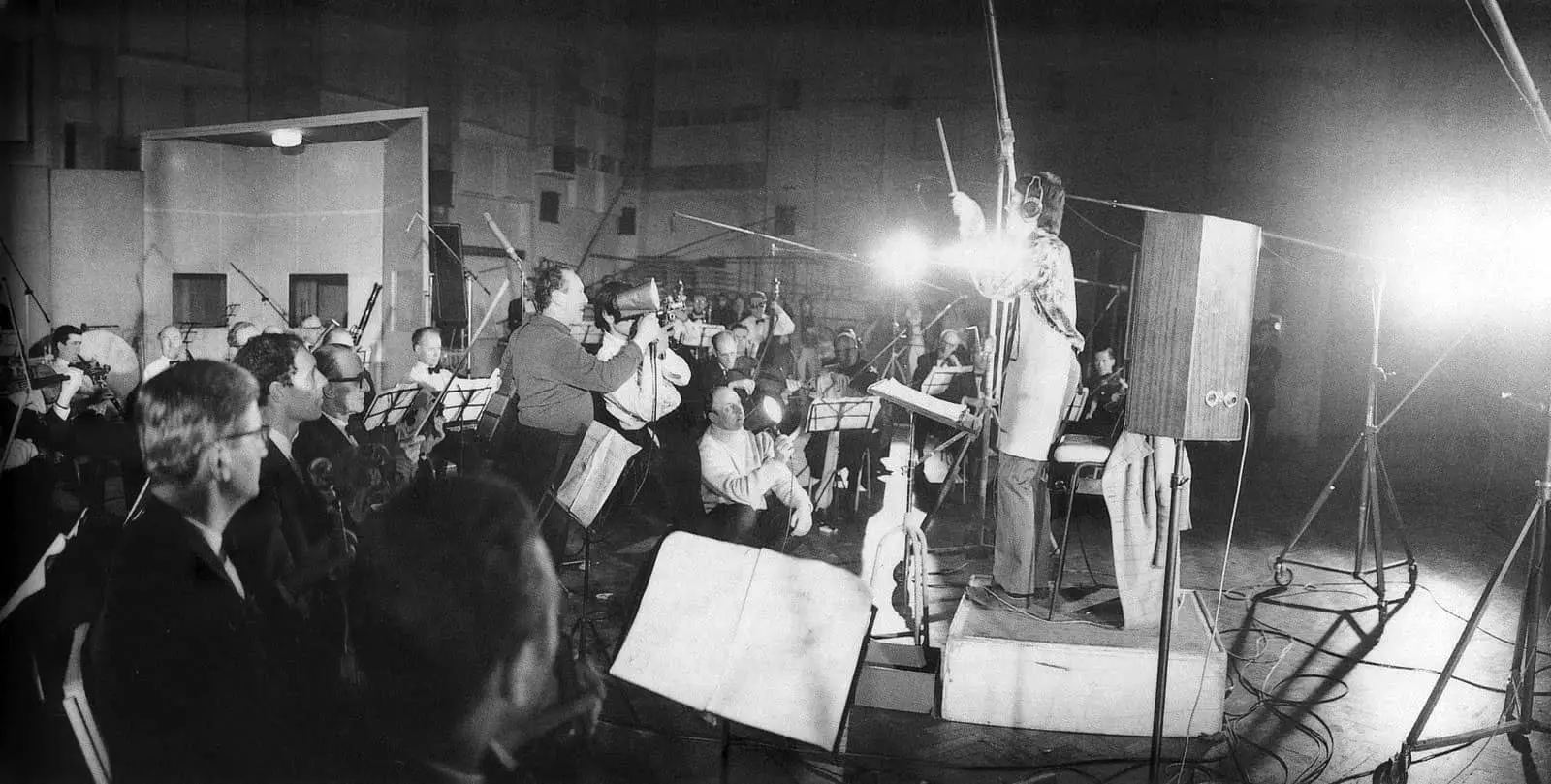
10 February 1967: Recording: A Day In The Life | The Beatles Bible

“What I did there was to write, at the beginning of the 24 bars, the lowest possible note for each of the instruments in the orchestra,” George Martin would explain. “At the end of the 24 bars, I wrote the highest note each instrument could reach that was near a chord of E major. Then I put a squiggly line right through the 24 bars, with reference points to tell them roughly what note they should have reached during each bar.
“The musicians also had instructions to slide as gracefully as possible between one note and the next. In the case of the stringed instruments, that was a matter of sliding their fingers up the strings. With keyed instruments, like clarinet and oboe, they obviously had to move their fingers from key to key as they went up, but they were asked to ‘lip’ the changes as much as possible too.
“I marked the music ‘pianissimo’ at the beginning and ‘fortissimo’ at the end. Everyone was to start as quietly as possible, almost inaudibly, and end in a (metaphorically) lung-bursting tumult. And in addition to this extraordinary of musical gymnastics, I told them that they were to disobey the most fundamental rule of the orchestra. They were not to listen to their neighbours.

“A well-schooled orchestra plays, ideally, like one man, following the leader. I emphasised that this was exactly what they must not do. I told them ‘I want everyone to be individual. It’s every man for himself. Don’t listen to the fellow next to you. If he’s a third away from you, and you think he’s going too fast, let him go. Just do your own slide up, your own way.’ Needless to say, they were amazed. They had certainly never been told that before.”
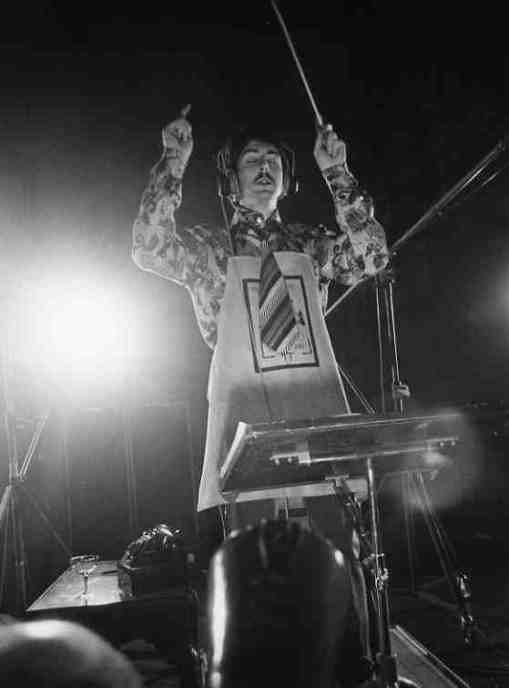
Paul McCartney conducting the orchestra for "A Day in the Life" at EMI Recording Studios, Sgt Pepper sessions, 1967.

The orchestra was recorded onto a separate reel of tape that, thanks to Ken Townsend and the EMI technical team figuring out how to run two four-track machines together, ran parallel to The Beatles’ previously-recorded instruments and vocals – allowing for said orchestra to be recorded five times and sound like 200 session musicians.
“After one of the rehearsals I went into the control room to consult Geoff Emerick,” The Beatles’ producer continued. “When I went back into the studio the sight was unbelievable. The orchestra leader, David McCallum, who used to be the leader of the Royal Philharmonic, was sitting there in a bright red false nose. He looked up at me through paper glasses. Eric Gruenberg, now a soloist and once leader of the BBC Symphony Orchestra, was playing happily away, his left hand perfectly normal on the strings of his violin, but his bow held in a giant gorilla’s paw. Every member of the orchestra had a funny had on above the evening dress, and the total effect was completely weird.”

Intending to produce a TV special about the making of the Sgt. Pepper, assistant Tony Bramwell oversaw the use of silent colour film to capture the evening’s proceedings.

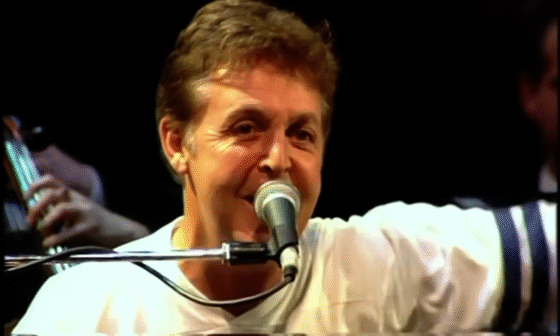
Paul McCartney presumably recording an orchestra part of a song

“We handed out loaded 16mm cameras to invited guests including, among others, Mick and Marianne, and Mike Nesmith of The Monkees,” he’d recall. “They were shown what to press and told to film whatever they wanted. The BBC then banned the subsequent video. Not because of the content of the footage, but because the song itself had drug references.”

Here’s some of that footage…

0 Shares:
Leave a Reply

Your email address will not be published. Required fields are marked *

You May Also Like
Duran
Read More

“We’re Not Here to Be Remembered — We’re Here Because We Never Really Left.” What Looked Like a Rock & Roll Hall of Fame Induction Quietly Turned Into Something Else Entirely, as Duran Duran Stepped Back Onto the Stage and Revealed Why Their Songs Refuse to Stay in the Past, Why This Night Wasn’t About Celebration, and Why Time Has Treated Them Very Differently From Everyone Expected

Duran Duran Enter the Rock & Roll Hall of Fame With a Performance That Felt Like a Victory…
Blake
Read More

Blake Shelton fired up his truck and tore down the highway toward Texas with one mission—bring his brand-new No. 1 hit, “Texas,” to life on the ACM Awards stage. The moment he stepped into the spotlight, the place exploded. Boots were stomping, people were shouting, and the whole arena felt like it was shaking. Even his ex-wife Miranda Lambert couldn’t sit still—she was on her feet, smiling and dancing like the song had grabbed her by the heart. It wasn’t just a performance. It was a full-blown, country-fueled takeover.

Blake Shelton didn’t just show up at the 2025 ACM Awards—he made an entrance straight out of a…