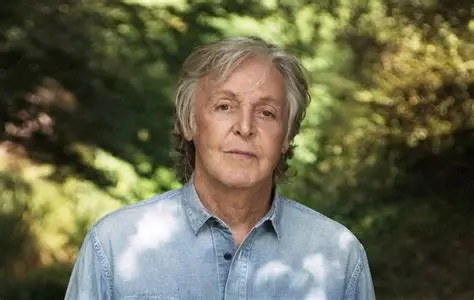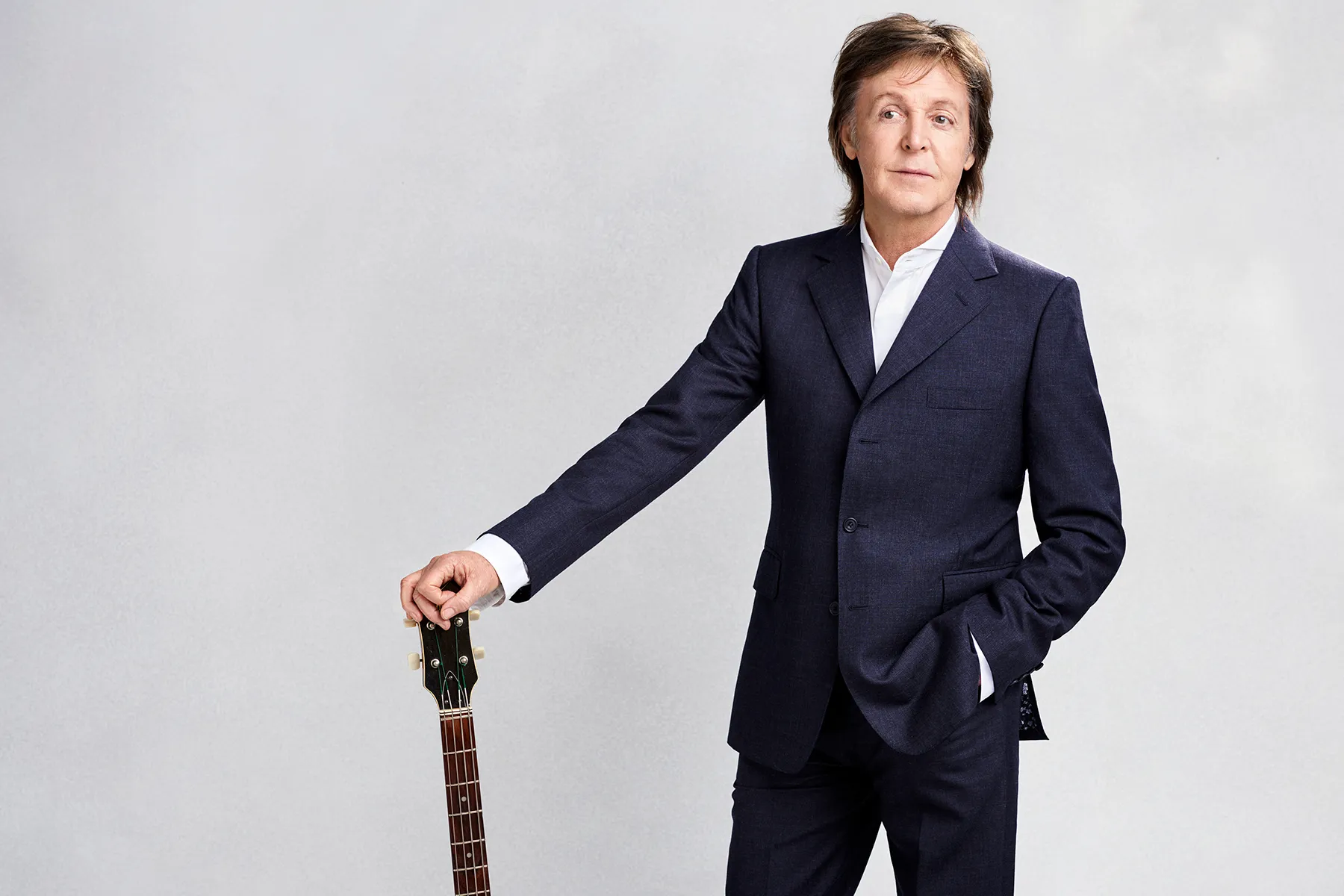
Liverpool has always been a city defined by music, and last night, it paused to honor one of its most cherished sons. Paul McCartney, one of the architects of modern music, stood beside a statue of his younger self, and for a fleeting moment, the city seemed to fall silent.

The unveiling took place in a bustling square, a place familiar to fans and locals alike, where the streets once carried the echo of a young musician with a guitar slung casually across his back. But now, it was a bronze figure that commanded attention — Paul as he appeared in the early days of The Beatles, just before the world knew his name. The statue captures a pivotal moment: McCartney with his Höfner bass in hand, a young man on the brink of changing music forever.
Crowds of fans and admirers gathered, their cameras raised, ready to capture the reveal. As the cloth slipped away, a wave of applause and murmurs of awe swept through the square. Some faces lit up with smiles, while others stood frozen, taking in the sight. It wasn’t just a statue; it was a bridge between the past and present, a tangible connection to the very moment when a boy from Liverpool first stepped into music history.

For Paul McCartney, the moment was quietly reflective. He lingered near the bronze figure, studying the likeness of himself with the familiarity and reverence of a man remembering his own past. There was no grand performance, no dramatic speech — just a profound stillness that spoke volumes. This was a rare convergence of life and memory, a living legend meeting the image of who he once was.
The statue itself is a testament to McCartney’s enduring legacy and the city’s deep affection for him. Crafted with remarkable attention to detail, it captures the youthful energy, determination, and quiet confidence that would define him and The Beatles in the years to come. Every line, every curve of the bronze reflects the spirit of a time when music was raw, hopeful, and full of promise.

Fans at the square didn’t just see a statue; they felt the history of Liverpool, the energy of the 1960s, and the thrill of witnessing a legend still very much alive. Conversations buzzed about the early days of The Beatles, the songs that had defined generations, and the incredible journey of a man who had grown from local streets to global stages.
In the end, the unveiling wasn’t simply about honoring the past — it was a celebration of continuity, of a life lived with music at its center. Paul McCartney, standing beside the bronze version of himself, reminded everyone that legends aren’t just memories; they are living stories, unfolding in real time, and sometimes, frozen in bronze for everyone to see.

As the crowd slowly dispersed, cameras still raised, and whispers of awe lingering in the air, one thing was clear: Liverpool had witnessed a rare and beautiful moment — a city, a musician, and the echo of history converging in one unforgettable evening.