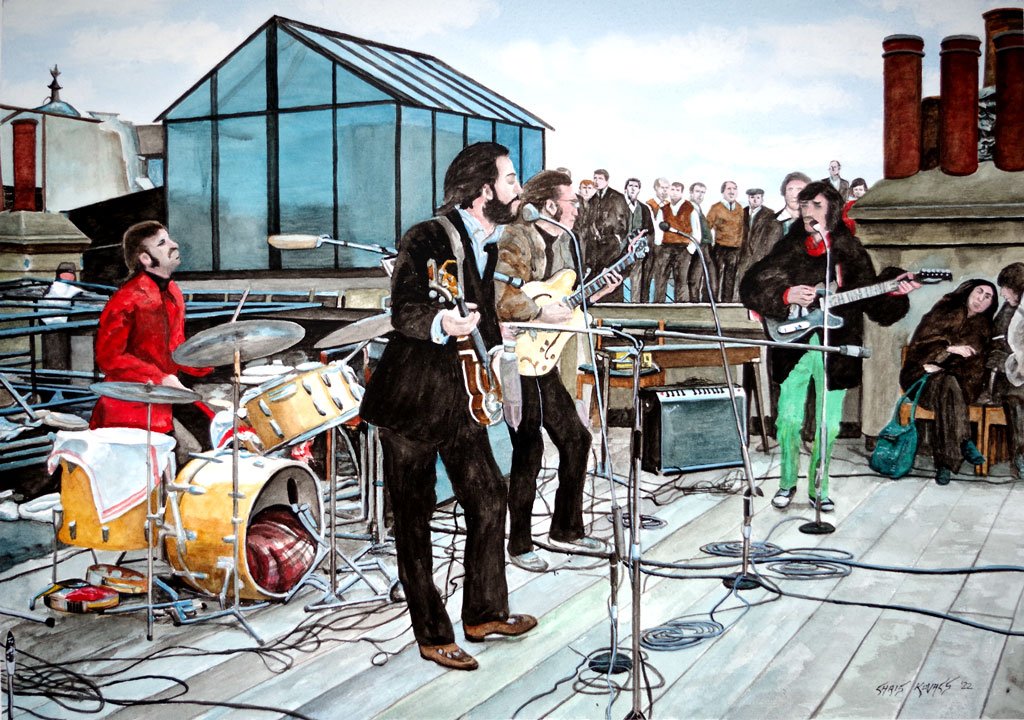
On a cold afternoon in London, January 30, 1969, something extraordinary—and entirely unplanned—was about to unfold. High above the busy streets, on the rooftop of the Apple Corps building, The Beatles gathered with their instruments, amplifiers, and a simple idea: to play.
There were no grand announcements, no elaborate staging, and no sense of finality. To those present, it was just another session, another chance to make music together. But history would come to remember it very differently.
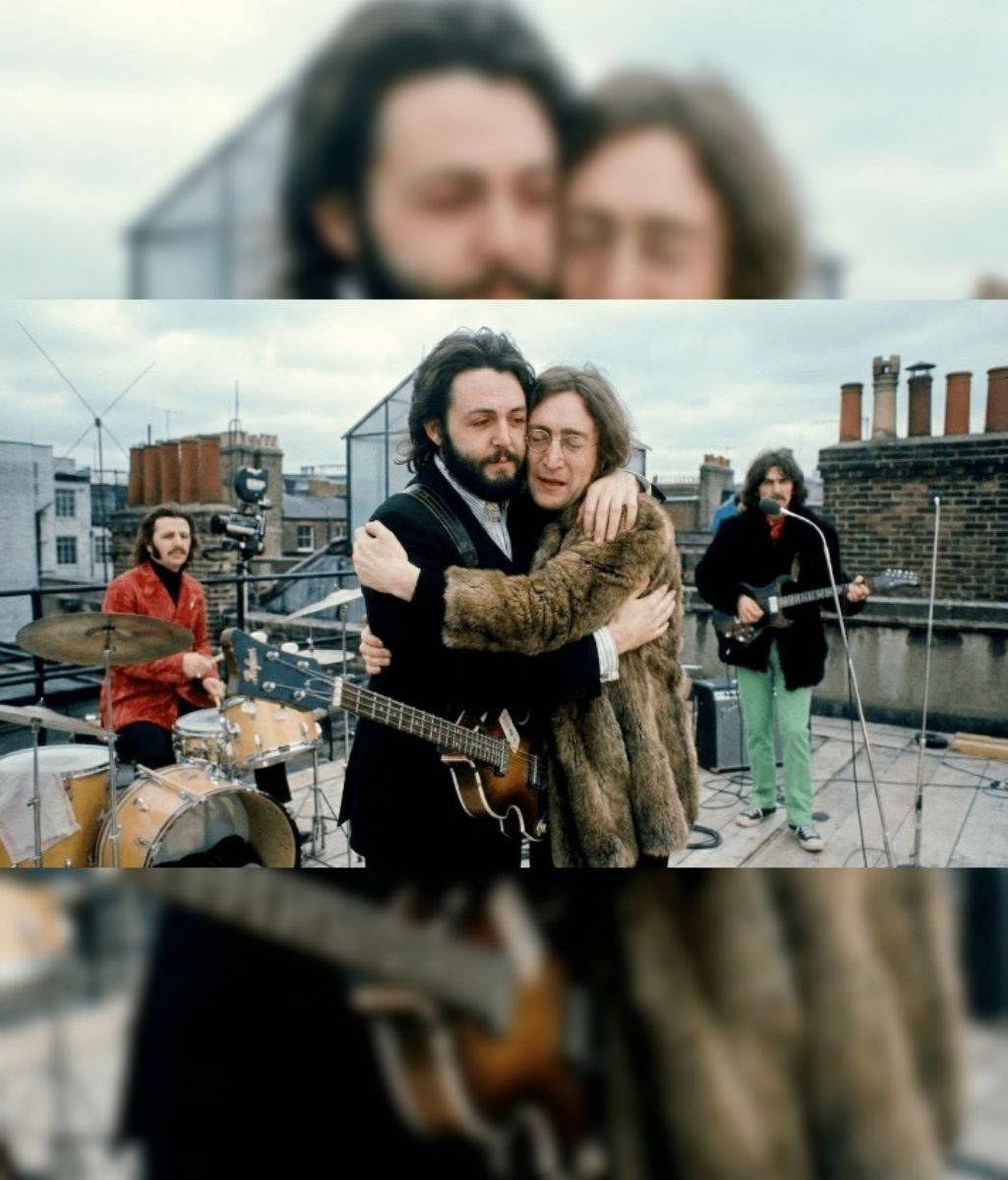
As John Lennon, Paul McCartney, George Harrison, and Ringo Starr began to play, the sounds drifted down into the streets below. Office workers paused. Pedestrians looked up, confused at first, then amazed. A crowd slowly gathered, drawn not by promotion, but by curiosity—and soon, by recognition.
The band moved through songs like “Get Back” and “Don’t Let Me Down” with a mix of focus and spontaneity. There was laughter between takes, glances exchanged, moments of imperfection that only added to the authenticity of the performance. It wasn’t polished in the traditional sense, but it was alive in a way that few performances ever are.
What makes that rooftop concert so powerful is not just the music, but the context that surrounded it—much of which was invisible at the time. The Beatles were nearing the end of their journey as a band. Creative differences, personal ambitions, and years of relentless fame had begun to pull them in separate directions. Yet on that rooftop, none of that fully surfaced. Instead, what the world saw was unity—four musicians still capable of creating something unforgettable together.
For decades, the footage of that day existed in fragments, glimpses of a moment that felt almost mythic. But thanks to director Peter Jackson, the performance has been meticulously restored, offering a clearer and more complete view than ever before. Every expression, every note, every quiet interaction has been brought back with stunning detail.
Watching it now, there’s a sense of intimacy that transcends time. You see not just icons, but individuals—artists fully immersed in their craft, unaware that they are closing a chapter that changed music forever.
In recent years, this restored footage has quietly found new life online, reaching millions of viewers across the globe. For longtime fans, it’s a chance to revisit a defining moment. For newer audiences, it’s an introduction to the magic that made The Beatles so enduring.
But perhaps what resonates most is the unspoken nature of it all. There was no farewell speech, no dramatic ending. The performance simply stopped when the police intervened, concerned about the disruption below. And just like that, it was over.
No one on that rooftop could have known that it would be the last time they would ever perform live together.
And maybe that’s what gives the moment its lasting power. It wasn’t designed to be historic. It became historic because it was real—a fleeting, unrepeatable moment when four musicians, standing against the London sky, played not for legacy, but for the simple joy of playing together.
In the end, that rooftop didn’t just mark an ending. It captured something even rarer: the sound of a band, still brilliant, still connected, saying goodbye without ever having to say the words.