Introduction
In early 1973 long before disco strobes and white suits became inseparable from their image the Bee Gees appeared on The Tonight Show Starring Johnny Carson in a form that now feels almost startling in its intimacy. This was not the era of packed stadiums or rhythmic urgency. This was a moment when Barry Robin and Maurice Gibb still carried the air of an acoustic soul trio grounded in melody blood and shared history.
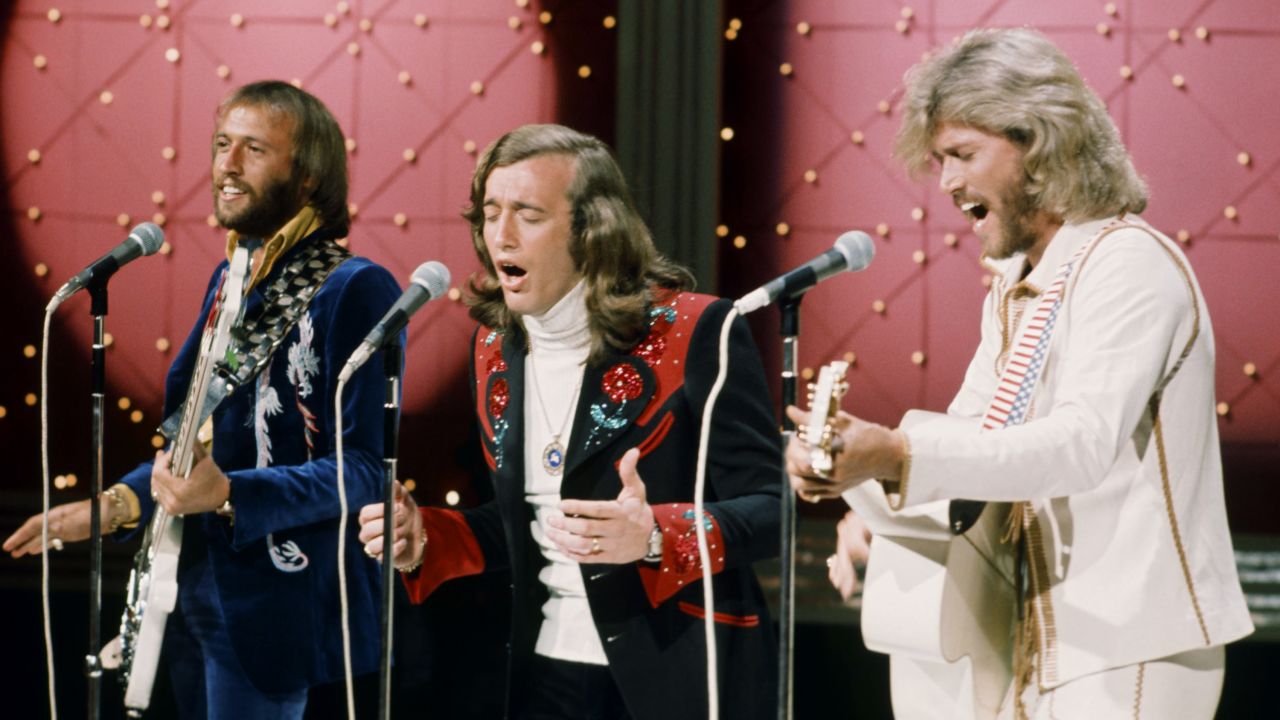
The brothers were in the midst of promoting Life in a Tin Can an album steeped in acoustic textures Americana and restrained soul. It stood far removed from the global pulse they would soon define. When the curtain lifted that night the visual impression alone told a story of transition. Barry wore black accented with leopard patterns Maurice appeared in pristine white and Robin favored cream colored simplicity. They looked unified yet distinct like three movements of the same composition.
They opened with I Saw a New Morning and the studio atmosphere shifted immediately. There was no studio gloss no orchestral safety net. The harmonies felt organic almost conversational as if the sound traveled directly from shared childhood memory to microphone. It was the sound that had always set them apart a blend only siblings could produce shaped by shared breath timing and instinct.
Seated opposite Johnny Carson the conversation unfolded with surprising ease. Carson known for his ability to disarm guests seemed genuinely fascinated by the brothers dynamic. The focus quickly turned to the mechanics of their songwriting a question that had followed them since their earliest success. Barry spoke calmly without theatricality offering a glimpse into their working relationship.
Robin and I usually handle the lyrics and the main writing Maurice brings in a lot of melody ideas and plays a huge role on piano and bass
The explanation was modest almost understated for a group whose catalog had already reshaped modern pop songwriting. What followed was a lighter exchange about fame and fan attention. When Carson raised the topic of devoted female fans the brothers laughed openly deflating the stereotype of rock star excess. Maurice delivered the punchline with impeccable timing noting that their tour manager often intercepted admirers long before the band had any chance to notice.
Yet the emotional center of the evening arrived quietly when the conversation turned inward toward family. Mentions of parents and their younger sister passed gently until the name Andy Gibb entered the discussion. At just fifteen Andy remained a possibility rather than a presence. Barry spoke with warmth and unmistakable pride projecting a future that felt hopeful at the time.
There is a chance that in the future he will grow up and we could have a wonderful four part harmony
The studio audience responded with applause unaware of how painfully that vision would resonate decades later. In 1973 Andy was still a promise a voice not yet tested by fame or burden. The brothers spoke with the ease of men who believed time would allow everything to unfold naturally.
The performance that followed sealed the night into television history. At Carson request or perhaps through quiet planning the Bee Gees picked up acoustic guitars and began Massachusetts. Stripped of orchestration the song transformed into something raw and immediate. Robin voice fragile and piercing carried the melody while Barry steady rhythm anchored the performance and Maurice low harmonies grounded the sound with emotional weight.
The effect was almost unsettling in its purity. It revealed the foundation beneath every reinvention that would come later. Behind disco backlash chart dominance and cultural shifts the Bee Gees remained storytellers rooted in folk tradition. Watching the clip now feels like viewing a family photograph taken moments before a storm.
There is innocence in their expressions an unguarded joy in their shared laughter. The industry skepticism and relentless pace of global fame had not yet taken hold. They were masters of melody standing at the edge of a transformation they could not yet imagine.
As the applause faded and the show moved toward its commercial break the brothers stood together and bowed in unison. Three voices three lives aligned in a rhythm the world would never fully recreate. What remains is a quiet morning preserved on tape a reminder of who the Bee Gees were before history demanded they become something larger.
Video