The Legendary Guitarist Ritchie Blackmore called ‘Most Overrated’

Ritchie Blackmore
Ritchie Blackmore

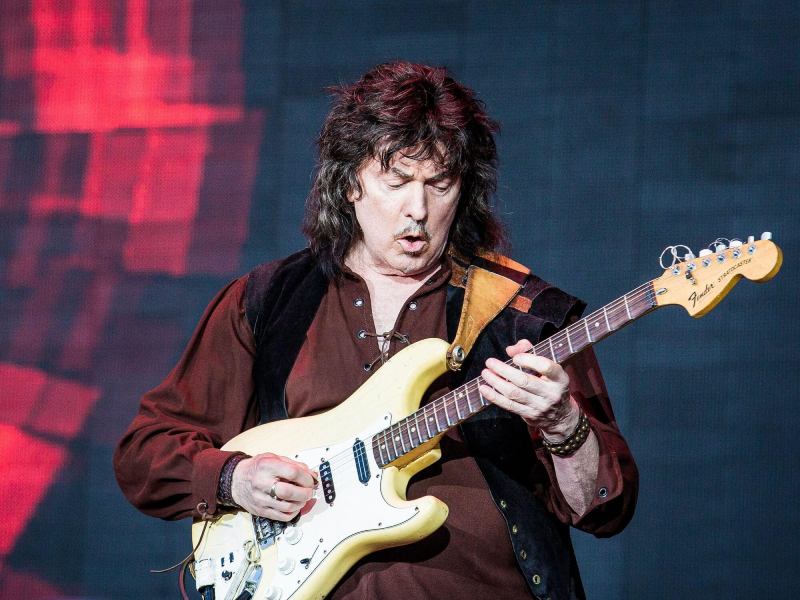
If there’s one thing Ritchie Blackmore excels at, it’s guitar playing. This widely influential fretboard master, who made his mark in an era rich with talent, has left his imprint through bands like Deep Purple, Rainbow, and as a solo artist.

In addition to showcasing his extraordinary skills, Blackmore has had the privilege of sharing stages and stories with some of the most notable guitarists of his time, including Jimmy Page, Jeff Beck, and Eric Clapton. The anecdotes he shares about the vibrant music scene of ‘Swinging Sixties’ London never fail to captivate.

However, like many from his outspoken generation, Blackmore isn’t shy about deviating from the conventional narrative regarding these iconic players. His critiques are especially insightful, coming from a seasoned artist who understands the craft. One notable analysis focuses on The Who’s frontman and guitar hero, Pete Townshend.

In a 1973 interview with Martin K. Webb, Blackmore expressed his belief that Townshend is “overrated” and not as skilled as many assume. He acknowledged Townshend’s pioneering use of feedback but suggested that his playing style relied heavily on crashing chords rather than technical prowess.

“Pete Townshend was definitely the first to use feedback,” Blackmore stated. “But not being that good a guitarist, he used to just sort of crash chords and let the guitar feedback. He didn’t get into twiddling with the dials on the amplifier until much later.”

Blackmore continued, noting, “He’s overrated in England. But at the same time, you find a lot of people like Jeff Beck and Hendrix getting credit for things he started. Townshend was the first to break his guitar. He was the first to do a lot of things. He’s very good at his chord scene too.”

It wasn’t only Townshend’s guitar skills that Blackmore critiqued. When asked why he doesn’t jump around on stage, Blackmore pointed to his peers: “I like leaping around on stage as long as it’s done with class. Like Free. They’re the best band in England. Paul Rodgers is a good singer and a brilliant mover. None of this jumping up in the air and doing the splits and all that. He just moves with the music.

Not like Pete Townshend, who’s gotten to the point that he waits until the photographers are well-aimed before he leaps. He’s not very spontaneous.”

Through his critiques, Blackmore sheds light on the complexities of musical artistry, reminding us that even legends are subject to scrutiny.

0 Shares:
Leave a Reply

Your email address will not be published. Required fields are marked *

You May Also Like
Loretta Lynn’s Granddaughter & Willie Nelson’s Son
Read More

THE NIGHT THE DUET DIED: Loretta Lynn’s Final Song Beside Conway Twitty Still Haunts Country Music — A Goodbye the World Never Saw Coming.Saw Coming. It happened quietly, without fanfare — a night that began like so many others for two of country music’s greatest voices, and ended as the closing chapter of one of its most beloved partnerships. When Loretta Lynn and Conway Twitty walked onstage together for the final time, no one in the crowd realized they were witnessing the end of an era — the night the duet, as the world knew it, died. The year was 1988. The place: Nashville, under the soft golden lights of a charity concert meant to celebrate country’s classic voices. Loretta and Conway had performed together hundreds of times, their chemistry effortless, their harmonies as natural as breathing. But that night, something felt different. Loretta was quiet backstage — not nervous, but reflective. Conway, too, seemed distant, pacing the hallway with a look that friends later described as “heavy, like he knew something the rest of us didn’t.” When they took the stage and the opening chords of “Louisiana Woman, Mississippi Man” filled the room, the audience erupted. For a moment, time folded back — the magic, the laughter, the playful glances that defined their duets returned as if nothing had changed. But then came their final song: a tender, stripped-down version of “Feelins’.” The crowd fell silent as they began. Loretta’s voice quivered just slightly; Conway’s baritone softened, trembling with something unsaid. Their eyes met for a moment longer than the lyrics required — two souls bound by music, by friendship, and by years of shared triumph and heartache. When the last note faded, they didn’t bow. They simply stood there — looking at each other, smiling through tears — before walking offstage hand in hand. “That was the last time,” Loretta later told a friend. “We didn’t know it, but maybe we did. It felt like goodbye.” Just months later, Conway Twitty would fall ill and pass away unexpectedly in 1993, leaving Loretta shattered and the country music world in mourning. She would go on to perform again, of course, but she never truly sang those duets again — not the way she did when Conway was beside her. In the years that followed, that final performance became legend. Fans still trade bootleg tapes and faded photographs, calling it “the night the duet died” — not because the music ended, but because something sacred was lost with it. “There’ll never be another Conway,” Loretta once said softly in an interview. “And there’ll never be another us.” Their voices — hers like sunlight through lace, his like a river’s low hum — blended in a way that no producer could recreate and no era could replace. Together, they gave the world songs of love, laughter, and longing that felt achingly real because they were real. Now, decades later, when “After the Fire Is Gone” or “Feelins’” plays on the radio, there’s a pause — a quiet ache that sweeps over anyone who remembers. Because deep down, everyone who loved them knows: that night in Nashville wasn’t just a concert. It was a farewell whispered in harmony — the sound of two legends singing their last truth. And when they walked off that stage, country music was never the same again. Video

It happened quietly, without fanfare — a night that began like so many others for two of country…
ringo
Read More

“THE BEATLES MADE HIM A LEGEND. LAST NIGHT, HIS DAUGHTER MADE HIM A FATHER AGAIN.” Last night, Ringo Starr didn’t sit in the audience like a legend. He sat like a dad. His daughter stepped onto the stage and sang one of his songs. No big gestures. No imitation. Just her voice, steady but soft, carrying years of growing up with that music in the background. When the first notes landed, Ringo lowered his head. Not to hide tears — just to feel the moment. For a few minutes, the room forgot about fame. Forgot about history. It was simply a father listening… and a daughter giving something back. One fan wrote it best: “That wasn’t a cover. That was love being returned.”

There are moments in music that don’t belong to charts, awards, or history books.They live somewhere quieter. Somewhere…