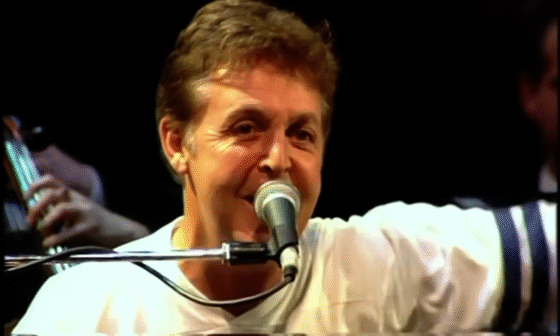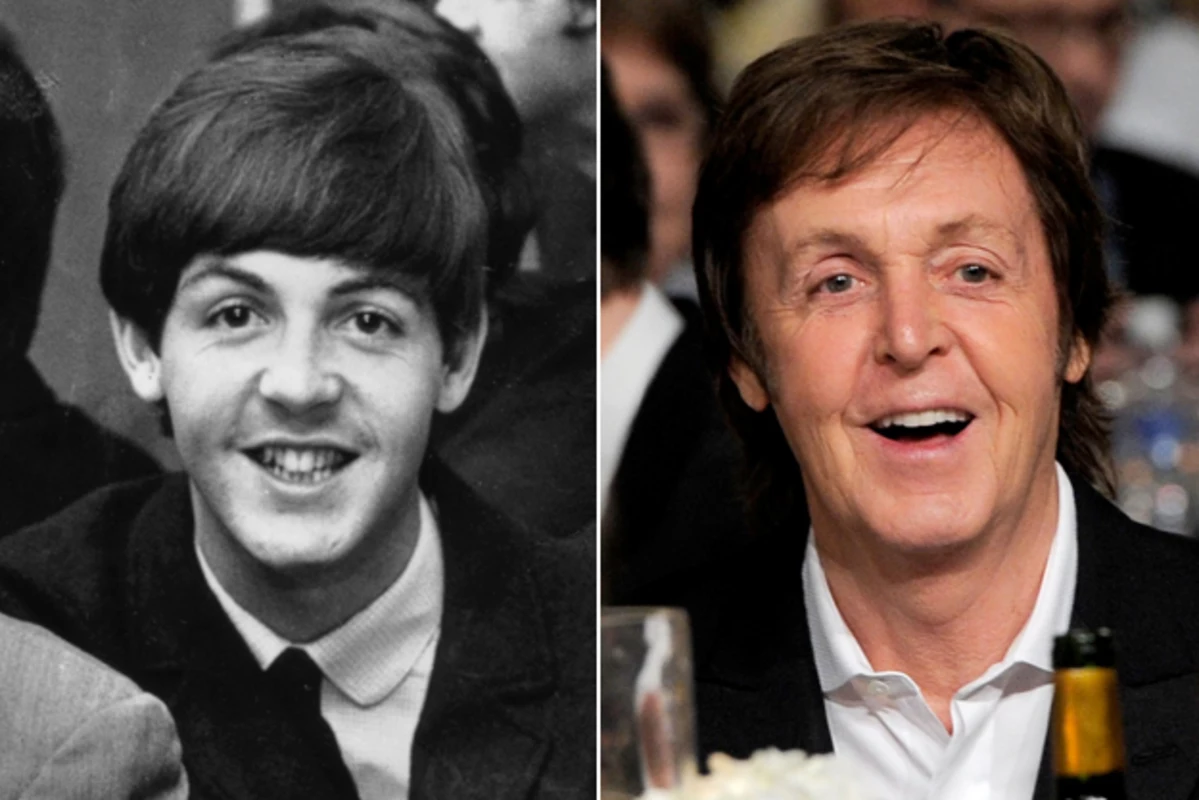
For years, the relationship between Paul McCartney and John Lennon seemed defined as much by tension as by their legendary collaboration. As the creative core of The Beatles, they had shaped some of the most influential music in history. But when the band dissolved in 1970, their bond fractured in ways that played out both privately and in public view.
In the years that followed, fans watched as the two exchanged what often felt like musical barbs. Songs and interviews carried hints of frustration and unresolved conflict. Legal disputes over the band’s business affairs only deepened the divide, making reconciliation seem unlikely. For many, it appeared that one of music’s greatest partnerships had ended not just professionally, but personally as well.

Yet behind the headlines and speculation, something quieter was unfolding. According to McCartney, the path back to a more peaceful relationship didn’t begin with a grand gesture or dramatic apology. Instead, it started with something far more ordinary: a shared interest in watching television—particularly American late-night shows.
At the time, both musicians found themselves in New York City, where Lennon had settled. McCartney would occasionally visit, and during those moments, the two would reconnect in the simplest way possible—sitting together, watching TV, and talking casually. Shows like Saturday Night Live became a backdrop for their interactions, offering a neutral, pressure-free space where conversation could flow naturally.
It may sound unremarkable, but that was precisely its power. Without the weight of their shared history dominating every exchange, they were able to rediscover a sense of ease with one another. The television wasn’t the focus—it was the environment it created. Side by side, reacting to the same jokes and moments, they found common ground again.
These small interactions gradually chipped away at the tension that had built up over the years. Conversations that might once have felt strained became lighter, more personal. The distance between them didn’t disappear overnight, but it began to shrink in a way that felt genuine rather than forced.
For fans, the idea that such a monumental relationship could be helped along by something so mundane is both surprising and deeply human. It serves as a reminder that even the most complicated conflicts don’t always require dramatic solutions. Sometimes, what’s needed is time, shared space, and a simple way to reconnect without pressure.
In reflecting on those moments, McCartney’s story offers a different perspective on the Lennon-McCartney legacy. Beyond the iconic songs and cultural impact, theirs was a relationship shaped by real emotions—friendship, rivalry, misunderstanding, and ultimately, reconciliation.
And in the end, it wasn’t a headline-making event that helped bring them back together. It was something far quieter: two old friends, sitting in a room, watching TV, and slowly finding their way back to each other.