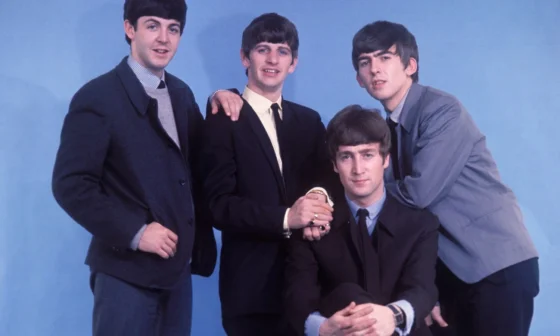
In 1973, two days before Paul McCartney and Denny Laine were scheduled to fly to Lagos, Nigeria, for the recording of “Band on the Run,” disaster struck. Guitarist Henry McCullough and drummer Denny Seiwell abruptly quit Wings, leaving Paul, his wife Linda, and Denny Laine as the only remaining members. What was meant to be a full-band album suddenly turned into a test of resilience and trust between Paul and Laine, a bond that would define the heart of Wings during its most crucial years.

Paul had envisioned Lagos as an exotic escape from London studios, a chance to capture raw energy in unfamiliar surroundings. But upon arrival, the trio faced far more than musical challenges. Lagos was politically unstable, its infrastructure unreliable, and the studio facilities primitive compared to what they were used to. To make matters worse, Paul and Linda were mugged at knifepoint one night, losing the demo tapes for “Band on the Run.” Yet in the midst of chaos, it was Laine who anchored the project. He had already proven himself loyal, having joined Wings in 1971 when others hesitated to gamble on Paul’s post-Beatles band. In Lagos, his versatility and determination became essential.
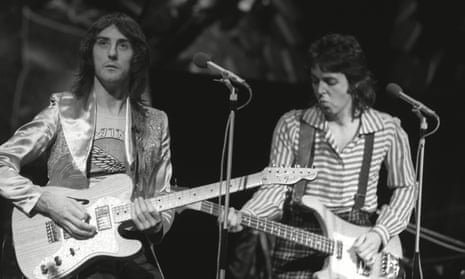
With only Paul on drums and bass, Linda providing harmonies and keyboards, Laine carried much of the guitar work while also lending his voice where needed. He was not overshadowed by Paul’s star power; instead, their chemistry tightened under pressure. Songs like “Jet” and “Bluebird” showcased how Laine’s musicianship enriched Paul’s vision. When recording the title track, Laine’s rhythm guitar gave Paul the freedom to push his vocals into soaring, desperate cries, embodying the spirit of endurance that defined the album’s creation.
Their camaraderie extended beyond the studio. Paul later recalled how he and Laine would unwind after tense recording sessions by jamming informally, a way of reminding themselves why they endured the hardships in the first place. Laine understood Paul in a way few collaborators did. He did not challenge his leadership but instead supported it, adding depth without ego. That quiet strength allowed Wings to move forward at a time when others might have abandoned ship.
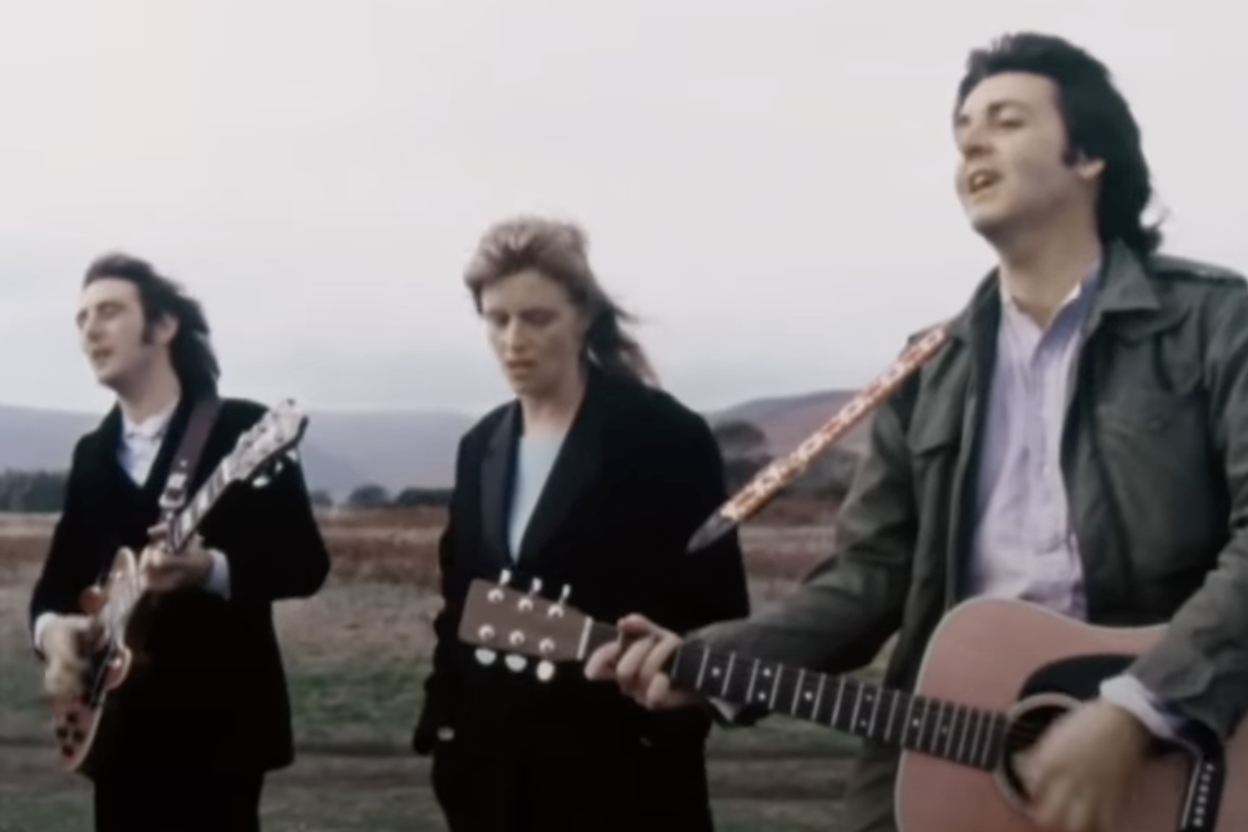
The album that emerged from Lagos became the band’s breakthrough. “Band on the Run” climbed to number one in both the US and the UK, earning critical acclaim and cementing Wings as a serious force rather than a fading post-Beatles experiment. Yet beneath its success lay the story of two musicians bound by necessity and mutual respect. Paul needed someone who could shoulder responsibility when everything fell apart, and Laine proved to be that partner. Their collaboration carried on through the mid-1970s, fueling records like “Venus and Mars” and “Wings at the Speed of Sound,” but the defining moment of their partnership will always return to those fraught weeks in Lagos.
The bond between Paul McCartney and Denny Laine during the making of “Band on the Run” revealed more than artistic compatibility; it was a testament to survival under pressure. In an abandoned studio with a half-empty band, two men found strength in each other, creating music that still vibrates with urgency and defiance.
What began as a crisis turned into a defining triumph, forged by friendship, trust, and the refusal to let obstacles silence their music.