“WE HADN’T REALLY REHEARSED” — The Night John Lennon Faced the World Alone
“WE HADN’T REALLY REHEARSED” — The Night John Lennon Faced the World Alone
By September 1969, The Beatles were still officially a band, but in every way that mattered, the center was already cracking. Abbey Road was newly released. Business tensions were poisonous. Creative trust was thin. And John Lennon—once protected by the collective force of the most famous group in history—was quietly approaching a moment he both feared and needed.
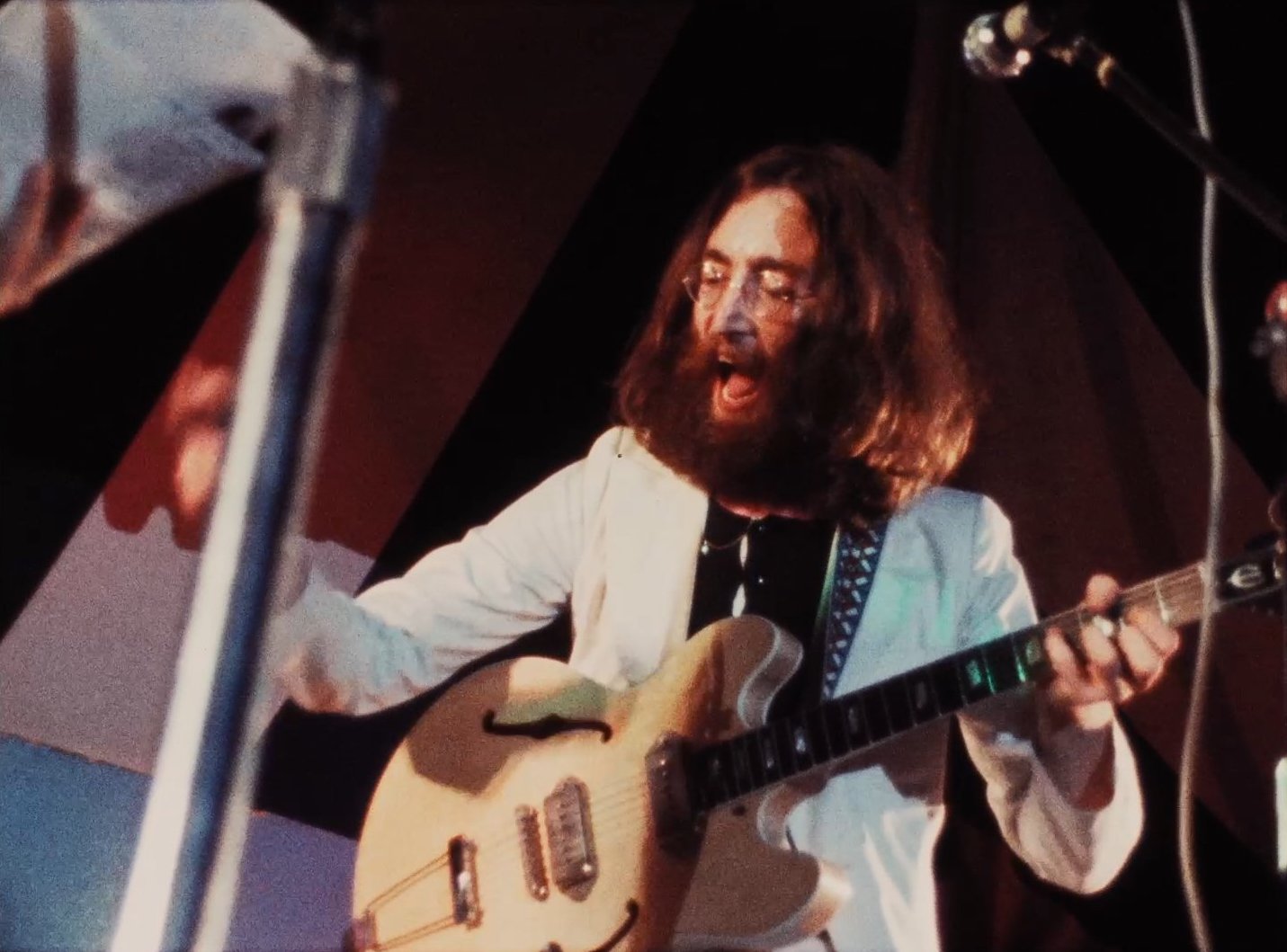
That moment arrived at the Toronto Rock and Roll Revival on September 13, 1969.
—
A Band Assembled in 24 Hours
The decision was impulsive, almost reckless. Lennon had been invited to appear at the festival as a guest, not a headliner. At first, he declined. Then—at the urging of Yoko Ono and his own restless need for change—he accepted, on one condition: he would not appear as a Beatle.
There was a problem. He didn’t have a band.
In less than a day, Lennon threw together what would be billed as The Plastic Ono Band.
Eric Clapton on lead guitar
Klaus Voormann on bass
Alan White on drums
Yoko Ono alongside Lennon, not as background, but as an equal presence
They barely rehearsed. Lennon later admitted they essentially talked through arrangements on the plane. There were no safety nets, no polished harmonies, no Paul McCartney smoothing edges, no George Harrison adding color, no Ringo Starr anchoring the chaos.
For the first time since 1960, John Lennon would walk onstage alone.

—
Fear Without the Beatles
Backstage, Lennon was unraveling.
He was not the fearless revolutionary figure history later mythologized. Without The Beatles, he felt exposed—vocally, musically, psychologically. He worried about forgetting lyrics. About falling apart. About being seen as less than the Lennon people believed in.
According to those present, he vomited from fear before going onstage.
This wasn’t just stage fright. It was existential. For nearly a decade, The Beatles had been armor. Now that armor was gone, and Lennon had to confront a question he had never truly faced:
Was he enough without them?
—
Walking Into the Unknown
When Lennon stepped onto the Toronto stage, the contrast was stark. Gone were tailored suits, coordinated movements, and precision. What replaced them was rawness—edges showing everywhere.
The band tore into old rock and roll standards:
“Blue Suede Shoes,”
“Money (That’s What I Want),”
“Dizzy Miss Lizzy,”
and then Lennon’s new, emotionally unfiltered song, “Cold Turkey.”
The performance was messy. Tempos wobbled. Vocals strained. The band searched for each other in real time.
And yet—it was electric.
Because for the first time, the audience wasn’t watching Beatle John. They were watching John Lennon, unprotected and unfiltered, daring himself to survive without the greatest band on earth holding him up.
—
The Moment Everything Changed
When the set ended, Lennon didn’t celebrate. He was quiet. Reflective. Almost stunned.
Later, he would say that the Toronto show proved something vital to him—that he could stand on his own. That he didn’t need The Beatles to exist, to perform, or to be heard.
That realization did not kill The Beatles instantly. But it sealed something internally.
Within weeks, Lennon privately told the other Beatles he wanted a “divorce.” Though the announcement was delayed for business reasons, the decision had already been made.
Toronto wasn’t just a concert.
It was a psychological crossing point.
—
The True Beginning of the End
History often frames The Beatles’ breakup as a slow legal and musical collapse. But emotionally, the end began the moment John Lennon walked onstage in Toronto and survived.
That night stripped away illusion. It showed him life beyond the band—scarier, messier, but free. The confidence he gained didn’t come from triumph, but from endurance.
He hadn’t really rehearsed.
He was terrified.
He was sick with fear.
And he did it anyway.
In doing so, John Lennon didn’t just launch the Plastic Ono Band.
He quietly stepped out of The Beatles—leaving behind not anger or drama, but the unspoken certainty that there was no turning back.
VIDEO BELOW