In March 1974, far from the noise of headlines and expectations, a small but meaningful moment unfolded in California. It didn’t take place on a stage or in front of an audience. There were no grand announcements, no sense of history being made in real time. And yet, what happened that day would come to hold a quiet significance for fans of The Beatles.
John Lennon and Paul McCartney—once inseparable collaborators—found themselves in the same room again.
Just a few years earlier, that would have seemed almost impossible. The breakup of The Beatles had not been gentle. It had been layered with creative differences, personal tensions, and emotions that spilled beyond private conversations into public interviews and music. Lennon’s How Do You Sleep? stood as one of the clearest expressions of that strain, its words sharp enough to suggest that some distances might never be crossed again.
But life rarely moves in straight lines.
:max_bytes(150000):strip_icc():focal(999x0:1001x2)/john-lennon-1-0567af4001664a43bf3f64bb40164551.jpg)
During what would later be known as Lennon’s “Lost Weekend,” he was living in Los Angeles, separated from Yoko Ono and spending time with May Pang. It was Pang who encouraged him to reconnect with people from his past—not as a public gesture, but as something personal. Among those connections was McCartney, the songwriting partner who had once shared not just music, but a formative chapter of life.
When they finally met, the moment didn’t carry the weight of expectation. There was no script for how it should unfold. And perhaps that’s why it worked.
Accounts of their reunion describe something simple and human. They talked. They laughed. The sharp edges that had once defined their relationship seemed to soften, replaced by something more familiar. For a brief time, they stepped outside of the narrative that had grown around them—the story of rivalry, distance, and unresolved tension.
And then, almost naturally, music found its way back in.
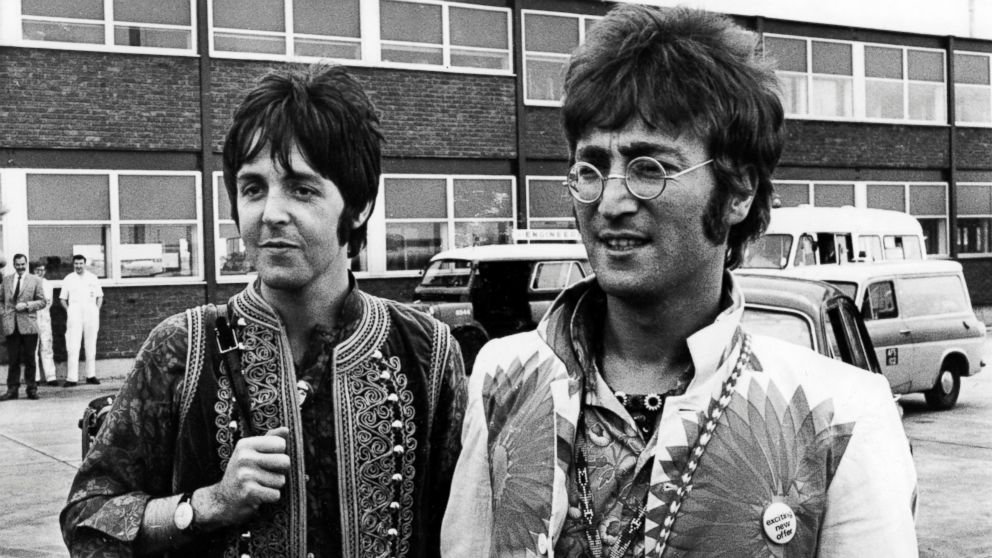
During an informal studio session, they played together again. It wasn’t a polished performance or a planned collaboration. There was no audience waiting to hear the result. But in that moment, it didn’t matter. The act of playing—of sharing music the way they once had—carried its own meaning. It suggested that beneath everything that had happened, something essential had remained intact.
For those who understand their history, that brief reunion holds a lasting resonance.
It reminds us that relationships, even those shaped by conflict, don’t always end in finality. Sometimes, they pause. Sometimes, they wait. And sometimes, given the right moment, they find their way back—quietly, without needing to prove anything to the world.
The meeting in 1974 didn’t rewrite the past. It didn’t erase the tensions or change the course of history. But it offered something else—something quieter, yet just as meaningful.
A reminder that the bond between John Lennon and Paul McCartney was never fully broken.
It was simply waiting for a moment when it could be felt again.