
Introduction
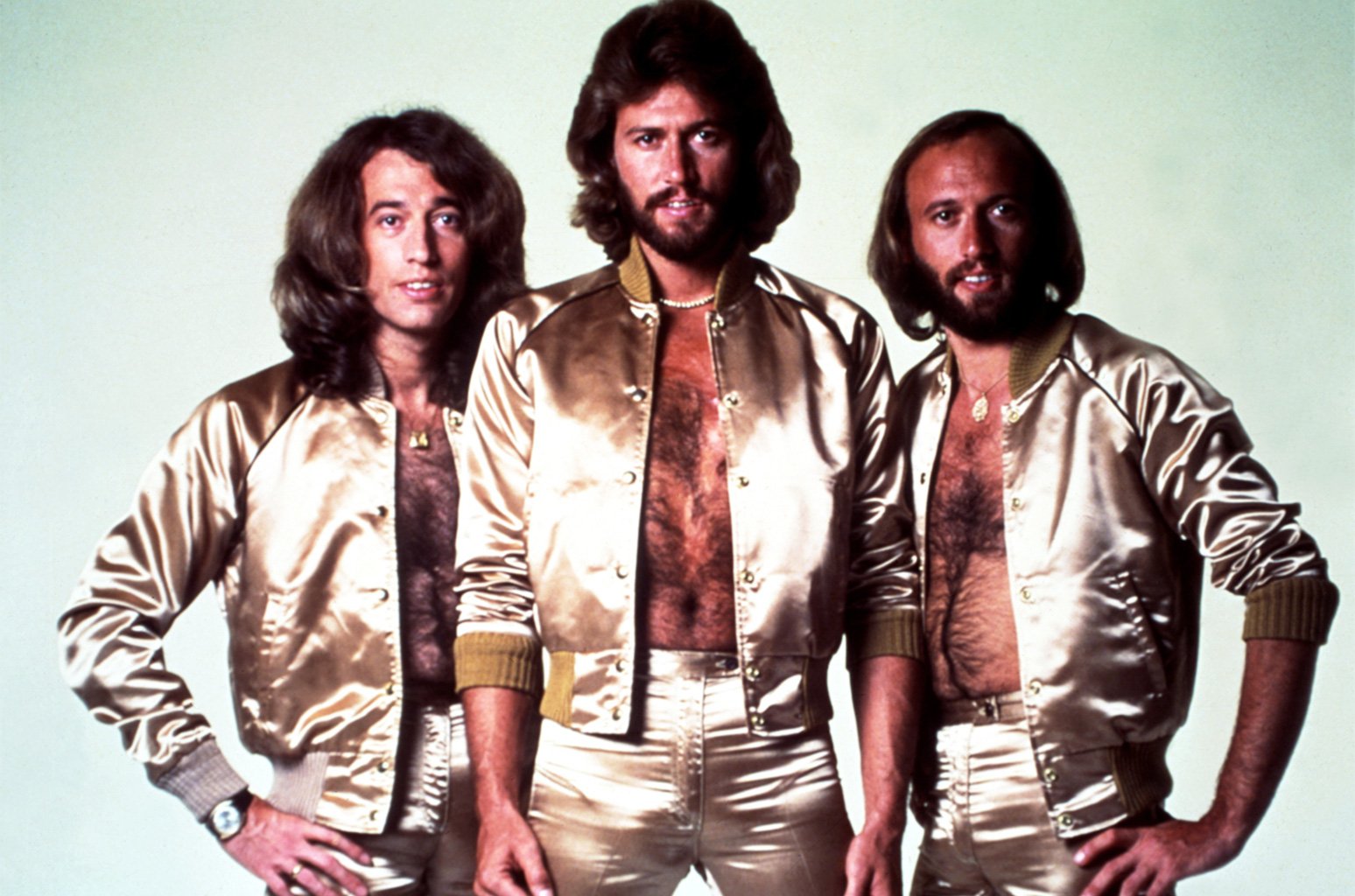
MIAMI, FL — During a rare, private interview tied to the 35th anniversary of their celebrated career and the release of This Is Where I Came In, the Bee Gees spoke with unusual candor about the single moment they say reshaped their lives more than any chart peak, tour triumph, or studio breakthrough. The subject was the death of their youngest brother, Andy Gibb.
For a group long associated with high harmonies and the polished confidence of an era, the conversation revealed a side audiences seldom witnessed. The atmosphere changed quickly when the band was asked to name the worst moment of their decades-long journey. Robin Gibb answered without hesitation, his tone subdued as the room fell quiet.
“The worst moment, without any doubt, was losing our youngest brother Andy,” Robin said softly. “That is probably the worst thing that ever happened to us.”
Only minutes earlier, the setting had carried a lighter mood as the brothers discussed creativity, endurance, and the energy of returning to music with fresh purpose. But at the mention of Andy, the temperature of the interview shifted. Barry Gibb, the eldest brother and the group’s informal leader, leaned forward and acknowledged that time had not erased what the family lived through.
“I think we are never going to get over it,” Barry admitted. “He was our youngest brother. Losing a brother is unimaginable. But seeing our parents lose their youngest son is something we never really understood. It broke them. It broke us.”
The remarks were not framed as nostalgia or public relations. They were delivered as a plain statement of what the family still carries. The Bee Gees have been praised for their ability to adapt across eras, from early ballads to global disco dominance, then into later reinventions that kept their songwriting in demand across the industry. Yet in this interview, the brothers described a grief that no acclaim could offset.
Andy Gibb was more than a younger sibling watching from the wings. He became a global teen idol in the late 1970s, rising swiftly with major hits including I Just Want to Be Your Everything, (Love Is) Thicker Than Water, and Shadow Dancing. With his looks, charisma, and vocal talent, Andy appeared positioned to follow the family path into lasting superstardom. Publicly, the story looked effortless. Privately, the family says it was not.
Behind the magazine covers and number one singles, Andy faced years of emotional turmoil and addiction. Over time, those struggles weakened him physically. In March 1988, only five days after his 30th birthday, Andy died. The official cause was myocarditis, an inflammation of the heart, believed to have been worsened by long-term substance use. The details have been reported for years, but the brothers’ comments underscored how the event remains present in their lives, not as history, but as a continuing reality.
The loss also altered the internal life of the group. The Bee Gees were known not only for their catalog but for a bond shaped by family and work in equal measure. In the interview, the brothers described that bond as tested by something music could not solve. The conversation offered little appetite for mythology. Instead, it returned repeatedly to family, and to the difficult experience of watching their parents endure the death of a child.
Maurice Gibb, seated between his brothers, nodded quietly as the discussion continued. He then offered a glimpse into how the family has tried to live with the absence, speaking in measured terms about belief and comfort rather than certainty.
“We believe he is still with us,” Maurice said, his voice thick with emotion. “Now Dad is gone too, we think they are together. That comforts us. We know Andy is not alone.”
The exchange did not drift into dramatic storytelling. It stayed focused on what the brothers said they feel, and what they still notice in ordinary moments. Barry described the lingering sense of presence that follows him when he performs, a statement that connected their private grief to the public setting audiences know best.
“Every time I step on stage,” Barry said quietly, “I still feel him there. I always will.”
In that brief stretch of conversation, the famous image of the Bee Gees as untouchable hitmakers fell away. What remained were three brothers talking about a missing fourth, and about the lasting gap left behind. The group’s most recognized songs, including Stayin’ Alive and How Deep Is Your Love, have long been treated as cultural landmarks. Yet here, the discussion centered on something not captured in a recording, a family’s attempt to continue while carrying a permanent loss.
Barry later added that memory does not fade in predictable ways. The band, he noted, can joke about aging, but not every part of the past becomes easier to hold.
As the interview moved toward its end, the brothers returned to present-day topics, including their renewed creative drive and the momentum surrounding This Is Where I Came In. Still, the earlier silence seemed to linger in the room. What began as a conversation about longevity and achievement briefly became something else, a reminder that even artists defined by confidence and control can be brought back to the most human of realities.
The Bee Gees have spent a lifetime writing about love in many forms, romantic, spiritual, and fraternal. In this interview, the clearest theme was the bond of family, shaped by success yet marked by absence. As they prepare to share their music with new listeners, the brothers made plain that Andy Gibb remains part of how they understand their story, not as a footnote, but as a presence that never entirely leaves the room.
Video