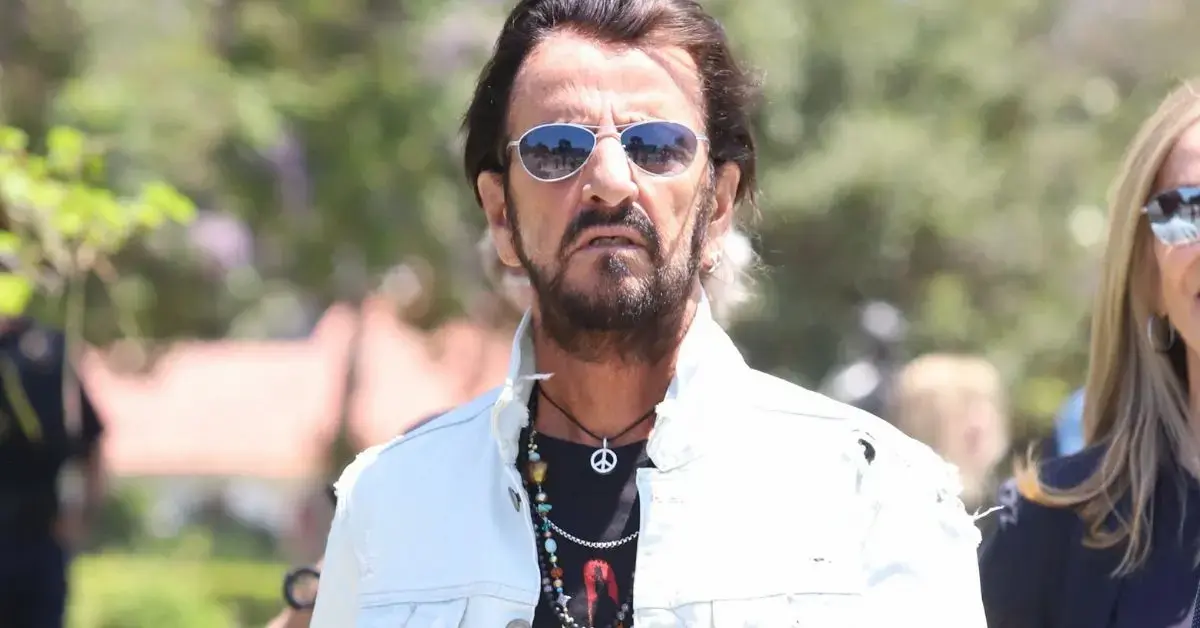
Live music has a way of creating moments no one can predict. Even in a carefully planned set, something unexpected can shift the entire atmosphere in seconds. That’s exactly what happened during a recent intimate concert in Los Angeles, where Paul McCartney was performing a rare small-venue show.
The setting itself already felt special. Known for filling stadiums, McCartney had chosen a much smaller space, bringing his catalog closer to the audience than usual. Fans packed into the venue knew they were in for something different—a more personal take on songs that have defined generations, from The Beatles to his later work with Wings.

The night unfolded as expected at first. McCartney moved through familiar melodies, sharing stories and letting the songs carry their own history. The connection between performer and audience felt immediate, almost conversational. Then, without warning, everything changed.
A figure walked onto the stage.
For a brief moment, the room seemed unsure of what it was seeing. Then recognition set in. It was Ringo Starr.
The reaction wasn’t instant chaos—it was something quieter at first. A collective pause, as if the audience needed a second to confirm it was real. Then came the eruption. Cheers, applause, and disbelief blended together as the realization spread: two members of one of the most influential bands in history were about to share the stage again.
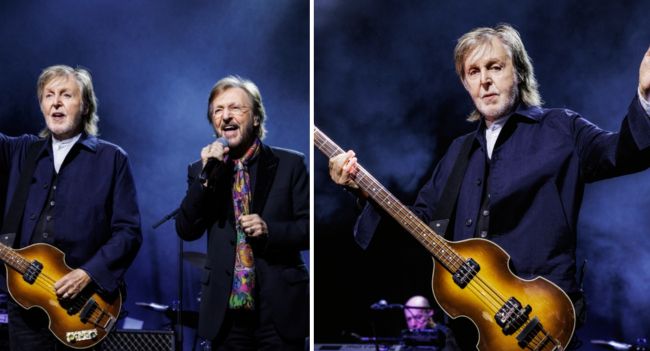
Moments like this don’t rely on elaborate production or planning. Their power comes from spontaneity. Starr’s appearance wasn’t built up or announced—it simply happened. That authenticity gave the moment its impact.
When the music began, the energy shifted once more. What had been excitement turned into something deeper. Watching McCartney and Starr perform together wasn’t just about nostalgia—it was about continuity. Decades after their earliest recordings, the connection between them was still visible, still audible.
Their performance carried a sense of ease. There was no need to prove anything, no pressure to recreate the past exactly as it was. Instead, they played with the confidence of musicians who understand both their history and their present. The songs felt alive, not preserved.
For the audience, it became more than just a surprise guest appearance. It was a rare glimpse into something enduring. Many had grown up with these songs, hearing them through recordings, documentaries, and stories. Now, in a small venue, they were witnessing that legacy in real time.

As the set continued, the initial shock settled into appreciation. Fans sang along, fully aware that they were part of a moment that couldn’t be replicated. These are the kinds of performances that don’t just entertain—they stay with people, becoming stories shared long after the final note fades.
In the end, what made the night unforgettable wasn’t just the surprise itself. It was what it represented: the lasting bond between two artists, and the timeless quality of the music they helped create.

And for everyone in that room, it was a reminder that sometimes, the most powerful moments in music are the ones no one sees coming.