“I Thought It Was Already Written Somewhere — It Was That Clear in My Head” — The Queen Song So Powerful Brian May Feared It Had Been Stolen, How ‘The Show Must Go On’ Emerged From Freddie Mercury’s Final Fight, and Why One of Rock’s Greatest Anthems Was Born From Pain, Courage, and a Voice That Refused to Fade Even as Time Was Running Out

Queen

The Queen song that was so good Brian May thought it was stolen: “I could hear it so clearly”

Queen is one of the most famous rock bands ever. They started in the 1970s and quickly became known for their unique style. Brian May’s guitar skills were amazing, but it was Freddie Mercury’s love for theater, ballet, and drama that made the band special. This mix of rock and performance art set them apart from other bands.

Queen In The 80s: An Unstoppable Hit-Making Force

Queen was also famous for their live shows. Their performance at Live Aid in 1985 is still remembered as one of the greatest concerts ever. Freddie Mercury’s energy and connection with the crowd made that performance unforgettable. Millions of people around the world watched them play hits like Bohemian Rhapsody and We Will Rock You.

However, things took a sad turn in the late 1980s. Freddie Mercury was diagnosed with AIDS, a disease that was not well understood at the time and carried a lot of stigma. The news was kept private, but rumors and tabloids made life harder for him and the band.
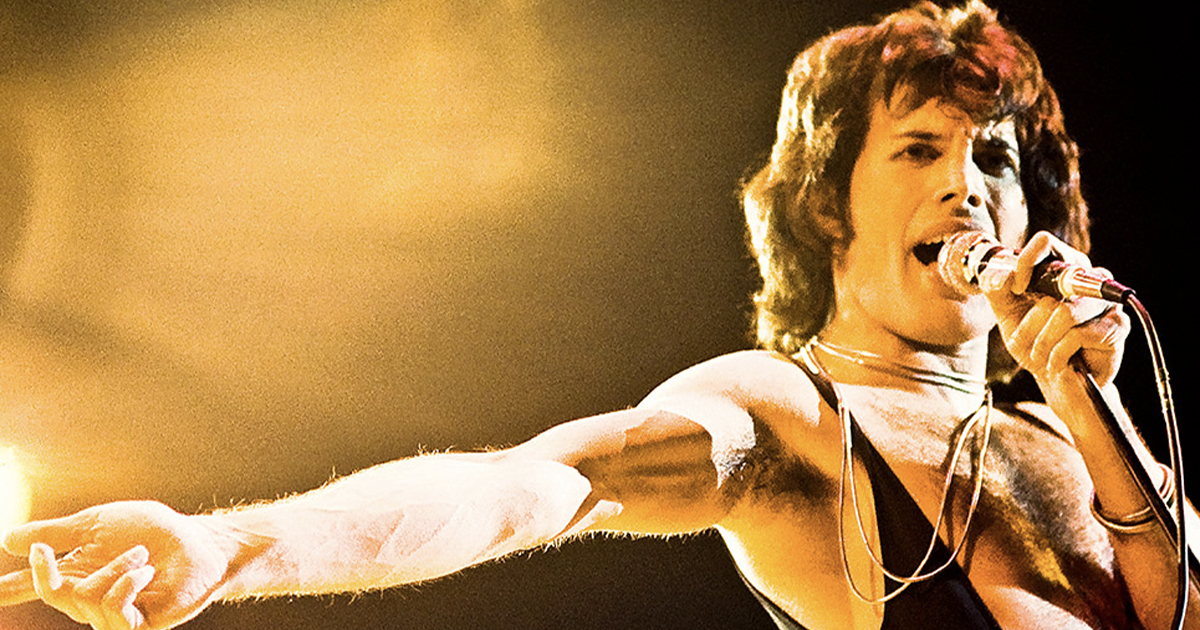
Freddie Mercury recorded vocals for Made in Heaven while dying ...

Even as his health declined, Mercury continued to work with Queen. One of the most powerful results of this time was the song “The Show Must Go On.” Written mostly by Brian May, the song was about Freddie’s courage to keep performing even while he was very sick. When he recorded it, he was weak, but his vocals were strong and emotional. It was recorded just weeks before he passed away in November 1991.

The song became a symbol of bravery and determination. Its lyrics tell the world that no matter how hard life gets, you have to keep going. Fans loved it, and it became one of Queen’s most famous songs. It also helped people remember Freddie Mercury for his incredible talent and strength.
Freddie Mercury's Final Music Video: Director Rudi Dolezal ...

Even today, The Show Must Go On reminds us of Freddie’s spirit and Queen’s power as a band. It is more than a song — it is a message of hope, courage, and never giving up, no matter what challenges come your way. 🎶

0 Shares:
Leave a Reply

Your email address will not be published. Required fields are marked *

You May Also Like
Dolly Parton
Read More

“When the last note dies, but the soul of the nation still sings…” On a golden night in Austin, Willie Nelson stood under the stage lights for the last time, guitar in hand, tears streaming down his haggard face. At 92, the living pulse of country music was met with an eight-minute ovation that would resonate across generations—a farewell not just to a legend, but to the spirit of an era. When he whispered, “I don’t think anybody wants to hear me sing anymore,” the crowd roared back, “Forever, Willie!” In the front row, his closest friend, Dolly Parton, wept unabashedly, her heart breaking with the world’s. This was more than a concert—it was a moment when time stood still, and America embraced a man who had given everything he had, wanting nothing more than to sing.

The Austin air, thick and warm on that mid-July night, carried more than just the scent of Texas…
patti smith
Read More

Patti Smith, the legendary ’70s rocker and often called the Godmother of Punk, just shocked fans in the best way possible. At 78 years old, she stepped onstage and delivered a mind-blowing cover of a classic hit by The Who—so powerful and raw that the crowd practically stopped breathing. People came expecting a good performance, but what they got felt like a lightning bolt. Her voice, still fierce and full of fire, tore through the song like she owned it, leaving fans cheering, crying, and wondering how someone pushing eighty can still shake a room like that. It wasn’t just a cover—it was a reminder that Patti Smith is still a force you don’t dare underestimate.

Photo by Elekes Andor, CC BY-SA 4.0, via Wikimedia Commons A Surprise Throwback on Stage Often hailed as…
Il Volo
Read More

“16 Years Later… and They Still Made Us Cry! ” When IL Volo Stepped Onto the Stage Beside Antonella Clerici After More Than a Decade, the Audience Lost It. What Began as a Simple Tribute Quickly Turned Into a Wave of Pure Emotion — Laughter, Tears, and Disbelief All at Once. As the Lights Dimmed and Familiar Melodies Filled the Air, Memories of Their Very First Appearance Together in 2009 Came Rushing Back. Even the Trio — Usually Composed and Smiling — Couldn’t Hold Back Their Tears. Fans Called It “A Full-Circle Moment You Could Feel in Your Soul.” a Reunion 16 Years in the Making… and Every Second Was Worth the Wait.

When Il Volo walked onto the stage of Tutti Per Uno – Time Travel and met Antonella Clerici once again,…
Read More

A Tour That Feels Like Time Travel: Why Paul McCartney’s 2026 Return Means More Than EverWhen the announcement broke that Paul McCartney would be touring in 2026, it didn’t arrive with the usual buzz of concert news. There was no sense of routine excitement or predictable anticipation. Instead, it landed quietly but deeply, like a familiar melody drifting back into your life after years away. For many fans, McCartney’s music has never belonged to just one moment. It has stretched across decades, threading itself through personal histories in ways that are hard to put into words. These are not just songs people remember — they are songs people lived through. They played during long drives with no destination, in bedrooms filled with late-night thoughts, and in fleeting moments when life seemed to pause just long enough to be understood. That’s why this tour feels different. It’s not simply about seeing a legendary artist perform again. It’s about reconnecting with something that has quietly shaped who we are. The chords, the lyrics, the unmistakable voice — they carry echoes of younger selves, of people we used to be and moments we thought were long behind us. There’s something uniquely powerful about hearing music live that has already lived inside you for years. It’s almost like reopening a chapter of your life, except this time, you’re reading it with the perspective of everything that came after. The songs haven’t changed, but you have — and that changes everything. And then there’s the weight of time itself. McCartney isn’t just another artist on tour; he’s one of the last living bridges to a musical era that reshaped culture forever. Seeing him perform now feels less like attending a concert and more like witnessing history still in motion. It’s a reminder that the past isn’t as distant as it sometimes feels — that it can still step onto a stage, pick up a guitar, and sing. But perhaps what makes the 2026 tour feel so significant is the quiet awareness that moments like this don’t come around endlessly. There’s a sense, unspoken but understood, that this is something to be cherished. Not out of nostalgia alone, but out of appreciation for what it represents — longevity, artistry, and the rare ability of music to remain meaningful across generations. Fans aren’t just preparing to attend a show. They’re preparing to revisit parts of their own lives. To stand in a crowd of strangers who somehow share the same memories, the same emotional connections to songs that have traveled through time alongside them. In the end, this tour isn’t just about Paul McCartney returning to the stage. It’s about the way music endures — how it holds onto moments, carries them forward, and gives them back when we least expect it. And in 2026, for a few hours under stage lights, those moments will feel alive again.

When the announcement broke that Paul McCartney would be touring in 2026, it didn’t arrive with the usual…