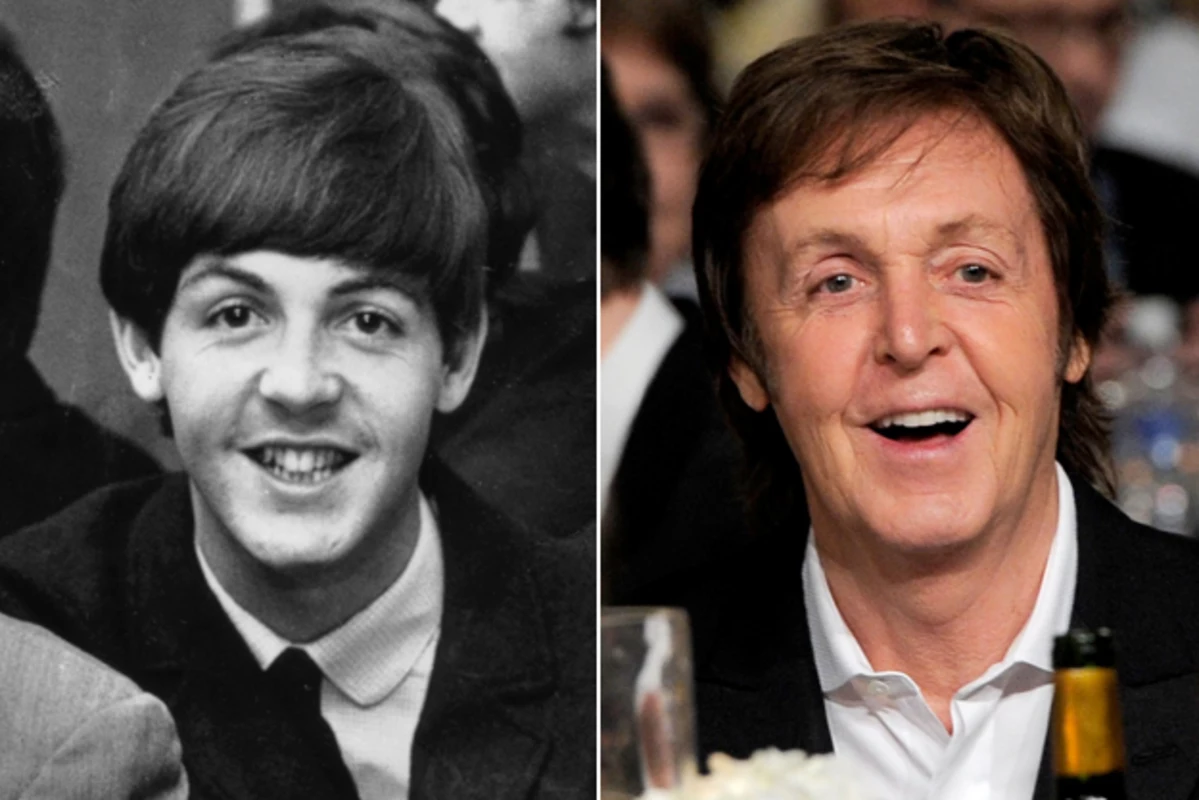
“They Didn’t Ask Permission — They Changed the Rules Instead.” In a quiet reflection that reframes everything we thought we knew about the Beatles, Paul McCartney looks back on the moment pop music stopped playing it safe and began listening to the unfamiliar. There were no guarantees, no roadmap, and no certainty the audience would follow — only tape loops, strange lectures, radical ideas, and a shared belief that listeners could be trusted with more than a conventional melody. What emerged wasn’t just experimentation for its own sake, but a turning point where popular music crossed an invisible line, carrying millions with it before anyone realized how far they’d gone.

Paul McCartney

“We decided that our audiences would come along with us, rather than it being down to us to feed them a conventional diet”: Paul McCartney on how the ’60s avant-garde influenced the Beatles

Paul Mccartney Smoking A Cigarette At London In England On June 19Th 1967

(Image credit: Keystone-France/Gamma-Keystone via Getty Images))

Paul McCartney has been talking about how exposure to avant-garde music enhanced the Beatles in the late ’60s and coloured some of their greatest work.

Macca has been interviewed by Radio 3 presenter Elizabeth Alker for her upcoming book Everything We Do Is Music, which explores the links between pop and classical music. In a piece in the Guardian, Alker describes meeting the ex-Beatle in his office as he remembers how he educated himself about experimental music.


McCartney saw experimental composer Cornelius Cardew in concert, attended a lecture by Karlheinz Stockhausen about synthesised music and met Delia Derbyshire. By 1966 all this background work was flowing into the Beatles’ music.

The first track to benefit from this new type of thinking was Tomorrow Never Knows, for which McCartney set up a couple of Brenell tape machines to create loops. “I set up the tape machines to create popping, whirring and dissolving sounds all mixed together.

“There could have been a guitar solo in it – straightforward or wacky – but when you put the tape loops in, they take it to another place because when they play, you get all these kind of happy accidents. They’re unpredictable and that suited that track. We used those tricks to get the effect we wanted.”

The following year brought I Am The Walrus, which in many ways went even further out. “(John) Cage had a piece that started at one end of the radio’s range,” he says, “and he just turned the knob and went through to the end, scrolling randomly through all the stations.

“I brought that idea to I Am the Walrus. I said, ‘It’s got to be random.’ We ended up landing on some Shakespeare – King Lear. It was lovely having that spoken word at that moment. And that came from Cage.”

The one song Paul McCartney said was too over the top

Interestingly, McCartney said he wanted to use this new technology “in a controlled way”, still working within the limits of a three-minute pop song.

When the less cautious Lennon got his hands on a pair of Brenell machines, the result was Revolution 9, the extraordinary cut-up piece that must have astonished (and terrified) the group’s audience when they heard it for the first time on the White Album in late 1968.
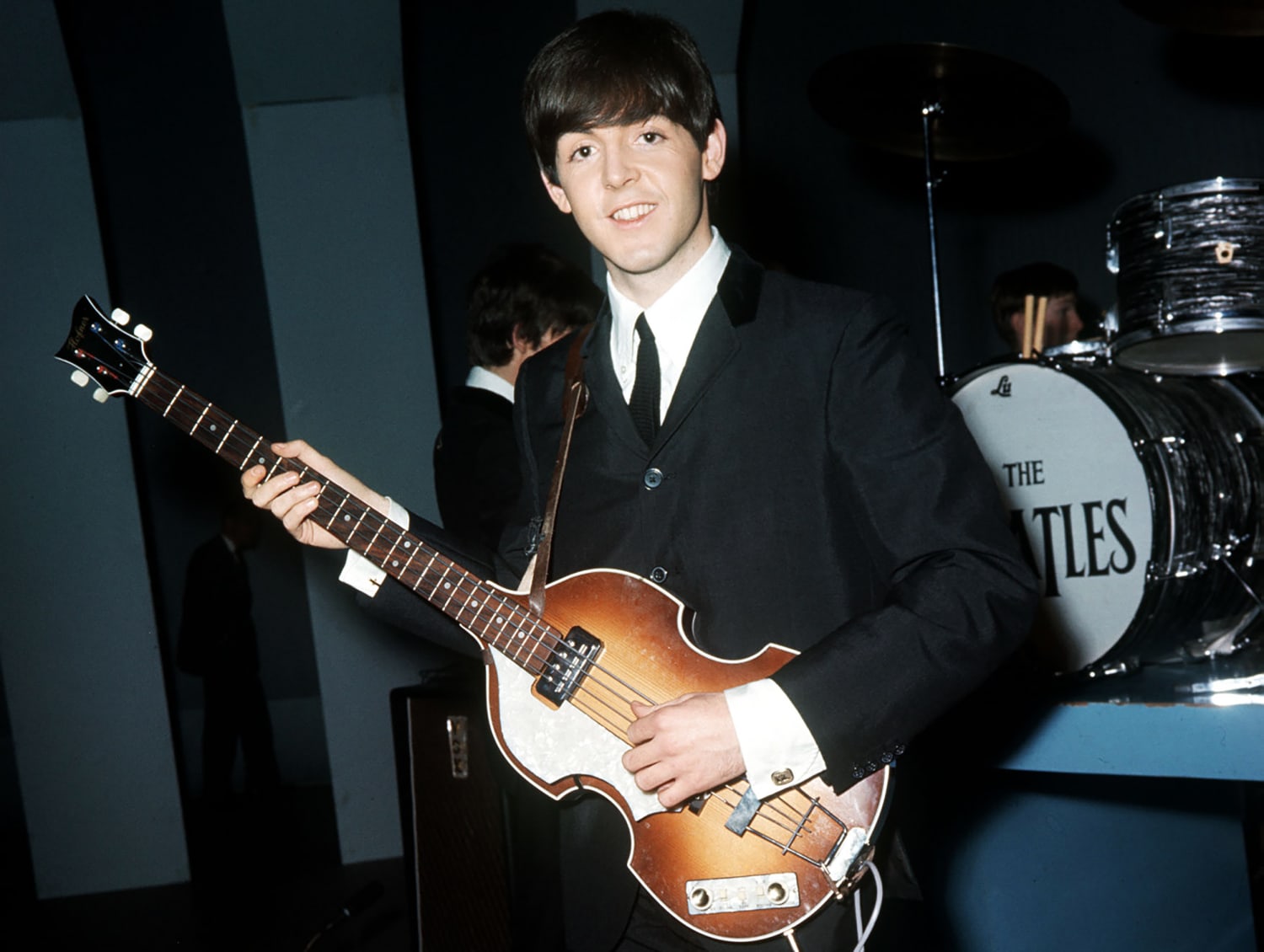
Paul McCartney reunited with famous bass stolen 50 years ago after online  campaign

But by bringing these elements into pop music, both Beatles were gently pushing their audience – and thus popular culture – forward. “You think, ‘Oh well, our audience wants a pop song,’” McCartney says.

“And then you might read about William Burroughs using the cut-up technique and you think, ‘Well, he had an audience, and his audience liked what he did.’ And eventually we decided that our audiences would come along with us, rather than it being down to us to feed them a conventional diet.”

Anyway, Alker’s book Everything We Do Is Music sounds fascinating. It’s out via Faber & Faber on August 28.

0 Shares:
Leave a Reply

Your email address will not be published. Required fields are marked *

You May Also Like
Tom Kennedy
Read More

It started as what looked like a routine bass break, but within moments Tom Kennedy had quietly taken control of the room, drawing everyone in without raising his volume or his posture. Instead of racing through notes, he let them hang, bend, and settle, as if telling a story one sentence at a time. You could almost hear the audience thinking it together — “Wait… listen to this.” Midway through the solo, applause burst out unexpectedly, not at a finish line but at a feeling, as Kennedy pushed the groove just far enough to make the tension delicious. When the final note finally landed, the reaction wasn’t just clapping — it was the sound of people realizing they had witnessed instinct, restraint, and soul working in perfect balance, a moment they’d be replaying long after the lights went down.

“WHEN TOM KENNEDY TOOK OVER THE MOMENT — A BASS SOLO THAT TURNED A CROWD INTO BELIEVERS” It…
Kate Hudson
Read More

“We Didn’t Want To Cover It — We Wanted To Risk It.” That Was the Quiet Confession Before Kate Hudson and Hugh Jackman Flipped “Cherry, Cherry” on Its Head. What Began as a Familiar Neil Diamond Groove Quickly Turned Into Something Unexpected — Playful, Aching, and Charged With Tension. Hudson Leaned Into Vulnerability, Her Voice Warm but Edged With Restraint. Jackman Followed, Holding Back Just Long Enough To Make the Release Hit Harder.

Kate Hudson and Hugh Jackman have given “Cherry, Cherry” new life. In a behind-the-scenes clip debuting exclusively with PEOPLE, Hudson, 46, and Jackman,…
Beatles
Read More

They didn’t try to become The Beatles. They simply returned to the place where their fathers once stopped — a rooftop, the London wind, and music with no need for a stage. James McCartney. Sean Ono Lennon. Dhani Harrison. Zak Starkey. Sons who grew up inside a legend, yet chose not to live inside its shadow. No mimicry. No costumes. No replaying the past. Just hands on instruments and one quiet question: if their fathers were here today, how would the music sound now? This wasn’t a reenactment of the 1969 rooftop. It was a continuation — spoken in a new generation’s voice, where memory isn’t a museum, but a living breath. No grand announcement. No demand to be remembered. Just four pairs of hands in the open London air, reminding the world that legacy isn’t meant to be repeated — it’s meant to move forward.

ROOFTOP LEGACY IN FOUR PAIRS OF HANDS When the sons of The Beatles lifted history back into the…
michael buble
Read More

“THE INTERNET JUST FROZE — WHAT DID THIS KID JUST DO?!” The Voice Fans MELT DOWN as 17-Year-Old Max Chambers’ Raw A Cappella Bublé Cover Turns a Simple Voting Clip Into the Most Viral ‘Mic Drop’ Moment of the Season 🎤🔥 Viewers are calling him “the most natural talent in YEARS”… and now producers are scrambling behind the scenes! Shreveport teen Max Chambers transformed a straightforward voting call into an unforgettable viral explosion with his stunning a cappella Michael Bublé cover that has taken The Voice fandom by storm.

Shreveport’s own Max Chambers has captured the hearts of The Voice fans everywhere with his a cappella rendition…