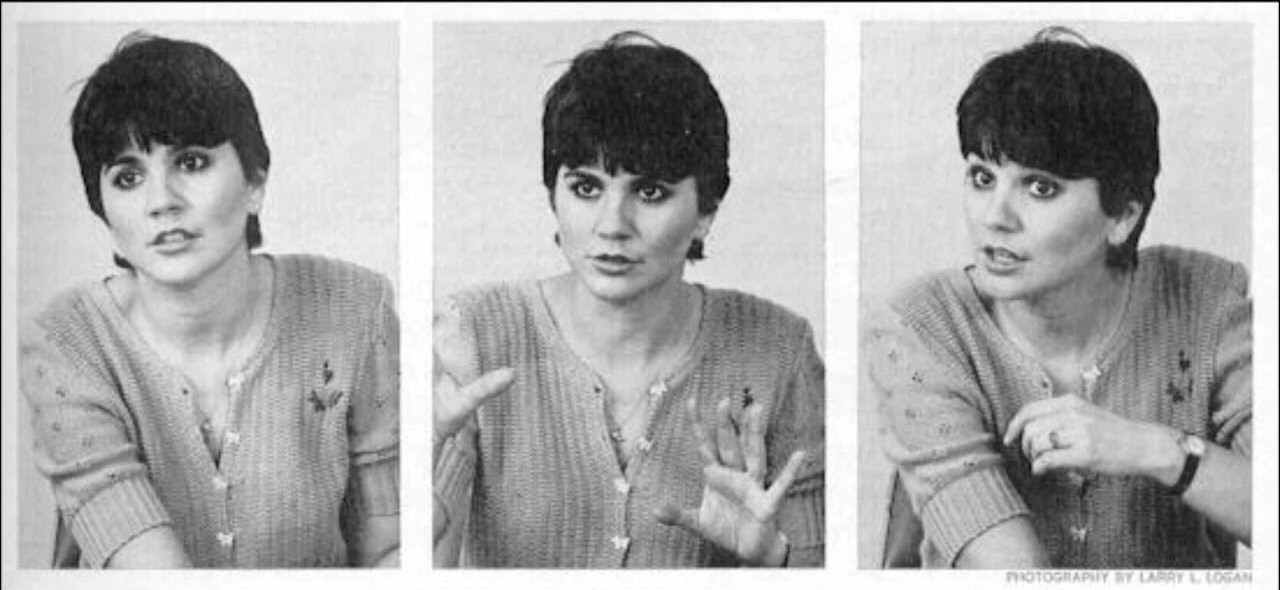
“Dedicated to the One I Love”becomes a lullaby of devotion—proof that the gentlest songs can carry the longest history of longing, comfort, and promise.
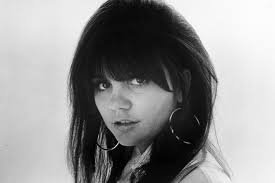
When Linda Ronstadt released Dedicated to the One I Love on June 25, 1996, she did something that on paper sounded almost mischievous. She took a handful of rock and pop classics and reimagined them as bedtime lullabies. Yet the results were anything but a novelty. The album reached No. 78 on the Billboard 200, topped Billboard’s Top Kid Audio chart, and then went on to win the GRAMMY for Best Musical Album for Children at the 39th Annual GRAMMY Awards (1997). That is the real “ranking at launch” story here. Not a single chasing radio but a full concept album landing strongly enough to be measured and honored.
The title track, “Dedicated to the One I Love,” sits at the doorway as track 1, setting the album’s entire emotional posture before anything else can. In Ronstadt’s hands, “dedication” is not a dramatic declaration. It is something whispered. The arrangement is soft-edged with harp, strings, and delicate textures. Even a glass harmonica appears among the album’s credits. This is the kind of sound that does not compete for attention but gently gathers it. Crucially, Ronstadt was not just the singer. She co-produced the album with George Massenburg, shaping the record’s entire palette of tenderness with the confidence of an artist who had already conquered every “serious” genre she wanted to touch.
What makes this particular song so fascinating is the weight of its past. “Dedicated to the One I Love” was written by Lowman Pauling and Ralph Bass, and first recorded by The “5” Royales in 1957. It was a piece of doo-wop and early R&B yearning that already understood how love can sound both brave and vulnerable at the same time. The tune then moved through the decades like a letter passed hand to hand. The Shirelles helped make it widely known in the early 1960s with their re-release hitting No. 3 on the Billboard Hot 100, and The Mamas & the Papas later pushed it even higher in 1967, reaching No. 2 on the Billboard Hot 100. So by the time Ronstadt arrived in 1996, she was not merely covering a “classic.” She was stepping into a song with a long, communal memory already worn smooth by decades of people dedicating it to someone they missed.
And then she changed its meaning without changing its words.
In earlier versions, “dedicated” can feel like a public announcement—flowers, spotlight, the emotional certainty of youth. Ronstadt’s version feels like something more private. A note left on a kitchen table. A promise made quietly so it will not be broken by noise. When she sings it as a lullaby, the devotion becomes less about romance and fireworks and more about love as shelter. It is almost as if the song finally reveals what it was always capable of. Not just longing but protection. The phrase “dedicated to the one I love” suddenly sounds like an act of care. Something you do for a person you are responsible for, a person you are determined to keep safe in your heart.
That shift is also the album’s central idea. Dedicated to the One I Love was recorded primarily between September 1995 and January 1996 at The Simplex, with one notable exception, “Winter Light,” recorded earlier at Skywalker Ranch. The production credits read like a craftsman’s workshop. String players, orchestration, and a refined studio touch refuse to become cold. Ronstadt had already proved many times over that she could sing loudly enough to fill arenas and precisely enough to honor the Great American Songbook. Here, the achievement is the opposite. She sings as if she is leaning in close, trusting the listener to meet her halfway.
There is a poignant irony too in the song’s history versus its 1996 purpose. A track that once rode the currents of R&B and pop charts becomes in Ronstadt’s reading a kind of soft lantern. Music designed for winding down rather than going out into the world. And still, the world answered. A Billboard 200 peak, a children’s-chart No. 1, and a GRAMMY that certified the project’s sincerity. That arc says something quietly moving about Ronstadt’s artistry. She did not need to chase the old version of success. She simply reframed what “success” could sound like. Gentler, slower, and more lasting.
In the end, “Dedicated to the One I Love” is a song about devotion that has survived multiple lifetimes of popular music. Ronstadt’s version feels like the moment it stops performing devotion and starts living it. It does not shout its love. It keeps watch. It stays. And when the final notes fade, what remains is the feeling the best lullabies leave behind. The sense that for a little while the world has been made kinder—simply because someone chose to sing softly and mean every word.
Video