When Two Opposite Worlds Sang as One
“I didn’t even know who he was.”
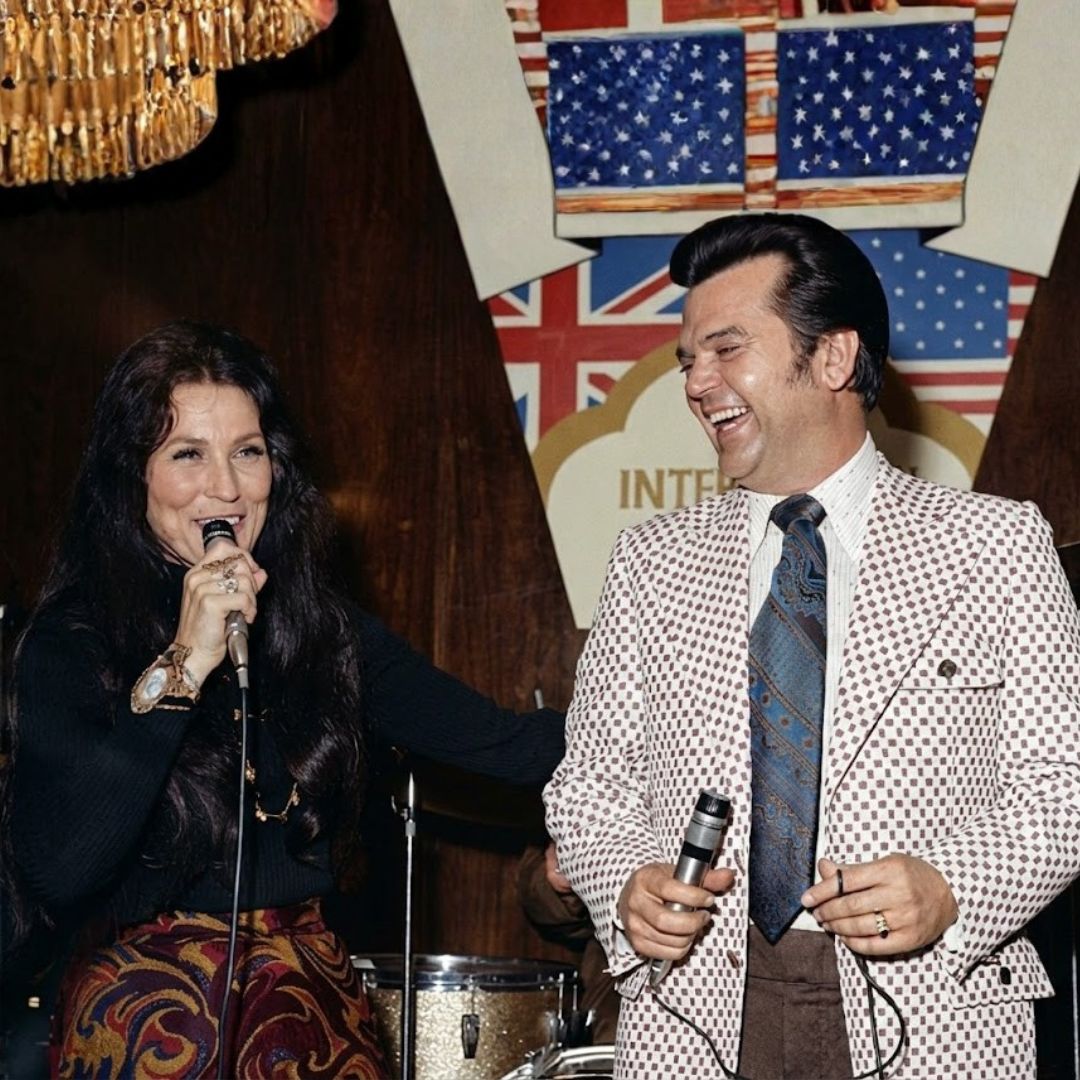
That’s how Loretta Lynn later described the moment she was told she would record a duet with Conway Twitty. At the time, Conway was already a polished pop-and-rock star, famous for “It’s Only Make Believe.” His hair was perfect, his smile practiced, and his reputation leaned toward romance and spotlight. Loretta, on the other hand, came from coal dust and kitchen tables. She was married, plainspoken, and proudly country. To her, fame was something you worked through, not something you posed for.
When they first stood in the studio together, the contrast was almost theatrical. Conway looked like he belonged on a Las Vegas stage. Loretta looked like she belonged on a front porch. They exchanged polite hellos, unsure what they were supposed to be to each other—partners, rivals, or just two professionals finishing a job.
A Song That Changed the Room
The song waiting for them was “After the Fire Is Gone.”
On paper, it was just another duet—two voices telling a story of temptation and regret. But when the tape started rolling, something shifted. Loretta’s voice carried the weight of lived-in truth. Conway’s carried smooth longing. Together, they sounded like two people who had known each other for years instead of minutes.
The studio went quiet in a way that only happens when something unexpected appears. Engineers stopped talking. Musicians forgot to check their instruments. Even the producer leaned forward, as if afraid the moment might disappear if he moved.
They finished the take and no one spoke right away.
Someone finally said, “Let’s do it again.”
But the second take sounded just like the first—honest, dangerous, and strangely believable.
The Illusion of a Perfect Pair
When the song was released in 1971, audiences didn’t just hear a duet. They heard a story. Fans wrote letters asking if Loretta and Conway were really in love. Radio hosts hinted at secrets. Newspapers printed their photos side by side, as if the song had created a couple instead of a collaboration.
In truth, their lives could not have been more different. Loretta went home to her family and her farm. Conway went back to tours, lights, and hotel rooms. But when they stood together on stage, the distance between those two worlds seemed to vanish.
Some said it was acting.
Others said it was talent.
A few insisted it had to be something more.
Loretta would later laugh and say, “We just sang what people felt.” Conway would smile and change the subject.
A Partnership Built on Mystery
Over the years, they recorded hit after hit, becoming one of country music’s most famous duet partners. Yet the question never fully went away: why did they sound so real together?
Maybe it was because Loretta knew how to tell the truth without dressing it up.
Maybe it was because Conway knew how to make a line sound like a confession.
Or maybe the magic came from the fact that neither of them expected it.
Two singers from opposite worlds met in a studio.
One song made them sound like soulmates.
And the reason it worked so well was never fully explained.
What happened in that first recording session was never written into history books. It lived in the pause after the song ended, in the silence of the room, and in the way listeners believed every word.
And that unspoken secret—whatever it truly was—is what turned a simple duet into a legend.
Video