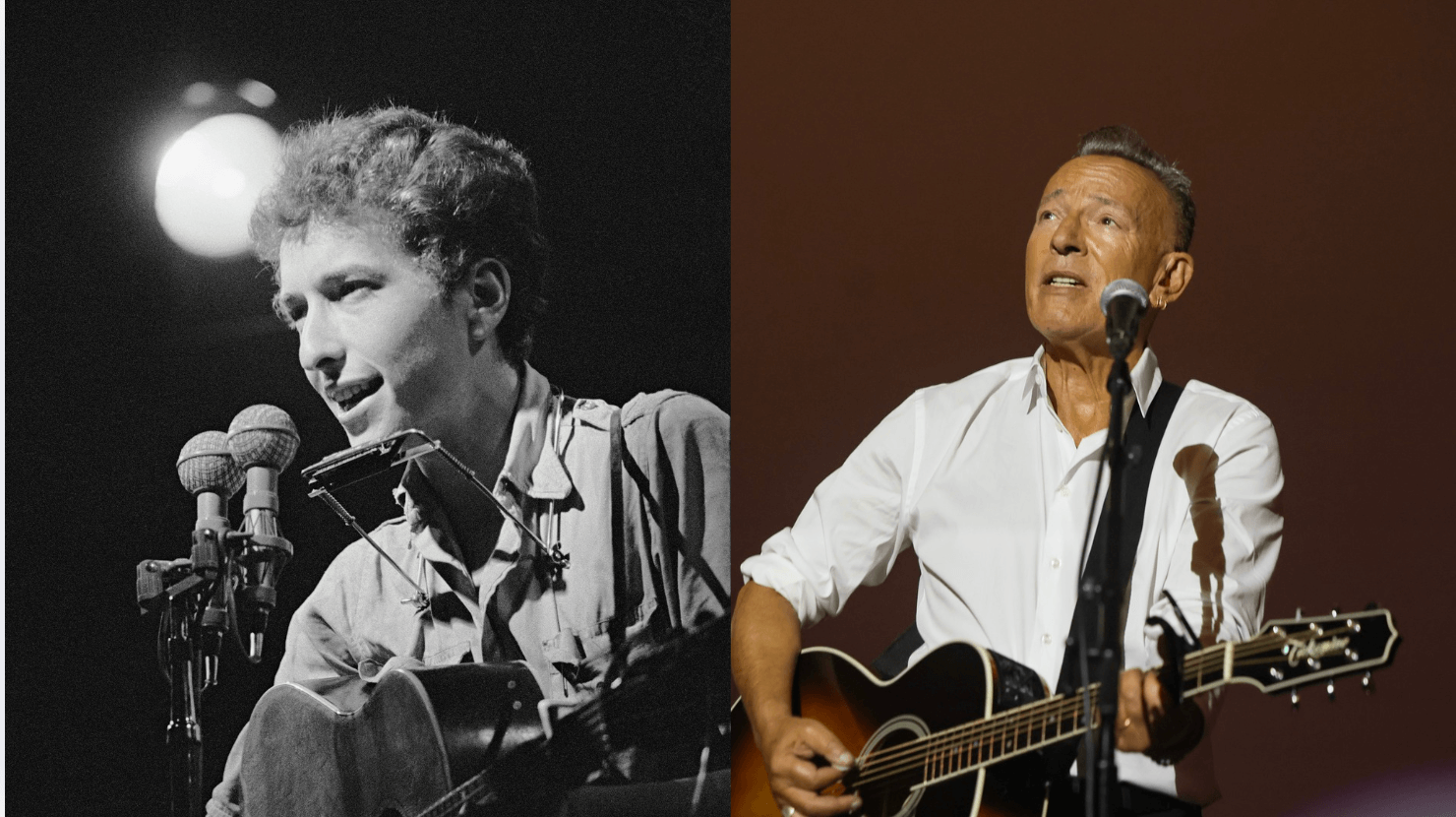
There have long been connections between Bob Dylan and Bruce Springsteen, who inducted the former into the Rock and Roll Hall of Fame. Photo by Getty Images
If you think you’ve heard Bruce Springsteen’s brand-new protest song before, you may not be far off base. The melody of the Boss’s “Streets of Minneapolis,” written, recorded and released just days after masked federal militiamen killed Alex Pretti, bears a strong resemblance to that of Bob Dylan’s “Desolation Row,” from the Nobel laureate’s 1965 album Highway 61 Revisited.
Whether Springsteen consciously or unconsciously patterned his song after Dylan’s doesn’t really matter. If anything, it is only appropriate that the Boss evoked it as a kind of tribute to one of his foremost musical inspirations (Springsteen inducted Dylan into the Rock and Roll Hall of Fame in 1988) – one who just happens to be a native son of Minnesota, who once roamed the very streets of the song’s title while attending university.
Dylan first gained renown in the early 1960s for writing topical songs about events ripped from the headlines, including such self-described “finger-pointing songs” as “The Lonesome Death of Hattie Carroll,” “Only a Pawn in Their Game” and “Who Killed Davey Moore?”
While Springsteen is no stranger to writing topical protest songs, “Streets of Minneapolis” is “the most overt, forensic and unambiguous political song of a long and storied career in which he hasn’t exactly been shy about his opinions,” writes music critic Neil McCormick in the Telegraph.
In a statement released along with the new song, Springsteen said: “I wrote this song on Saturday, recorded it yesterday and released it to you today in response to the state terror being visited on the city of Minneapolis. It’s dedicated to the people of Minneapolis, our innocent immigrant neighbors and in memory of Alex Pretti and Renee Good.”
Springsteen said, “If you believe in the power of law and that no one stands above it,” said Springsteen, “if you stand against heavily-armed masked federal troops invading an American city, using Gestapo tactics against our fellow citizens, if you believe you don’t deserve to be murdered for exercising your American right to protest, then send a message to this president, as the mayor of the city said: ICE should get the fuck out of Minneapolis.”
Picking up on that point, Springsteen’s new song culminates with the sounds of a crowd chanting “ICE out now!”
Other topical songs written by Springsteen over the years have included “American Skin (41 Shots),” “We Take Care of Our Own,” and “Living in the Future.” And the title of his new song is an obvious reference to “Streets of Philadelphia,” his Oscar- and Grammy Award-winning song about the AIDS crisis that served as the title song for the 1993 film Philadelphia.
If Springsteen’s melody owes something to Bob Dylan, the Boss favors a more direct lyrical approach than the more imagistic, poetic thought-dreams of the latter. Springsteen sings:
King Trump’s private army from the DHS
Guns belted to their coats
Came to Minneapolis to enforce the law
Or so their story goes.
And there were bloody footprints
Where mercy should have stood
And two dead, left to die on snow-filled streets
Alex Pretti and Renee Good.

Contrast that with the opening lines to Dylan’s “Desolation Row”:
They’re selling postcards of the hanging
They’re painting the passports brown
The beauty parlor is filled with sailors
The circus is in town
… And the riot squad they’re restless
They need somewhere to go
As Lady and I look out tonight
From Desolation Row
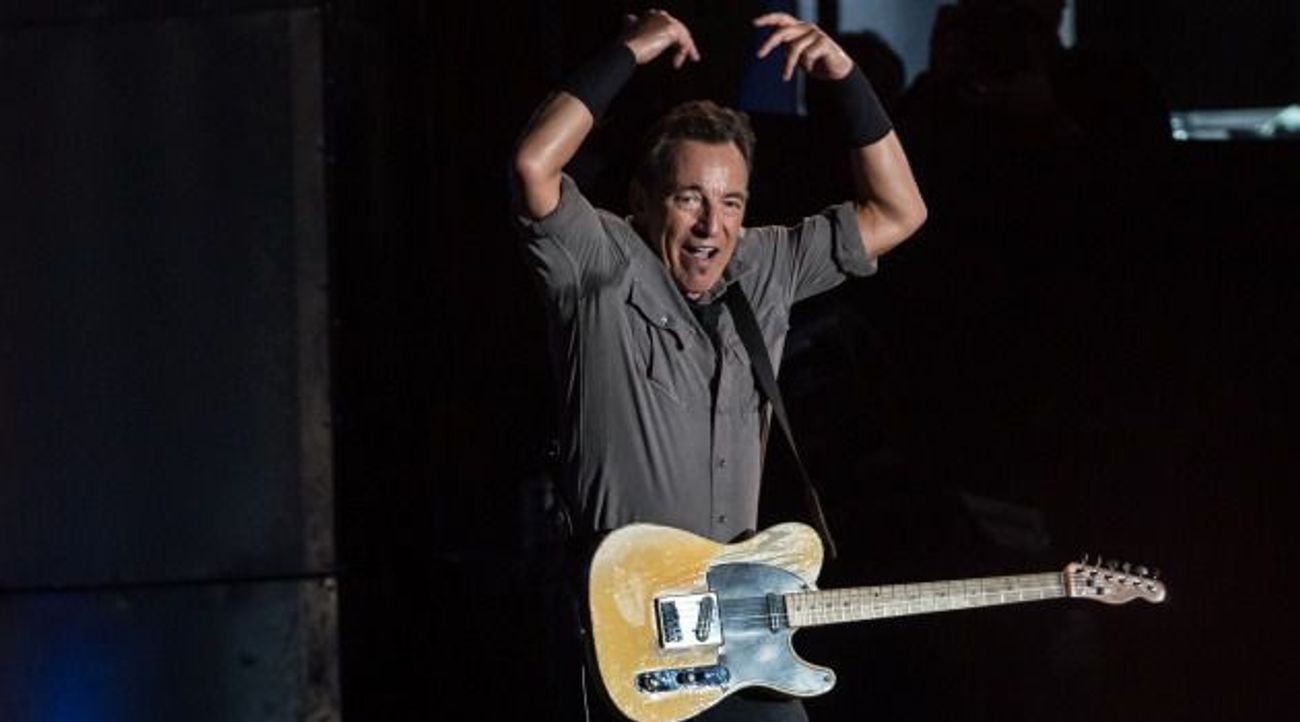
White House spokesperson Abigail Jackson exercised her free-speech rights to impersonate a rock critic in a statement following the new song’s release, saying that “the Trump Administration is focused on encouraging state and local Democrats to work with federal law enforcement officers on removing dangerous criminal illegal aliens from their communities — not random songs with irrelevant opinions and inaccurate information.” (Emphasis mine.)
Last year, after the Boss made remarks critical of the president, Trump posted on social media that Springsteen “ought to KEEP HIS MOUTH SHUT” and called for the artist to be investigated.
Rooted in the very real and present reality and details of what has been happening in Minneapolis and elsewhere ICE has “killed and roamed in the winter of ’26” — the song even calls out Homeland Security Advisor Stephen Miller and Secretary of Homeland Security Kristi Noem by name — it remains to be seen if Springsteen’s “Streets of Minneapolis” will stand the test of time in the manner of Dylan’s “Desolation Row.” Heard today, the latter song is resonant with prophecy:
Now at midnight all the agents
And the superhuman crew
Come out and round up everyone
That knows more than they do
Then they bring them to the factory
Where the heart-attack machine
Is strapped across their shoulders
And then the kerosene
Is brought down from the castles
By insurance men who go
Check to see that nobody is escaping
To Desolation Row.