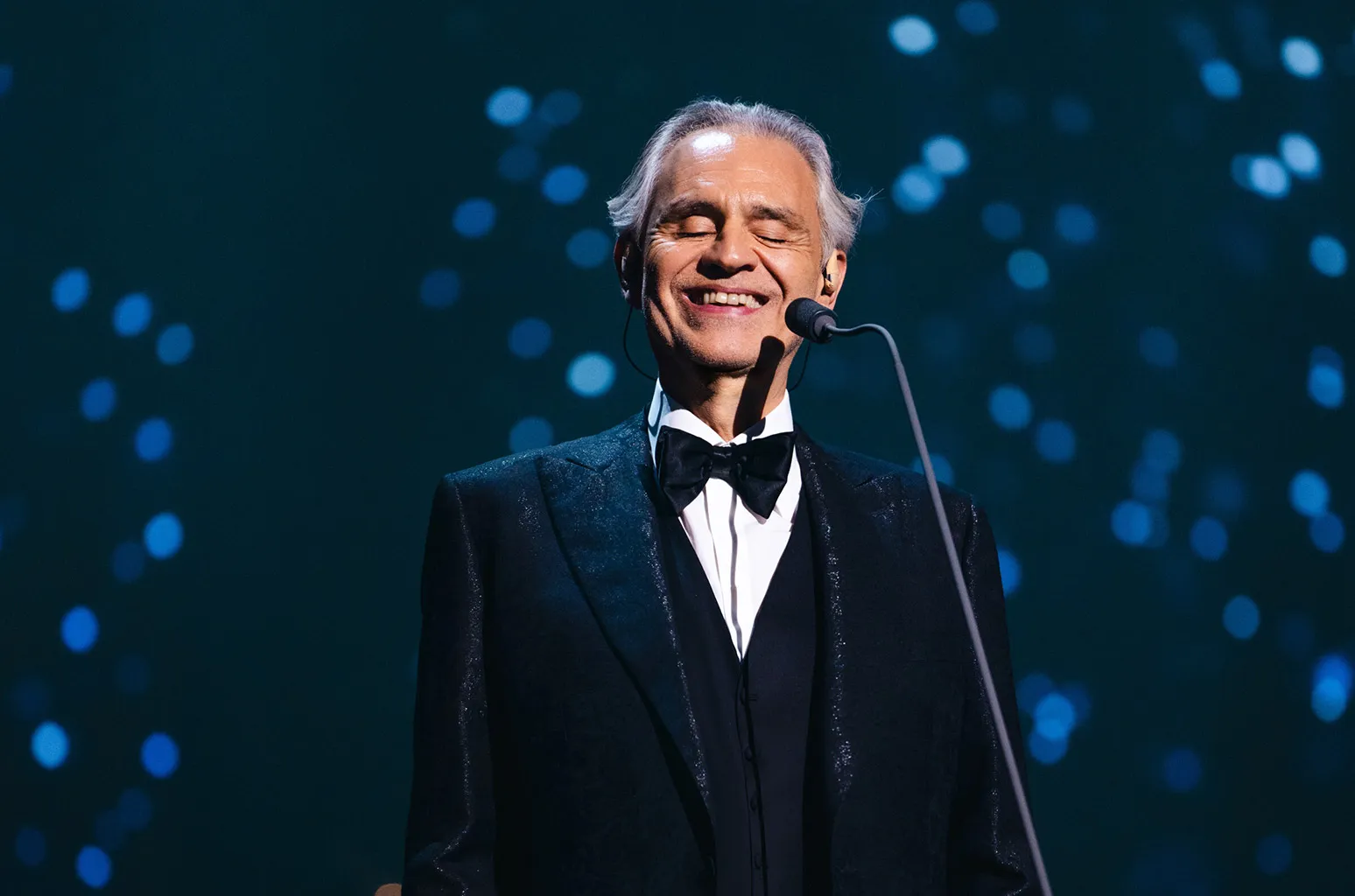
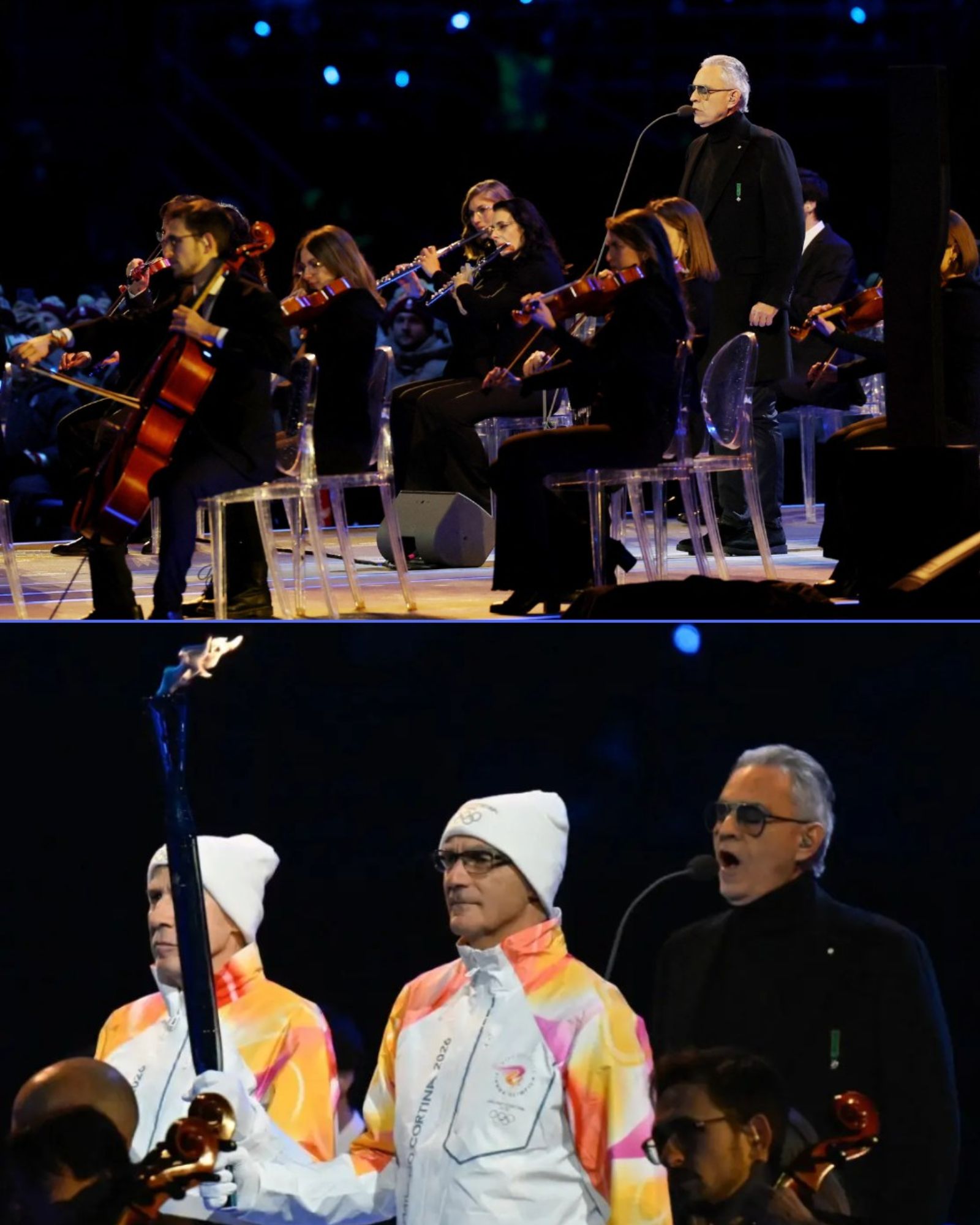
When Andrea Bocelli stepped onto the stage at the Opening Ceremony of the 2026 Winter Olympics, the roar of the stadium softened into something far quieter—and far more powerful. As the first notes of “Nessun Dorma” rose into the night air, it became clear this was more than a ceremonial performance. It was a pause. A collective breath. A moment that seemed to belong to the entire world at once.
Backed by a full orchestra and framed by sweeping visuals, Bocelli delivered the Puccini aria with his signature restraint and emotional control. There were no grand gestures or theatrical flourishes. He stood grounded, allowing the music to speak for itself. Each phrase carried patience, dignity, and resolve—qualities that mirrored the Olympic spirit far more than spectacle ever could.
For many watching, the choice of “Nessun Dorma” felt deeply symbolic. The aria, which famously ends with the declaration “Vincerò”—“I will win”—has long represented perseverance in the face of uncertainty. In the context of the Olympic Games, it transcended competition. It became a message of endurance, unity, and shared hope, carried across borders and languages.
As Bocelli’s voice soared, the stadium—filled with athletes, dignitaries, and spectators—fell into a rare collective stillness. Cameras lingered on faces in the crowd: some with eyes closed, others visibly moved. Viewers around the world noticed the shift as well, with social media quickly filling with reactions describing the performance as timeless, goosebump-inducing, and unforgettable.
Bocelli has performed on the world’s grandest stages throughout his career, but this moment felt especially resonant. He has often spoken about music as a universal language—one capable of transcending politics, nationality, and circumstance. Standing at the center of an event watched by millions worldwide, that belief felt fully realized.
As the aria reached its final crescendo, Bocelli held the closing note with remarkable clarity and calm, letting it linger in the air before dissolving into silence. The pause that followed was almost as powerful as the sound itself—a brief instant before applause, as if the world needed a moment to absorb what it had just experienced.
Then the stadium erupted.
The ovation was immediate and overwhelming, answering the stillness Bocelli had created moments earlier. It was less a celebration than an expression of gratitude—for the reminder that even in events defined by scale, technology, and spectacle, a single human voice can still stop time.
In an Opening Ceremony filled with innovation and visual grandeur, Bocelli’s “Nessun Dorma” stood apart precisely because of its simplicity. It did not compete for attention. It commanded it—quietly.
For many, the performance will endure as one of those rare Olympic moments that outlive the Games themselves. Not because of medals or records, but because it captured something harder to define: the shared feeling that, for a few minutes, the world was truly listening together.