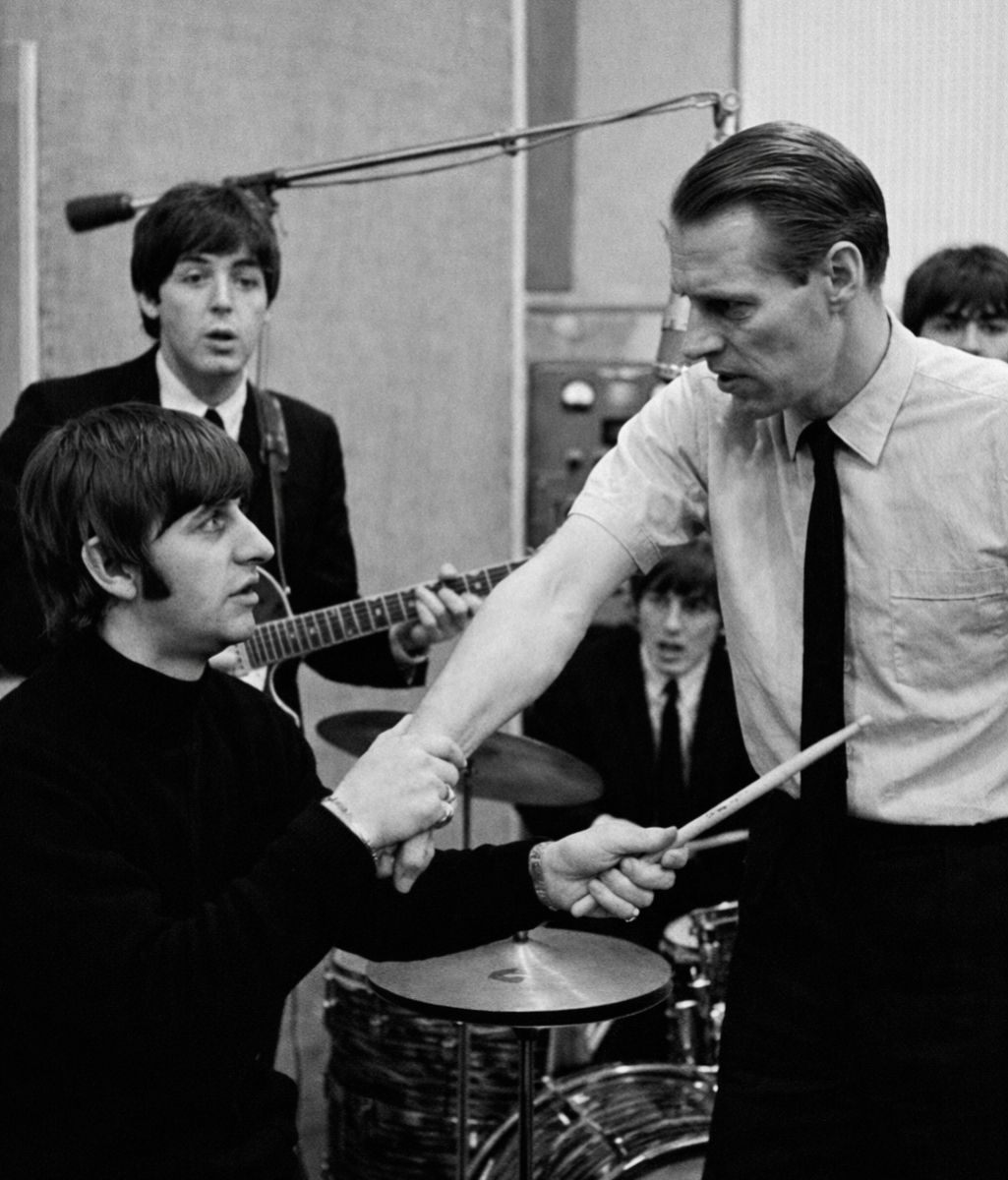
September 1962 carried tension into Abbey Road. Studio Two felt unusually crowded that day, not with people, but with uncertainty.
Two drummers were present, and everyone in the room understood what that meant. One sat confidently behind the kit, precise and professional, selected by producer George Martin to ensure control. The other stood slightly apart, tambourine in hand, saying nothing. His name was Ringo Starr.
No protest followed the decision. No argument. Ringo waited.
The session moved forward with discipline. Andy White played flawlessly. Every beat landed where it was meant to. Every bar aligned with the plan. On paper, nothing was wrong. The tape rolled. The notes were clean. Yet something essential refused to appear. The song existed, but it did not live.
Those listening felt it, even if they could not name it. The performance lacked breath. It moved forward, but it did not speak back. The rhythm obeyed, but it did not listen. In a room filled with technical excellence, humanity felt strangely absent.
Then, without ceremony, the balance shifted.
Ringo was invited to the kit. No announcement. No explanation. Just a quiet change in position. He sat down, adjusted the stool, and took a single breath. One count followed. Nothing dramatic. Nothing forceful. And yet, the room changed.
The groove softened. The song opened. Space appeared between notes, and that space mattered. The rhythm no longer pushed the music forward; it carried it. The beat felt conversational, instinctive, alive. The difference was immediate and undeniable.
💬 “That’s the sound.”
It was not spoken aloud, but it settled across the room with certainty. George Martin heard it instantly. This was not about accuracy. This was about identity. Technique could be taught. Feel could not. In that brief moment, the producer recognized something more valuable than control.
From that day forward, George Martin never hired another session drummer for The Beatles. His greatest misjudgment became his most important correction. Not because he abandoned standards, but because he learned to recognize character when it appeared quietly.
Ringo did not argue his way into that place. He did not demand it. He earned it through restraint. Through patience. Through the discipline of waiting until the music itself asked for him.
History often celebrates loud turning points. This one was nearly silent. No confrontation. No victory speech. Just a beat that fit where nothing else quite did. That beat became the foundation of everything that followed.
Ringo Starr did more than play drums that day. He demonstrated trust in timing, respect for process, and belief that truth reveals itself without force. The future of the Beatles did not change because someone spoke louder. It changed because someone listened.
Sometimes music is not rewritten by brilliance alone. Sometimes it is reshaped by patience steady enough to wait for the right moment—and brave enough to play when it finally arrives.
Video