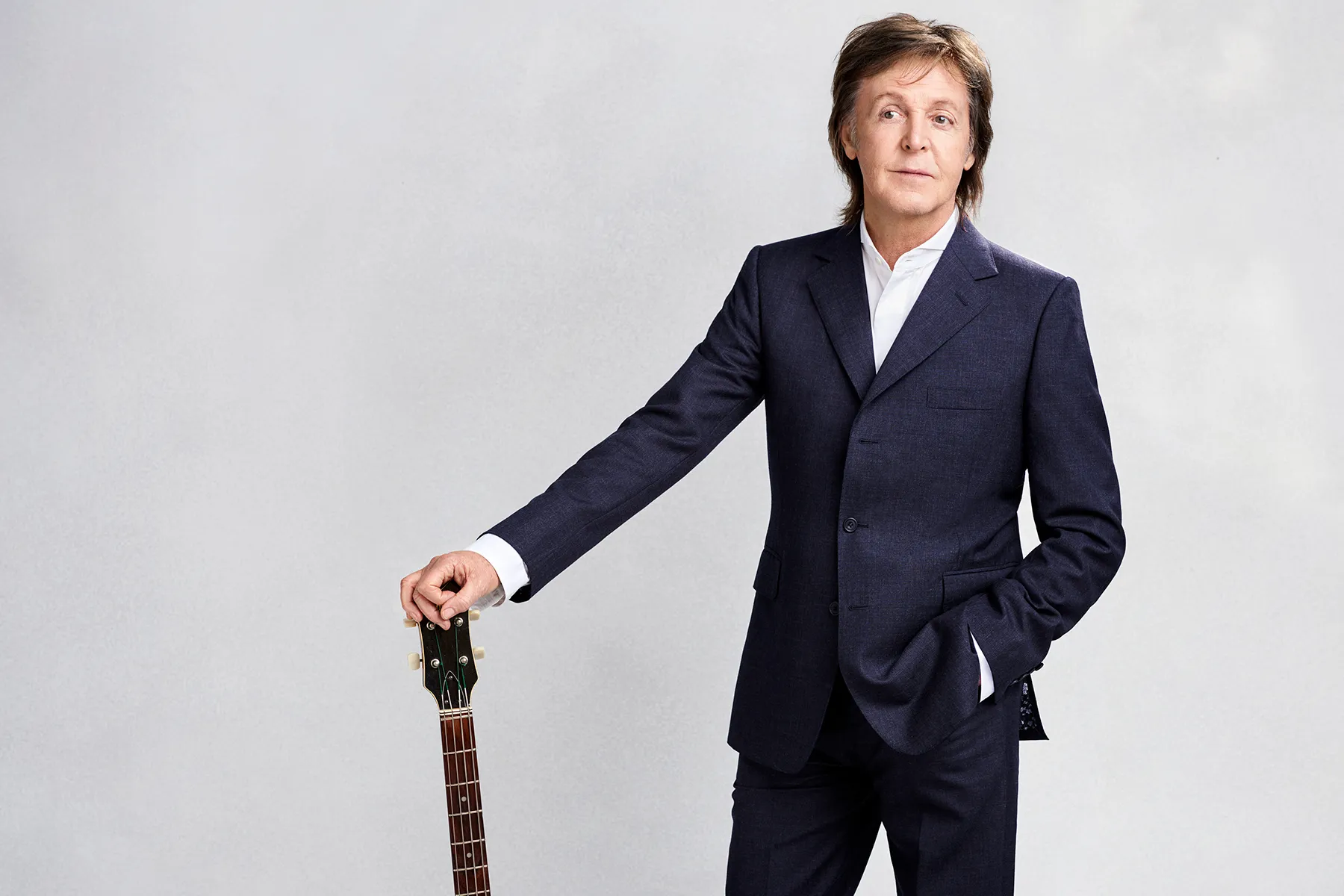
Paul McCartney just revisited his most haunting slip-up: nine days in a Tokyo jail after banned items were found in his luggage. From stadium lights to a cramped cell, he bluntly admitted, “I was an idiot.” The tour collapsed within hours — and the Wings era quietly shifted course soon after. He says there was a moment he truly feared he could be stuck there for a long time, thinking only of Linda and the kids. But what he did right after leaving Japan is the detail that has fans talking most.

paul-mccartney

Paul McCartney Reflects on His 9 Days in Jail After Japan Drug Bust in ‘Man on the Run’ Documentary: “I Was An Idiot”

Paul McCartney 'Man On The Run' Documentary Prime Video Review: Stream It  Or Skip It?

Man on the RunIf you’re a Beatles fan under 40, you may not know the story of Paul McCartney’s infamous 1980 arrest and jail time in Tokyo, Japan. But if you watch to the end of the new Paul McCartney documentary, Man on the Run—which began streaming on Prime Video today—you’ll get the full, juicy story of that time the world’s most famous rock star spent nine days in a jail cell, for carrying a bag of marijuana in his luggage.

Directed by Oscar-winning documentary filmmaker Morgan Neville (20 Feet From Stardom, Won’t You Be My Neighbor?), and executive produced by McCartney and Caitrin Rogers, Man on the Run takes viewers through the years directly after the Beatles broke up in 1969, when McCartney launched his solo career, and formed a new band, Wings, with his wife Linda McCartney. The film ends in 1980, a year that started with McCartney and Wings, flying to Tokyo for a week-long tour in Japan.

“Everyone said, ‘Whatever you do, don’t take any pot into Japan. Seven years hard labor.’ But we were in New York, and we had this pot,” a present-day McCartney says in a voice over interview from the film. “Oops.”

When Paul and Linda arrived at at Tokyo International Airport on January 16, 1980, a customs officer searched their carry-on bag and pulled out a bag of marijuana, roughly the size of a softball. McCartney was detained at the airport and arrested on a smuggling charge. Less than 12 hours later, the tour was canceled and McCartney was relegated to a 4-by-8 cell in a Tokyo jail.


 A customs officer inspects one of the plastic one of the plastic bags containing marijuana which hidden inside one of Paul McCartney's luggages after he was arrested for illegal possession of marijuana at New Tokyo International Airport in Narita 1/16.
A customs officer inspects one of the plastic one of the plastic bags containing marijuana which hidden inside one of Paul McCartney’s luggages after he was arrested for illegal possession of marijuana at New Tokyo International Airport in Narita 1/16/80.Photo: Getty Images / Bettmann Archive

“There are times in your life where you just think, ‘OK, you’re an idiot.’ And that’s one of them,” McCartney says in the documentary. “I was an idiot. I was in a little cell, on my own. I was Steve McQueen in The Great Escape. First night I didn’t sleep. Third night, I had a blinding headache all night. Just not wanting to be in there. I was being told I might be in there seven years.”

McCartney was plagued by thoughts of his wife, Linda, and their four children, Heather, Mary, Stella, and James.

“We hadn’t been separated at all, since we’d been married,” McCartney says. “I had visions of her, and the kids, just growing up outside Tokyo.”


 Former Beatle Paul McCartney leaves Tokyo Detention Center following release 1/25 after he was jailed for nine days after trying to smuggle marijuana into Japan.
Paul McCartney leaves Tokyo Detention Center following release 1/25/80 after he was jailed for nine days after trying to smuggle marijuana into Japan.Photo: Getty Images/ Bettmann Archive

Thankfully, McCartney was released after just nine days in jail. Rather than being held for trial, McCartney was asked to leave Japan, which, as once can imagine, he was all too happy to do. Less than a week later, he got to work on recording his second solo album (without the Beatles, and without Wings), McCartney II. Though he made no formal announcement, the arrest saw the end of the Wings era.

“I used to imagine, the best possible thing I could imagine, would be sitting under my oak tree in my garden,” McCartney said of his time in jail. “That was absolutely the height of bliss. You don’t cherish all of those moments unless they are taken away from you. It was one of the point where I thought, ‘Wait a minute. If I ever get out of here, do I really want to be doing what I’m doing?’”

As the present-day McCartney reflected, “It was liberation for me. You don’t have to be that Paul McCartney fellow that we expect all the time.”

0 Shares:
Leave a Reply

Your email address will not be published. Required fields are marked *

You May Also Like
michael
Read More

This Day in 1965 — The Birth of The Monkees On September 11, 1965, two small ads appeared in Daily Variety and The Hollywood Reporter, calling for “madness folk & roll musicians” to audition for a brand-new television project. The response was overwhelming — 437 hopeful young men lined up, chasing a chance at stardom. British actor-singer Davy Jones had already been chosen, and soon three more faces would join him to create something no one had seen before: The Monkees, the world’s first manufactured boy band. A year later, on September 12, 1966, the show premiered — and a pop culture phenomenon was born.

THIS DAY IN 1965 — HOW A NEWSPAPER AD GAVE BIRTH TO THE MONKEES AND A POP CULTURE PHENOMENON On September…
carrie
Read More

AMERICAN IDOL COLLIDES PAST AND FUTURE — AND CARRIE UNDERWOOD’S EMOTIONAL REACTION SAID EVERYTHING. As American Idol brought familiar faces and fragile dreams back onto the same stage, the moment quietly revolved around Carrie Underwood, whose composure visibly wavered as Breanna Nix returned carrying unfinished business and a 15-year-old contestant stood on the edge of a brutal reality no one that young should have to face. Carrie leaned forward, eyes glassy, listening with the kind of attention that comes from memory — not judgment — as if she could feel the weight of both journeys at once. Those watching noticed the shift immediately: her smile softened, her voice dropped, and for a brief stretch she said nothing at all, absorbing the performance with an empathy shaped by her own path from hopeful teenager to global star. When she finally spoke, it wasn’t as a judge delivering critique, but as someone recognizing how thin the line is between promise and heartbreak, between coming back stronger and being forced to grow up too fast. In that quiet exchange, Idol wasn’t about nostalgia or competition — it became about Carrie seeing herself in front of her, and the unmistakable ache of knowing exactly what that stage can give… and what it can take.

American Idol Blends Past And Future As Breanna Nix Returns And A 15-Year-Old Faces A Brutal Reality American…
Celtic Thunder
Read More

“THE NIGHT CELTIC THUNDER SANG WITH SOMEONE WHO WASN’T THERE.” The room was loud with anticipation, until the lights softened to a single glow. Then an old recording floated in. George Donaldson’s voice. Warm. Familiar. Impossible to miss. You could feel the shift instantly. Hands rose to mouths. A few gasps. Then silence — the kind that carries respect. One by one, the others stepped forward. Not with speeches. With memories. Small laughs. Cracked voices. Sentences left unfinished. And when the final chorus came, they didn’t sing over him. They sang with him. As if time bent for a moment. As if goodbye could sound like an embrace.

The room was loud with anticipation, the kind of noise that comes from fans who know they’re about…