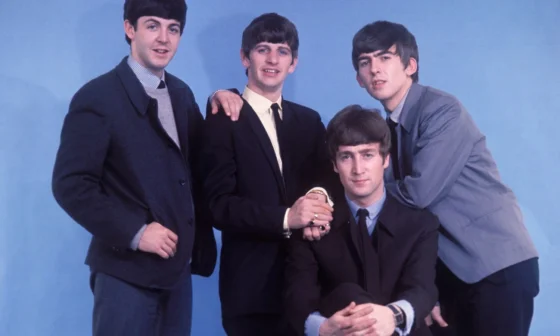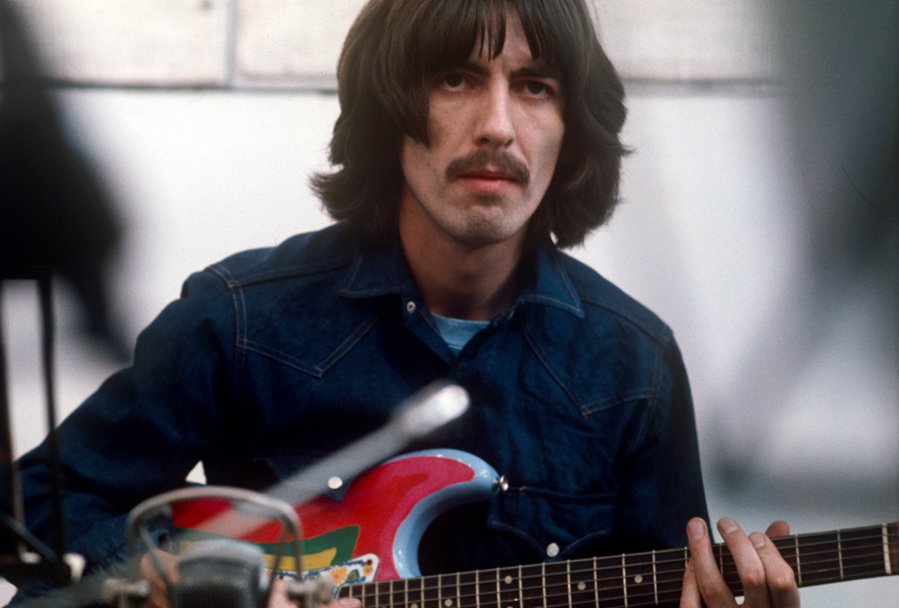
 More than two decades after his passing, George Harrison’s legacy continues to grow in ways that few artists ever experience. Known to millions as “The Quiet Beatle,” Harrison was often seen as the more reserved member of The Beatles. Yet behind that calm presence was a musician whose creativity, curiosity, and songwriting helped shape some of the most memorable moments in music history.
As the lead guitarist of The Beatles, Harrison played a crucial role in defining the band’s sound during the 1960s. While the spotlight often focused on John Lennon and Paul McCartney, Harrison steadily developed his own unique musical voice. His guitar work added texture and emotion to many of the band’s songs, and over time he began contributing compositions that would become classics in their own right.
One of Harrison’s most distinctive qualities as an artist was his willingness to explore new musical traditions. In the mid-1960s, he developed a deep interest in Indian music and spirituality. His friendship and collaboration with legendary sitar player Ravi Shankar opened the door for Western audiences to experience sounds and philosophies that were largely unfamiliar at the time. Through songs like “Love You To” and “Within You Without You,” Harrison helped introduce Indian instruments and musical structures into mainstream rock music, expanding what popular music could be.
 By the later years of The Beatles, Harrison’s songwriting had reached remarkable heights. Songs such as “Something” and “Here Comes the Sun” became two of the band’s most beloved tracks. “Something,” a beautifully written love song, has been praised by countless musicians and is widely considered one of the greatest love songs ever written. Meanwhile, “Here Comes the Sun” captured a feeling of optimism and renewal that continues to resonate with listeners today.
Even decades later, Harrison’s music continues to find new audiences. In recent years, “Here Comes the Sun” surpassed the incredible milestone of one billion streams on Spotify, proving that the song’s message of hope still connects with people around the world. For many younger listeners discovering The Beatles for the first time, Harrison’s songs often become instant favorites.
His influence also lives on through unforgettable tribute performances. Moments like the emotional Concert for George in 2002 brought together some of the world’s greatest musicians to celebrate his life and artistry. And years later, Prince’s powerful guitar solo during a performance of “While My Guitar Gently Weeps” at the Rock & Roll Hall of Fame reminded audiences just how timeless Harrison’s songwriting truly is.
George Harrison may have been known as the quiet one, but his impact on music has never been quiet. His songs continue to inspire musicians, comfort listeners, and remind us of the beauty that music can bring into the world.

Which George Harrison song means the most to you? 🎸