London, January 30, 1969. It was a Thursday, and the city was locked in the gray, bone-chilling grip of winter. But at 3 Savile Row, the headquarters of Apple Corps, the atmosphere inside was colder than the biting wind outside.
The Beatles—the four men who had rewritten the laws of pop culture—were at their breaking point.
They hadn’t performed live for a paying audience in three years. Three years of suffocating studio sessions, clashing egos, legal battles, and a silence between John Lennon and Paul McCartney that was growing louder by the day. The “Get Back” project was supposed to save them, but it felt more like a filmed autopsy of a dying band.
“We need an ending,” someone said. The ideas had been wild: an amphitheater in Tunisia, a boat on the sea. But in the end, they chose something reckless and impulsive.
“Let’s go to the roof.”
No tickets. No promotion. No stadium security. Just four musicians, their instruments, and the open sky.
The Cold Wind and the Old Fire
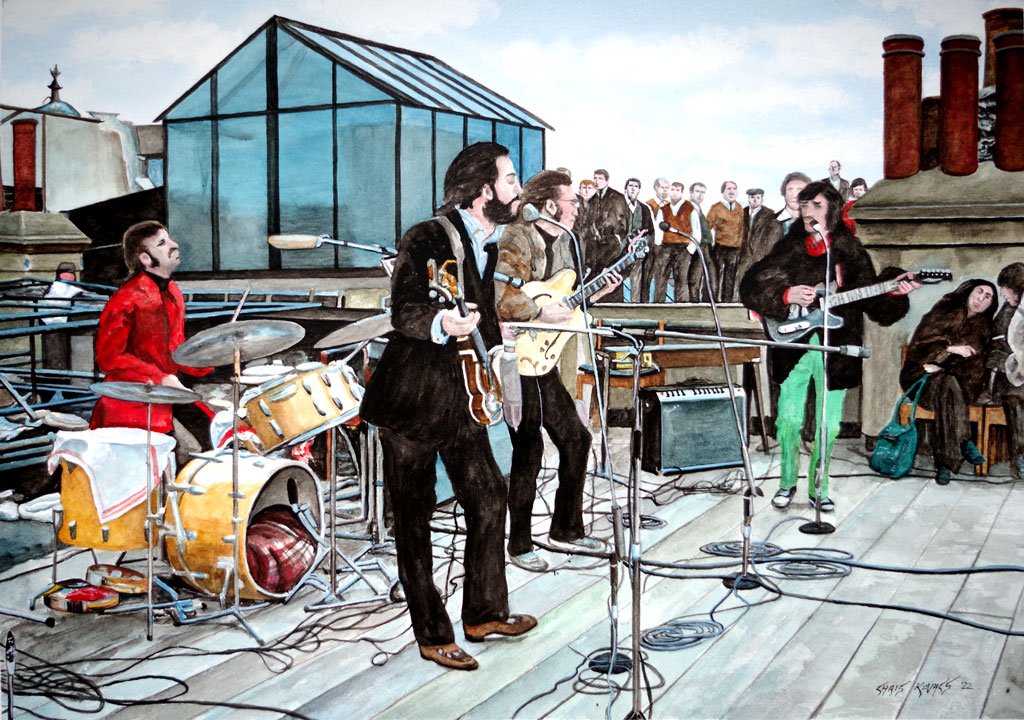
As they climbed the narrow stairs to the roof, the January air slapped them in the face. Ringo Starr, wrapped in his wife’s red PVC raincoat, looked like he wanted to turn back. George Harrison muttered about his fingers freezing up on the fretboard.
But then, Ringo sat behind the kit. John, huddled in Yoko’s fur coat, strapped on his Epiphone Casino. Paul plugged in the Höfner bass.
The moment the first chord of “Get Back” rang out, a shift occurred in the universe.
The wind howled, their hands were numb, but the resentment vanished. For the next 42 minutes, they weren’t millionaires suing each other. They were just boys from Liverpool again, playing rock and roll because it was the only thing that made sense.
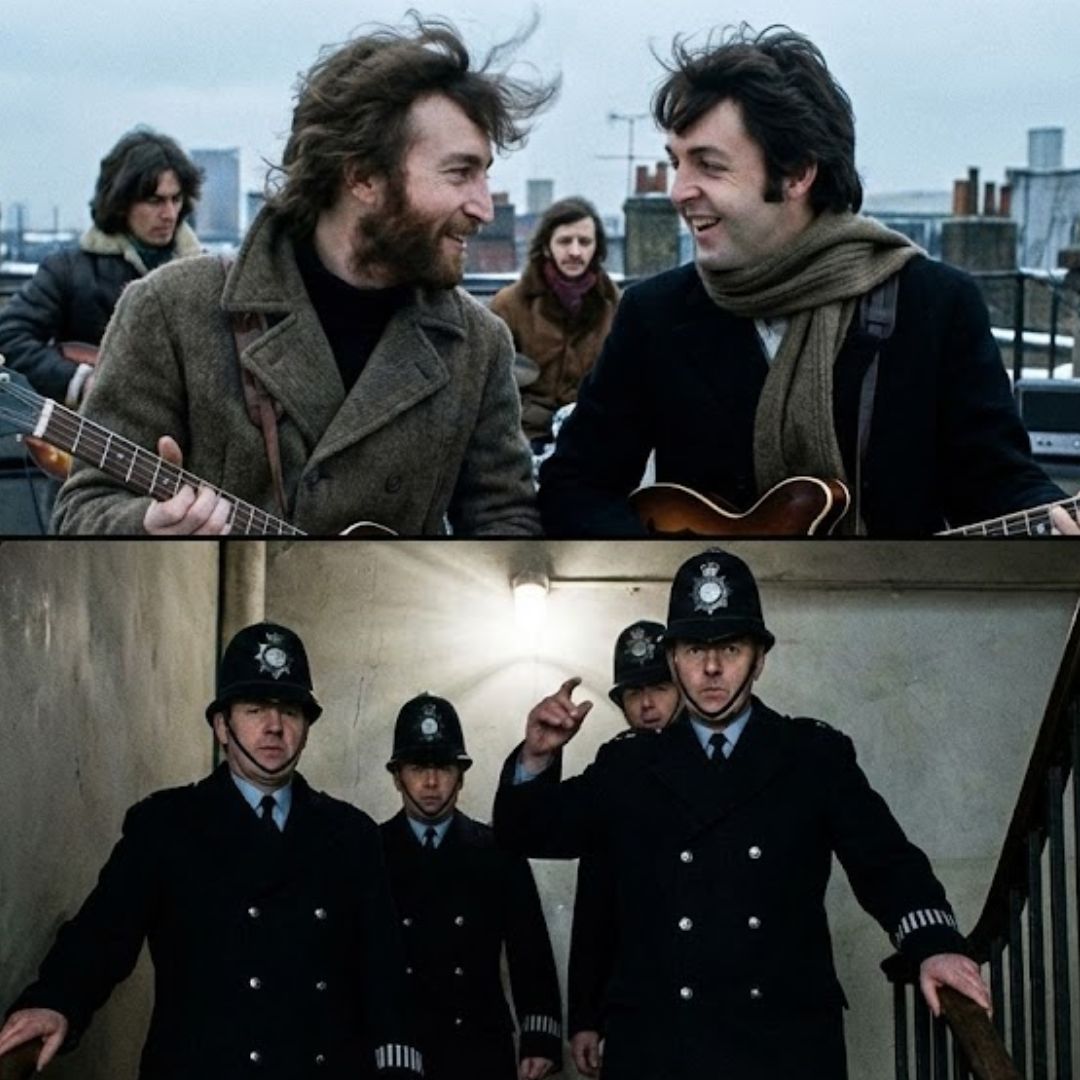
John and Paul locked eyes. A fleeting, secret smirk passed between them. It was a look that screamed: “Screw the lawyers. Screw the tension. Let’s show them who we are one last time.”
Chaos Below, Tension on the Stairs
Down on the street, the respectable tailoring district of Savile Row descended into beautiful chaos. Bankers stopped eating their lunches. Crowds gathered, necks craned toward the sky, confused and mesmerized. The sound of the greatest band on earth was raining down on them, free of charge.
But the establishment didn’t like it. The noise complaints flooded the local police station.
Inside the building, the drama was escalating. Two young police officers entered the lobby, their faces stern. They weren’t there for autographs; they were there to restore order. They demanded the music stop, threatening arrests for disturbing the peace.
They began to ascend the stairs. Every heavy bootstep on the concrete was a ticking clock counting down the end of The Beatles.
The Showdown
On the roof, the band knew time was running out. Mal Evans, their loyal roadie, looked panic-stricken as he stood between the police and the amplifiers.
The roof door burst open. The black helmets of the bobbies appeared.
Most bands would have panicked. Most bands would have faded out. The Beatles? They turned the amps up to 11.
George Harrison pushed his volume to the limit. John howled into the microphone with a raw, desperate energy during “Don’t Let Me Down.” It wasn’t just a performance anymore; it was an act of defiance. They were raging against the boredom of the city, against the police, and against the inevitable end of their own brotherhood.
Finally, under direct threat of arrest, Mal Evans was forced to switch off John and George’s amps mid-song. The wall of sound collapsed. Ringo’s drums stuttered to a halt.
The Deafening Silence
The silence that followed was heavier than the noise. The wind seemed to hold its breath. The four of them stood there, chests heaving, surrounded by tangled wires and confused policemen who were suddenly realizing they had just interrupted history.
It was in that precise moment that John Lennon stepped to the microphone for the last time. With a smirk that was half-arrogant, half-heartbroken, he delivered the line that would echo forever:
“I’d like to say thank you on behalf of the group and ourselves, and I hope we passed the audition.”
The Aftermath
They unstrapped their guitars and headed for the stairs, back into the warmth, back into reality.
History remembers the quote. But the real story isn’t what John said. It’s what happened in the seconds after the feedback died.
As they walked through the door to leave the roof, witnesses say John placed a hand on Paul’s shoulder for a split second. No words were spoken. It was a silent acknowledgment that the magic was still there, even if their time had run out.
They never played live together again. Those 42 minutes on the roof weren’t just a concert. They were a final, blazing supernova before The Beatles faded into the dark.