Some collaborations are planned. Others feel destined. When Ed Sheeran and Andrea Bocelli came together to record “Perfect Symphony,” the result was more than a reimagined hit—it was a meeting of two very different musical worlds, captured in a moment of genuine awe.
The setting couldn’t have been more fitting. Bocelli’s home in Tuscany, surrounded by rolling hills and quiet beauty, provided the backdrop for what would become one of the most memorable versions of Sheeran’s song “Perfect.” Stripped of stadium lights and massive crowds, the recording session felt intimate, almost fragile.
Sheeran began the way he always does—guitar in hand, gently strumming the familiar opening chords. His version of “Perfect” had already become a global success, known for its simplicity and emotional clarity. But this session would take it somewhere new.
Then Bocelli began to sing.
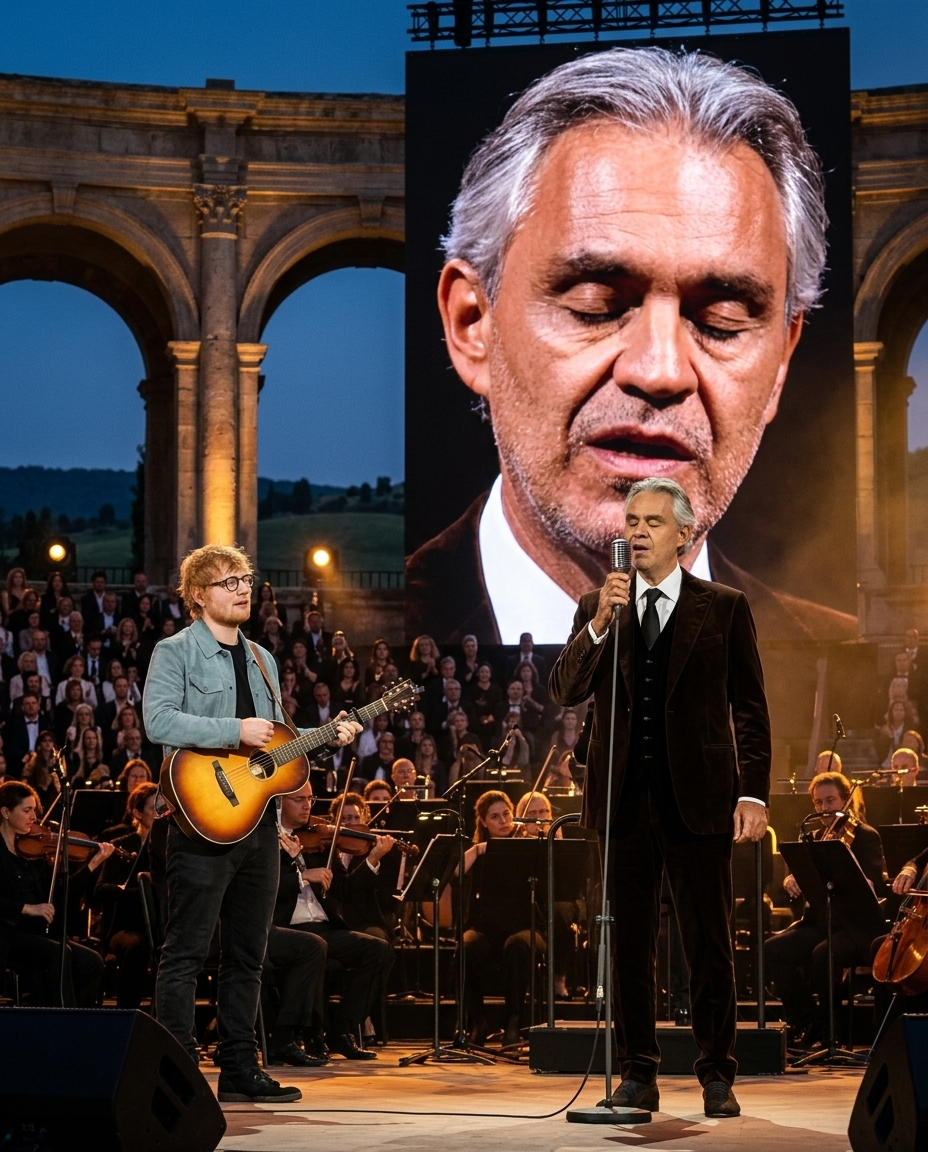
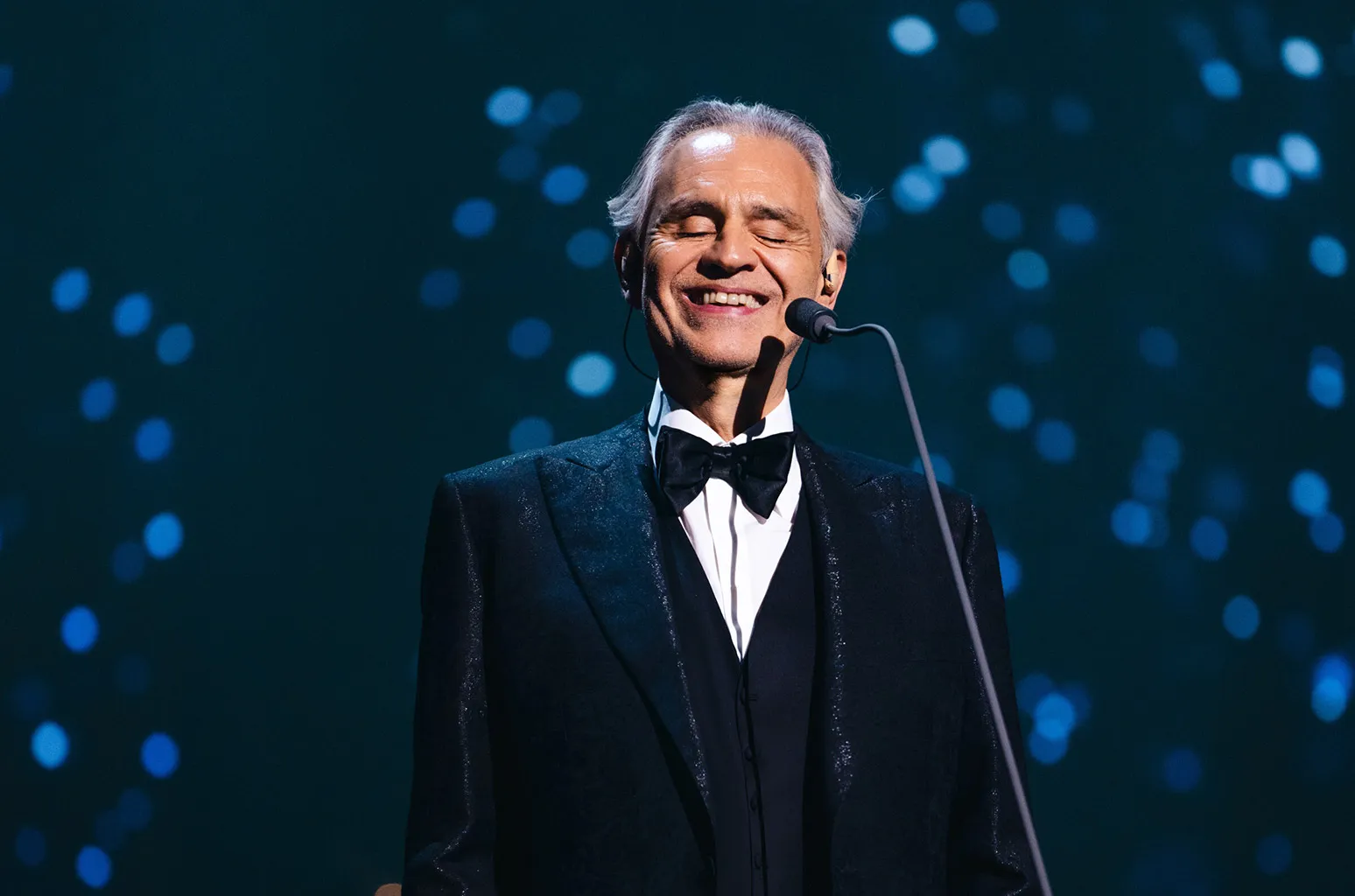
Blind since the age of 12, Bocelli has spent decades refining a voice that transcends genre. With millions of records sold and a career that bridges classical and popular music, he carries a presence that is both commanding and deeply personal. As his voice entered the room, it shifted the atmosphere instantly.
In the studio footage, Sheeran’s reaction says everything. He doesn’t interrupt, doesn’t try to match the moment. Instead, he pauses—his guitar falling silent—as he watches and listens. For an artist who spends his life performing, it’s a rare role reversal: from performer to audience.
It’s not just admiration—it’s recognition.
Bocelli’s voice doesn’t simply complement the song; it transforms it. The melody expands, the emotion deepens, and what was once a pop ballad becomes something closer to a classical aria. It’s a reminder of how a single voice can reshape a familiar piece of music.
Months later, that same transformation would play out on a much larger stage.
At Wembley Stadium in London, in front of tens of thousands of fans, Sheeran and Bocelli performed “Perfect Symphony” live. The scale was entirely different—bright lights, a vast audience, the energy of a sold-out crowd—but the essence of the moment remained unchanged.
Sheeran sang the verses in English, his voice steady and warm. Then Bocelli responded in Italian, his tone soaring above the arrangement. The contrast between them—modern pop and classical tradition—created a dialogue within the song itself.
For the audience, it was more than a performance. It was a conversation between styles, generations, and perspectives on music.
As the final note faded into the night, there was a brief pause—a collective exhale from the crowd. Sheeran, known for his easygoing stage presence, broke the silence with a simple remark, acknowledging the rarity of what had just happened.
And he was right.
Moments like that don’t come often. They can’t be manufactured or repeated on command. They happen when talent, timing, and emotion align in a way that feels almost accidental.
What makes this collaboration endure isn’t just technical skill or vocal power. It’s the authenticity of the interaction—the way Sheeran allows himself to be visibly moved, the way Bocelli brings his full artistry into a contemporary song without losing its core.
Together, they created something that exists between worlds. Not quite pop, not entirely classical, but something uniquely human.
Because sometimes, a voice doesn’t just fill a room.
It changes how you hear everything that comes after.