Some collaborations in music are carefully planned, rehearsed, and refined over time. Others seem to arrive almost fully formed, as if the connection existed long before the artists ever met. The duet between Andrea Bocelli and Celine Dion belongs firmly in the second category—a moment where distance and unfamiliarity gave way to something unexpectedly profound.
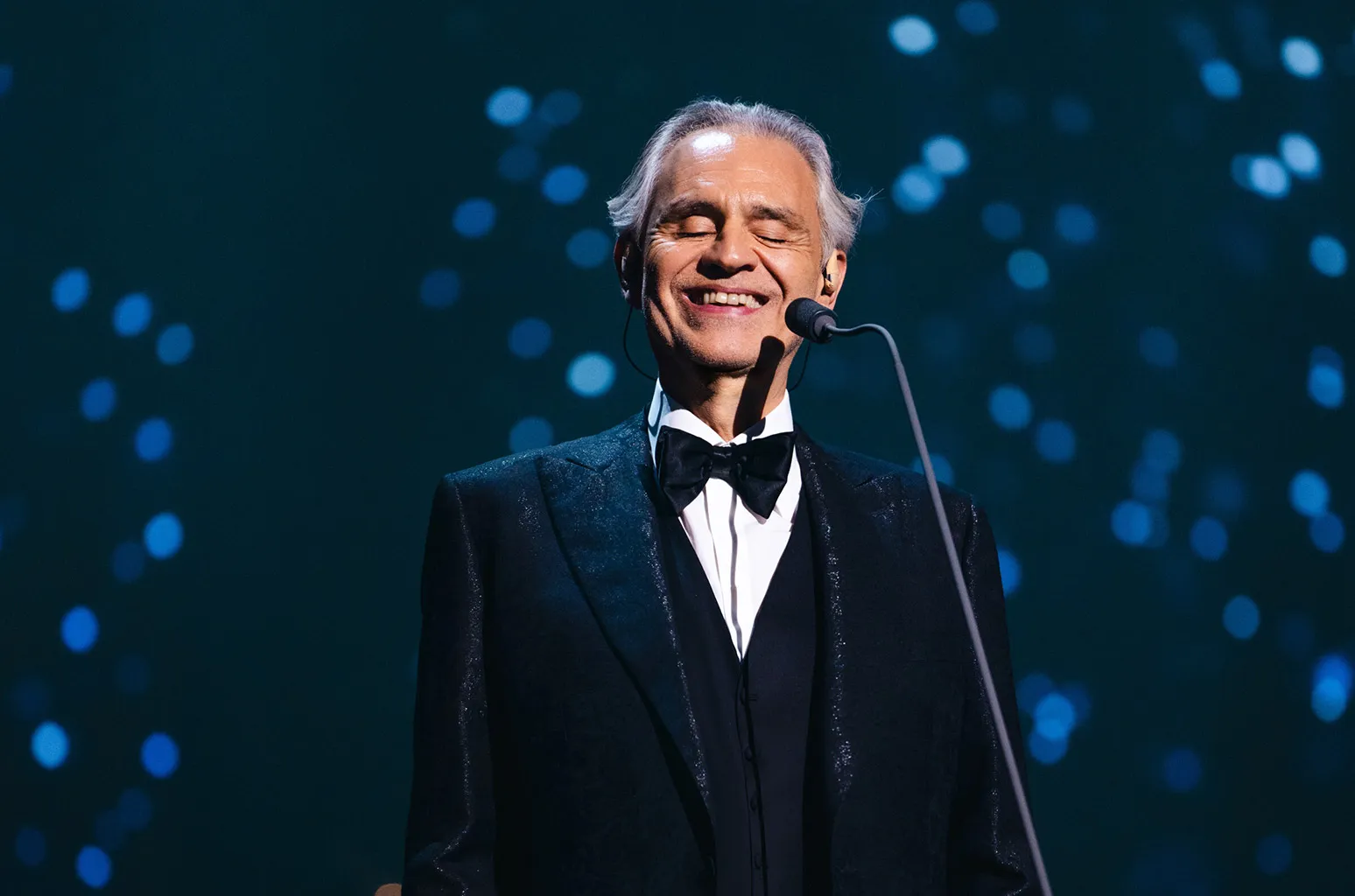
The process began in Italy, where Bocelli recorded his part of the song alone. Standing behind the microphone, eyes closed in his signature style, he relied entirely on sound. The orchestra flowed through his earpiece, guiding his performance, but there was no visual reference for the voice that would eventually join his. No shared glance, no exchanged energy—just trust in the music itself.
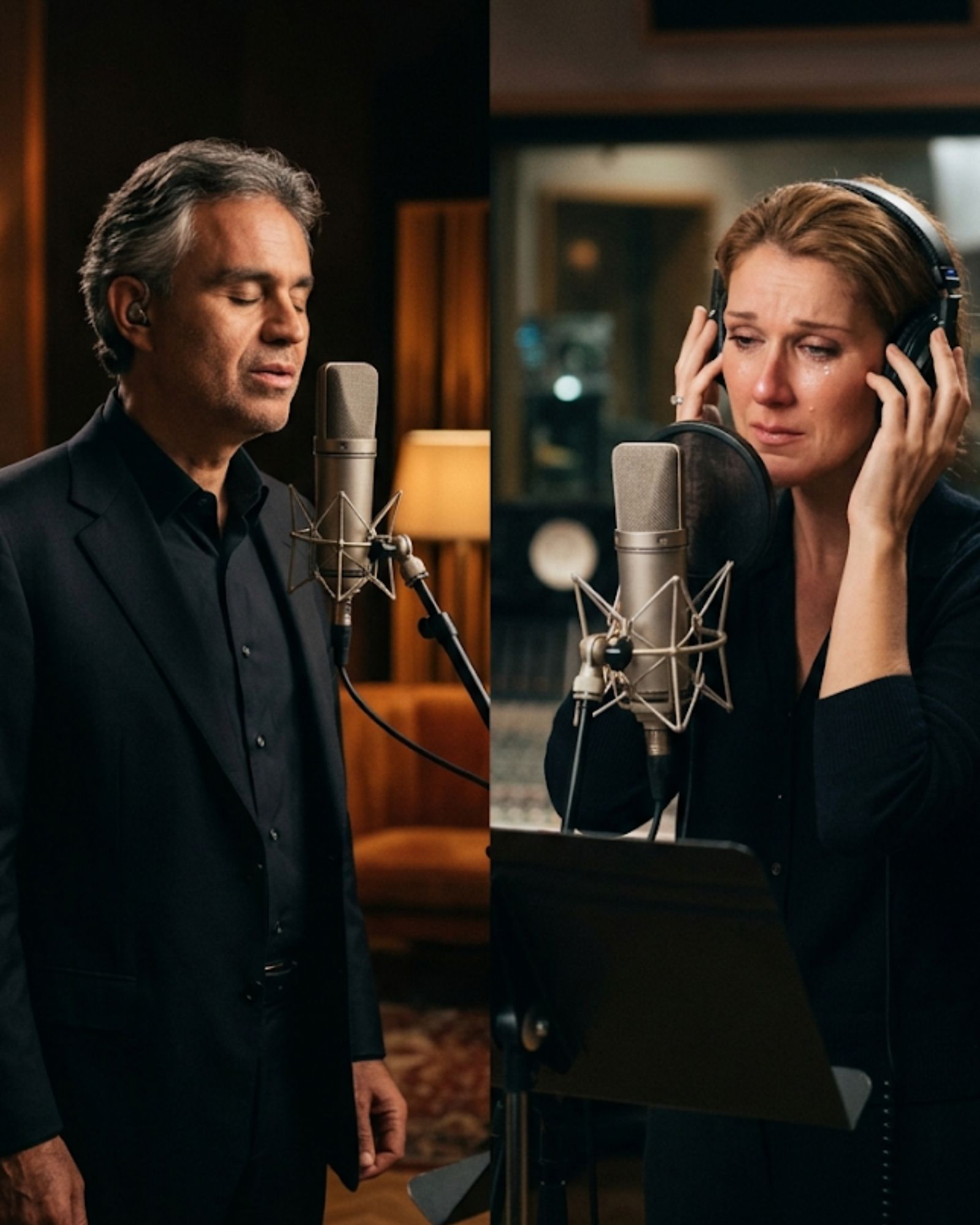
Thousands of miles away in Montreal, Celine Dion encountered that voice for the first time. When she received Bocelli’s recording, the impact was immediate. After listening to only a short portion, she paused the track. For a moment, there was hesitation—not from lack of ability, but from respect. His voice carried a weight and purity that made her question where her own would fit.
Still, she stepped into the studio and began recording. What followed was not a series of takes or careful adjustments, but a single, uninterrupted performance. Emotion surfaced quickly, her voice carrying both strength and vulnerability. By the second verse, the experience had become deeply personal, the kind of moment artists rarely plan but instantly recognize.
Bringing those two performances together was producer David Foster, known for shaping some of the most memorable ballads in modern music. When the final mix was ready, he chose to share it with both singers at the same time—over the phone, separated yet connected by the very song they had created.
The silence that followed spoke volumes. For a few seconds, neither Bocelli nor Dion said anything. Then Bocelli broke the quiet with a simple observation: he didn’t need to see her—he could hear her soul. It was a statement that captured the essence of what had just happened.
The song, The Prayer, would go on to win a Grammy and become one of the most celebrated duets of its time. Yet its lasting impact goes beyond awards or chart success. It lies in how it was created—two artists recording separately, guided only by instinct, emotion, and an unspoken understanding of the music.
When they finally performed together live months later, the connection was immediate. There was no sense of awkwardness or distance, only recognition. Dion would later describe the experience as feeling like meeting someone she had known forever, as though the song itself had already introduced them.
In an industry that often emphasizes chemistry built through collaboration, this duet offered a different perspective. It showed that sometimes, connection doesn’t require shared space or even shared time. Sometimes, it simply requires two voices willing to meet in the same emotional place.
And when they do, the result can feel timeless.