In a world where public figures often share every chapter of their lives, silence can be the most intriguing story of all.
That’s certainly true when it comes to Enrica Cenzatti — a name closely connected to one of the most recognizable voices in music, yet rarely heard in public. For more than 20 years, she has remained almost entirely out of view, choosing a life defined not by headlines, but by absence from them.
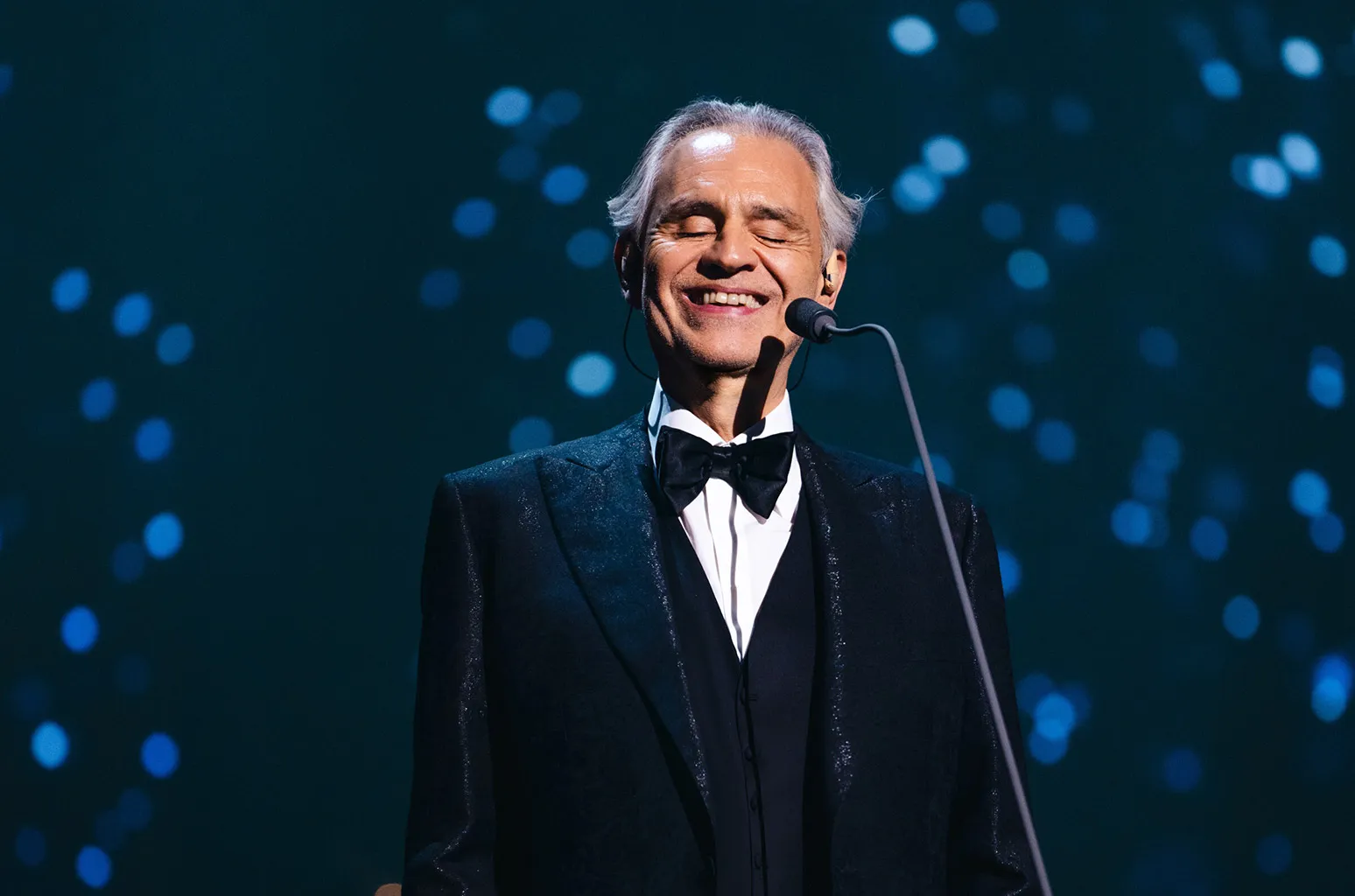
Her connection to Andrea Bocelli is well known. The two shared an important chapter of life together, including raising their children before eventually going their separate ways. But while Bocelli’s life continued in the public eye — through performances, interviews, and a new marriage — Cenzatti took a very different path.
She stepped away.

What makes her story especially compelling isn’t just the silence, but its consistency. In an era of social media, where even the most private individuals leave some digital trace, Cenzatti has remained remarkably discreet. No interviews revisiting the past. No public reflections. No visible effort to shape her narrative.
And yet, her presence hasn’t disappeared entirely.
Living in close proximity to Bocelli and his current family, she remains physically near a life that continues to evolve in the public sphere. It’s a detail that naturally invites curiosity. For many observers, it raises questions about how boundaries are maintained, how relationships adapt, and what everyday life looks like in such an unusual arrangement.
But those questions often lead to speculation — and that’s where the story becomes more complicated.
Rumors about tension, particularly around the idea of “biological mother versus stepmother,” tend to surface in conversations about blended families, especially when public figures are involved. However, without direct insight or confirmation, these narratives often say more about public curiosity than about reality.
What can be said with certainty is this: families are rarely as simple as they appear from the outside.
Blended households, shared responsibilities, and evolving relationships require balance, communication, and, often, a level of privacy that outsiders don’t always understand. In that context, Cenzatti’s silence may not be mysterious at all — it may simply be intentional.
A choice.
Choosing privacy in a world that constantly invites exposure is not easy, especially when connected to someone as globally recognized as Bocelli. Yet, over the years, she has maintained that boundary with consistency, suggesting a clear sense of what she values.
It’s also worth considering that not every story is meant to be public.
While fans may feel connected to the lives of artists they admire, there are parts of those lives that exist beyond the stage — personal spaces where meaning isn’t meant to be explained or interpreted from afar. Cenzatti’s story may belong to that space.
In many ways, the intrigue surrounding her says less about secrecy and more about contrast. Against a backdrop of music, fame, and visibility, her quiet presence stands out.
Not because it demands attention — but because it refuses it.
And perhaps that’s the real story.
Not a hidden conflict. Not an untold agreement. But a deliberate decision to live outside the narrative, even while remaining close to it.
Sometimes, what we don’t hear isn’t missing.
It’s protected.