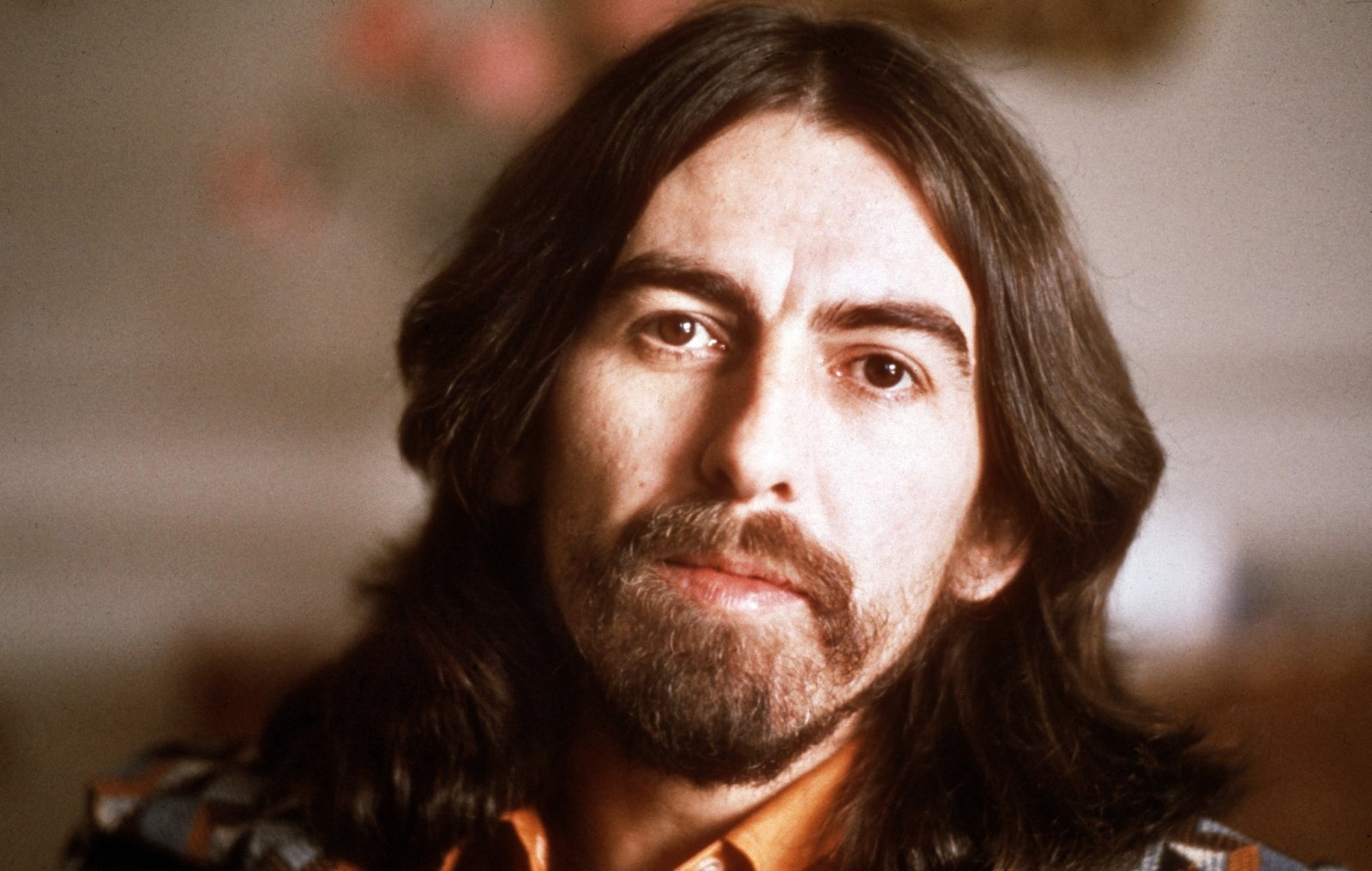
For most musicians, the challenge is being heard. For Dhani Harrison, the challenge was something far more complicated—being heard as himself.
From the moment he stepped into the public eye, comparisons were inevitable. As the son of George Harrison, and bearing an uncanny resemblance in both appearance and voice, Dhani was often seen less as a new artist and more as an extension of a legacy. For fans of The Beatles, that connection was powerful—but it also came with weight.
There’s a certain expectation attached to a name like Harrison. Listeners don’t just hear music; they hear history. Songs like “Here Comes the Sun” aren’t just classics—they’re cultural landmarks. And when Dhani began making music, many were already listening for echoes of that past.
But echoing a legend is not the same as building a career.

Early on, Dhani faced a choice that many second-generation artists encounter: lean into familiarity or risk stepping away from it entirely. The easier path might have been to embrace the comparisons, to refine a sound that mirrored what audiences already loved. Instead, he chose something less predictable.
Gradually, his music began to shift. Moving away from the warmth and melodic ease associated with his father’s work, Dhani explored darker textures, layered production, and a more experimental edge. His sound leaned into alternative rock, electronic influences, and a moodier atmosphere—territory that felt distinctly his own.
It wasn’t a rejection of his roots, but rather an expansion beyond them.
This evolution didn’t happen overnight. For listeners, the change was subtle at first—a different tone here, a more complex arrangement there. But over time, something became clear: Dhani Harrison was no longer being defined by resemblance. He was creating distance, not out of necessity, but out of purpose.
And that distance mattered.
Because identity in music isn’t just about how you sound—it’s about what you choose to say, and how you choose to say it. For Dhani, that meant embracing a sense of grit and experimentation that stood in contrast to the expectations surrounding him. It meant accepting that some listeners might always hear his father first—and continuing anyway.
There is a quiet courage in that decision. It’s not easy to step out of a shadow that so many people find comforting. Nostalgia has a strong pull, especially when it’s tied to something as influential as The Beatles. But staying in that space would have meant limiting his own voice.
Instead, Dhani pushed forward.
Today, his music reflects that journey. It carries traces of where he comes from, but it doesn’t stay there. It moves, shifts, and evolves—just as any artist’s work should. And in doing so, it tells a story not of inheritance, but of individuality.
The turning point isn’t a single song or moment. It’s the gradual realization, both for him and for his listeners, that he is no longer being compared—he’s being heard.
And perhaps that’s the real achievement.
Not sounding like a legend.
But becoming one in your own way.