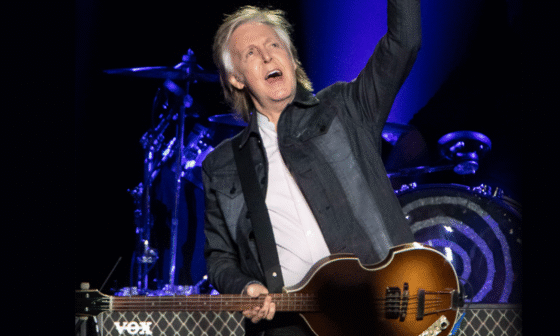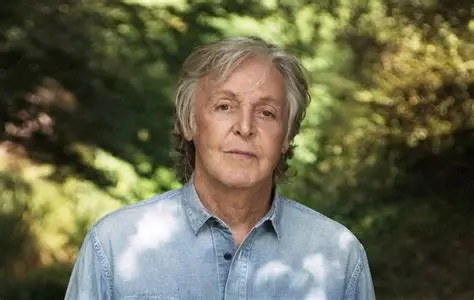
The world remembers Paul McCartney as one of the legendary Beatles, a member of a band whose music changed the course of history. But the story that followed the band’s breakup is far less known — a story of uncertainty, reinvention, and audacious risk.
When The Beatles disbanded in 1970, McCartney found himself lost. The sudden end of one of the most famous musical collaborations in history left him grappling with depression and the crushing weight of legal battles over the band’s dissolution. Questions loomed: Could he create music on his own? Did he even want to?
It was in this fragile, uncertain state that McCartney made a move few saw coming. Rather than retreat entirely, he launched a new project — Wings — alongside his wife, Linda McCartney, and a rotating lineup of musicians. The decision surprised critics, who scoffed at the idea that McCartney could succeed outside the shadow of The Beatles. Fans, too, were skeptical. And McCartney, characteristically, refused to explain or apologize for his choice.
The early days of Wings were humble, even raw. McCartney and Linda played unannounced university gigs, often charging just 50p, creating a grassroots following one small audience at a time. They embraced the uncertainty, traveling the country in a modest tour bus, sometimes accompanied by their children. Every show was a risk, every performance a test of whether McCartney could reinvent himself on his own terms.
Yet from these modest beginnings emerged a musical empire. Wings went on to dominate the charts in the 1970s with hits like Band on the Run, Live and Let Die, and Jet. McCartney’s songwriting matured, taking on new dimensions that fused his Beatles-era brilliance with fresh perspectives gained from personal and familial experiences. His music became more than entertainment; it was proof of resilience, creativity, and the courage to start over.
The story of Wings is not just about commercial success; it is deeply human. It captures the emotional and personal journey of a man recovering from the loss of a defining chapter in his life, rediscovering joy in music, and building a legacy on his own terms. McCartney’s willingness to risk criticism and doubt paved the way for future generations of artists who sought to break free from the constraints of their early fame.
Today, looking back at the rise of Wings, it’s clear that McCartney’s post-Beatles years were anything but ordinary. The comeback was raw, inspiring, and, at times, almost unbelievable — a reminder that even the biggest icons must face doubt, fear, and uncertainty before creating something truly enduring.
From quiet university halls to global stages, McCartney’s journey with Wings stands as one of the most remarkable reinventions in music history — a testament to persistence, artistry, and the courage to follow one’s own path.