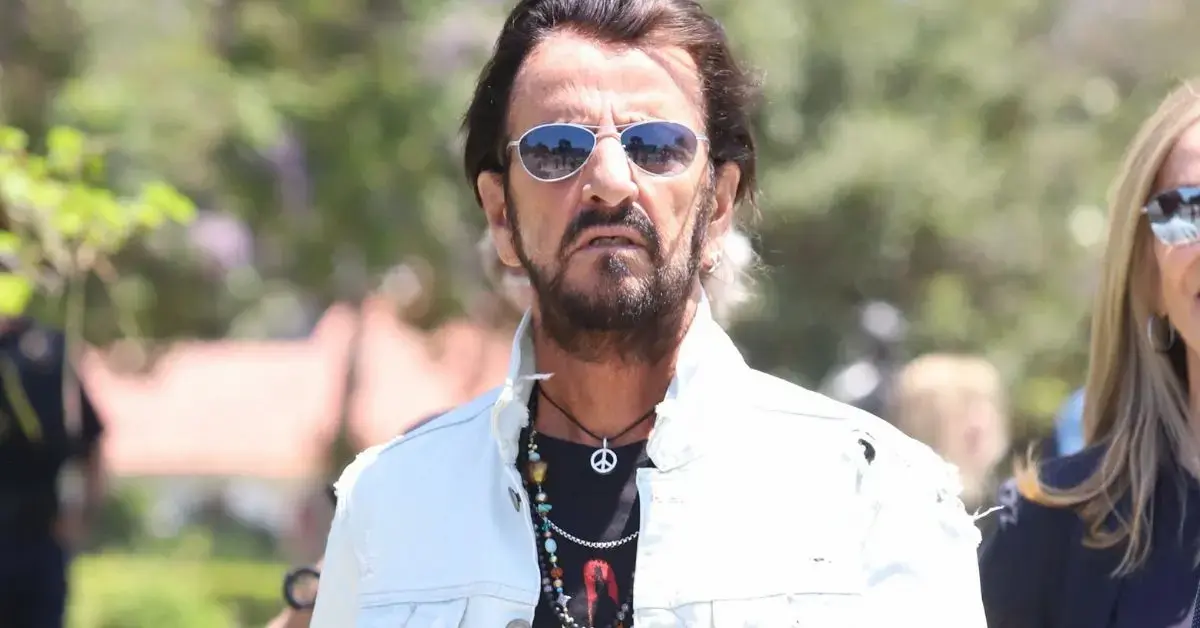
In the early days of The Beatles, the narrative seemed almost too easy to write. John Lennon was the sharp edge, Paul McCartney the melodic architect, and George Harrison the quiet seeker. And then there was Ringo Starr—often described, sometimes dismissively, as the “lucky one.”
It was a label that stuck for years. Critics and even casual listeners assumed that Ringo had landed the easiest role in the band. After all, how hard could it be to sit behind a drum kit while two of the greatest songwriters in history stood at the front? The assumption was simple: almost anyone could have done what he did.
But that assumption missed something fundamental.

Ringo didn’t play the drums the way others did. He wasn’t interested in flash or technical showmanship. Instead, he approached rhythm like a storyteller—serving the song, not himself. His fills were unconventional, sometimes described as “backwards,” shaped by the fact that he was a left-handed player using a right-handed kit. That subtle difference gave Beatles songs a feel that was instantly recognizable, even if listeners couldn’t quite explain why.
Listen closely to tracks like those on Abbey Road, and it becomes clear. The drumming doesn’t dominate, but it defines. It breathes. It gives space where needed and energy where it counts. It’s not just timekeeping—it’s emotional timing.
While the world debated the brilliance of Lennon and McCartney, Ringo remained exactly where he was: steady, consistent, and deeply attuned to the music around him. He didn’t compete for attention. He didn’t try to reshape his identity to fit expectations. In a band full of evolving egos and creative tension, that stability became invaluable.
And that’s where the narrative began to shift.

Because the truth is, The Beatles didn’t just need a drummer—they needed that drummer. Someone who understood restraint. Someone who could anchor songs without overwhelming them. Someone who could adapt as their music grew more complex without losing the human feel that made it all connect.
Ringo provided all of that, quietly.
Over time, musicians and producers began to recognize what had been overlooked. His sense of timing wasn’t just accurate—it was instinctive. His choices weren’t simple—they were precise. Remove Ringo from those recordings, and something intangible disappears. The songs still exist, but the feel changes. The heartbeat is different.
That’s what critics never fully accounted for. Replacement isn’t just about technical ability. It’s about chemistry, intuition, and presence. And those are things you can’t easily replicate.

By the time the band reached its later years, the idea of Ringo as the “lucky one” felt increasingly out of place. He wasn’t just along for the ride—he was part of what made the ride possible.
Today, looking back, it’s clear how much that perception missed. Ringo Starr didn’t need to prove himself loudly. He did it the only way he ever intended to—by playing exactly what the music needed, no more, no less.
And in doing so, he became something far greater than “lucky.”
He became essential.