The “Lucky One” Who Wasn’t: How Ringo Starr Became Irreplaceable

ringo

In the early days of The Beatles, the narrative seemed almost too easy to write. John Lennon was the sharp edge, Paul McCartney the melodic architect, and George Harrison the quiet seeker. And then there was Ringo Starr—often described, sometimes dismissively, as the “lucky one.”

It was a label that stuck for years. Critics and even casual listeners assumed that Ringo had landed the easiest role in the band. After all, how hard could it be to sit behind a drum kit while two of the greatest songwriters in history stood at the front? The assumption was simple: almost anyone could have done what he did.

But that assumption missed something fundamental.

Ringo didn’t play the drums the way others did. He wasn’t interested in flash or technical showmanship. Instead, he approached rhythm like a storyteller—serving the song, not himself. His fills were unconventional, sometimes described as “backwards,” shaped by the fact that he was a left-handed player using a right-handed kit. That subtle difference gave Beatles songs a feel that was instantly recognizable, even if listeners couldn’t quite explain why.

Listen closely to tracks like those on Abbey Road, and it becomes clear. The drumming doesn’t dominate, but it defines. It breathes. It gives space where needed and energy where it counts. It’s not just timekeeping—it’s emotional timing.

While the world debated the brilliance of Lennon and McCartney, Ringo remained exactly where he was: steady, consistent, and deeply attuned to the music around him. He didn’t compete for attention. He didn’t try to reshape his identity to fit expectations. In a band full of evolving egos and creative tension, that stability became invaluable.

And that’s where the narrative began to shift.

Ringo Starr of the Liverpudlian pop group The Beatles at a press conference in London Airport following a tour of Australia.

Because the truth is, The Beatles didn’t just need a drummer—they needed that drummer. Someone who understood restraint. Someone who could anchor songs without overwhelming them. Someone who could adapt as their music grew more complex without losing the human feel that made it all connect.

Ringo provided all of that, quietly.

Over time, musicians and producers began to recognize what had been overlooked. His sense of timing wasn’t just accurate—it was instinctive. His choices weren’t simple—they were precise. Remove Ringo from those recordings, and something intangible disappears. The songs still exist, but the feel changes. The heartbeat is different.

That’s what critics never fully accounted for. Replacement isn’t just about technical ability. It’s about chemistry, intuition, and presence. And those are things you can’t easily replicate.

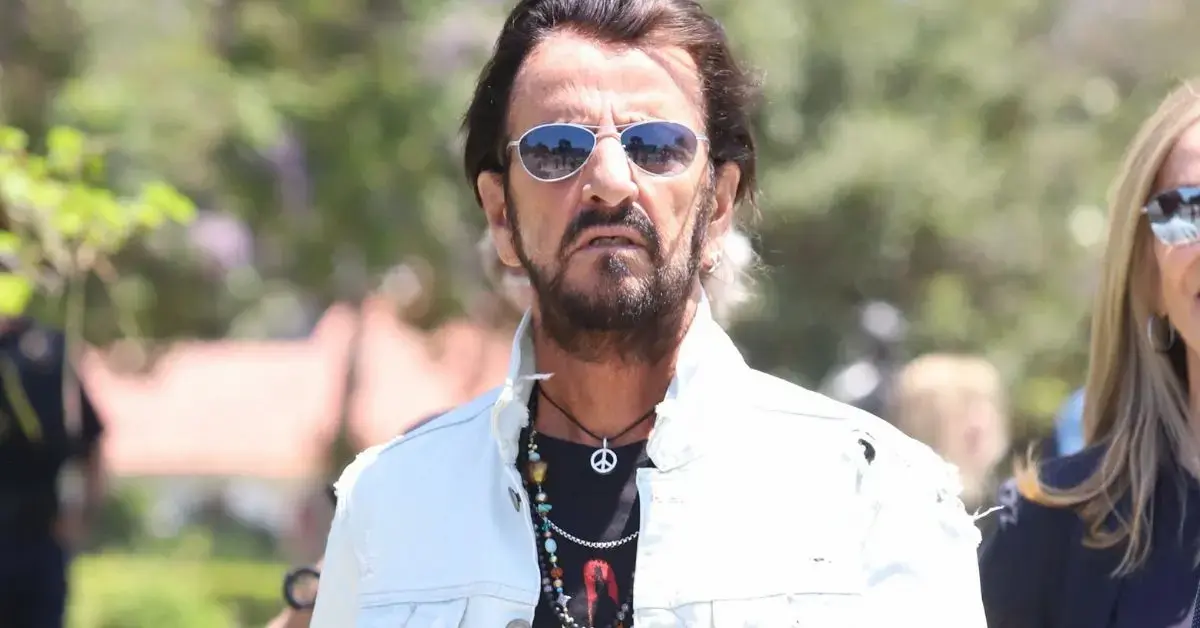
Ringo Starr attends the 2023 Musicians Hall Of Fame Induction Ceremony where he was the Inaugural recipient of the Joe Chambers Musicians Legacy...

By the time the band reached its later years, the idea of Ringo as the “lucky one” felt increasingly out of place. He wasn’t just along for the ride—he was part of what made the ride possible.

Today, looking back, it’s clear how much that perception missed. Ringo Starr didn’t need to prove himself loudly. He did it the only way he ever intended to—by playing exactly what the music needed, no more, no less.

And in doing so, he became something far greater than “lucky.”

He became essential.

Ringo Starr performs at The Grand Ole Opry on February 21, 2025 in Nashville, Tennessee.

0 Shares:
Leave a Reply

Your email address will not be published. Required fields are marked *

You May Also Like
Long-Lost Conway Twitty Performance
Read More

He walked onstage like he always had. Smiling. Steady. Completely unaware it would be the last time. On June 5, 1993, Conway Twitty sang without farewell, without warning — carrying truth instead of perfection, gratitude instead of goodbyes. Some say his smile toward the band lingered… like a quiet thank you no one understood until it was too late. Hours later, he was gone. And suddenly, every note meant everything.

THE NIGHT CONWAY TWITTY SANG WITHOUT KNOWING IT WAS THE LAST TIME A Final Performance the Crowd Would…
courtney_hadwin
Read More

“There Are Goosebumps Everywhere!” in Julie Miles’ Vocal Class, Courtney Hadwin Dazzles With a Stripped-Down Rendition of “Pretty Little Thing.” Fans Never Anticipated the Comeback of Courtney Hadwin’s Sheer Power. The Rock-Soul Prodigy SAT Down and Unleashed a Haunting, Stripped-Down Version of Her Popular Original Song, Pretty Little Thing, With the Help of Vocal Coach Julie Miles. The Room Changed as Soon as the First Note Was Played; There Were Thrills, Goosebumps, and an Almost Supernatural Spirit in the Air. It Was More Than Simply a Voice Class; It Was Like Watching History Relive Itself, Reverberating With the Same Fervor That First Made Her Famous Throughout the World. “Release the Studio Version Now — the World Needs This Song Again!” Was the One Demand That Fans Who Watched Couldn’t Keep Quiet About in Their Comments.

Courtney Hadwin took the mic for a stripped-down performance of her viral original song “Pretty Little Thing” during…
paul
Read More

He still sees him — in the quiet hours before dawn, when music drifts through memory like smoke. Paul McCartney has shared that John Lennon appears in his dreams, not always speaking in words, but through melodies they never finished together. Sometimes there’s laughter. Sometimes there’s a silence that cuts deeper than sound. “It feels like he’s still around,” Paul admits softly, “as if he’s just stepped out of the room.” For fans, it’s hauntingly beautiful — a friendship that refused to end, a creative bond so deep it continues beyond waking life. The songs don’t stop; they simply change where they’re written. In these dreams, Lennon isn’t a legend or a ghost of history. He’s a friend. A partner. A presence that lingers. For McCartney, each visit is both a gift and a reminder — comfort wrapped in loss. A melody that arrives unannounced, then fades with the morning light. Some connections don’t disappear with time. They echo. ▶️ FULL VIDEO BELOW

Paul McCartney’s Midnight Conversations with John Lennon He still sees him — in the quiet hours before dawn,…